
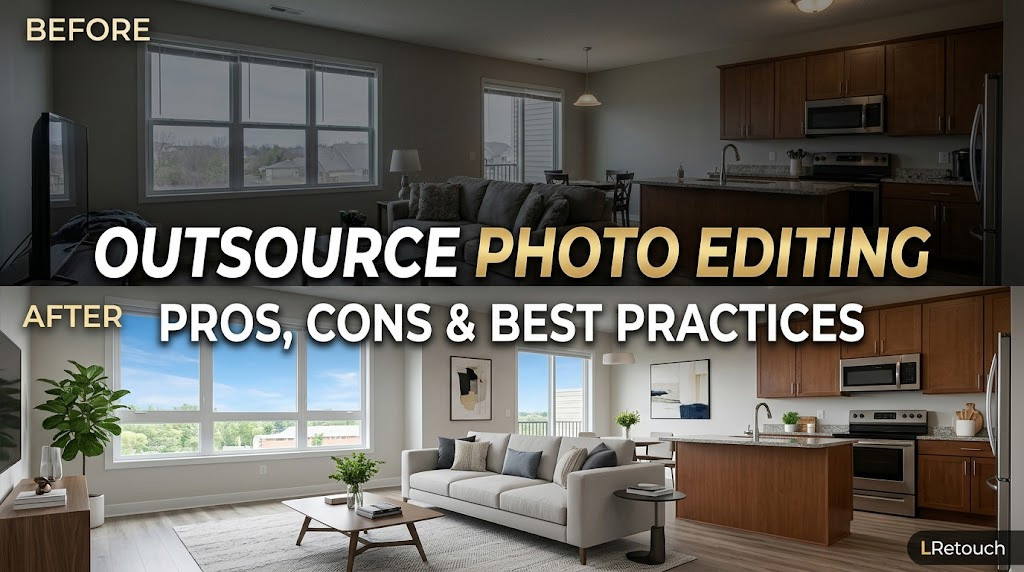
Outsource photo editing can help real estate photographers manage growing workloads and tight deadlines. Learn how outsourcing works, what it costs, and how to choose the right editing service for consistent, professional results.
Power of outsourced real estate photo editing
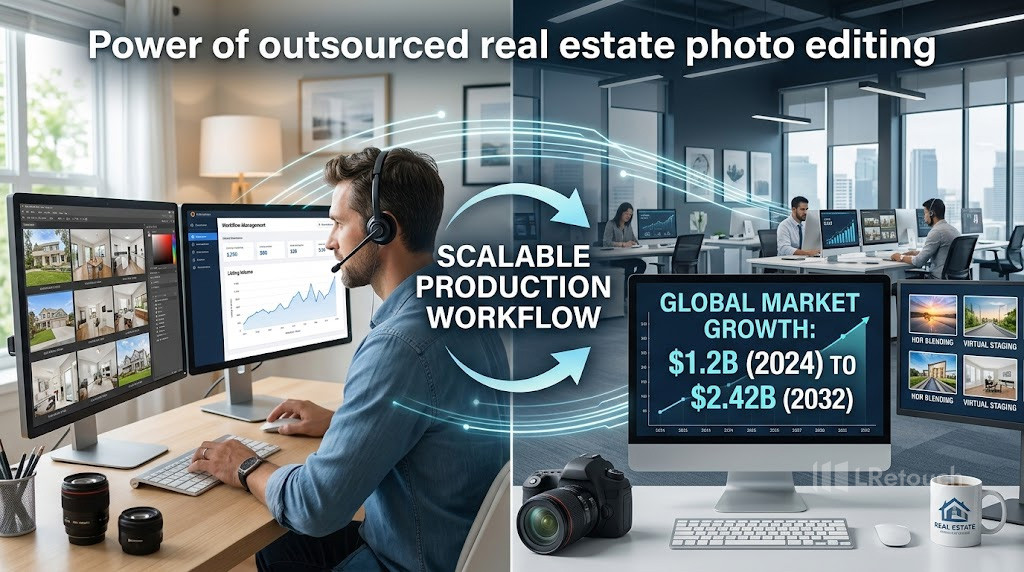
Outsource photo editing has become a growing part of modern real estate photography workflows. As listing volumes increase and agents expect faster digital delivery, photographers are moving post-production to specialized teams. A 2026 market report estimates that the global real estate photo editing service market could grow from $1.2 billion in 2024 to $2.42 billion by 2032, showing strong demand for these services.
Power of outsourced real estate photo editing
This shift also changes how photographers manage production. Instead of treating editing as an in-house task, they can build a flexible workflow around external specialists. The real estate photo editing cost then becomes part of a larger production strategy.
In 2026, outsourcing is no longer just an option for busy photographers. It is becoming a practical way to structure a scalable real estate media business.
Outsource photo editing: PROS
For real estate photographers, editing can become a major part of the workday. A single property may require dozens of images and several rounds of adjustments. When you outsource photo editing, you can move this work to a professional team and spend more time on activities that grow your business.
Outsource photo editing: PROS
1. Save Time After Every Shoot
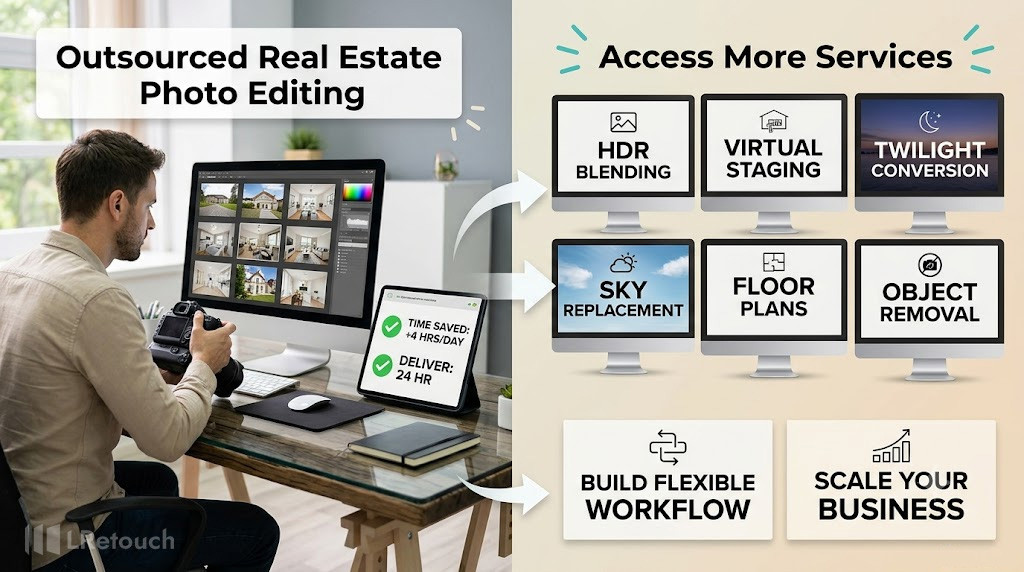
Editing can take 3–4 hours after a full day of shooting. Outsourcing removes much of this workload. You can use those hours to rest, prepare for the next shoot, contact clients, or market your services.
2. Save Cost on In-House Editing
Hiring a full-time editor can add salary, software, equipment, and training expenses. Outsourcing can reduce these overhead costs. The save cost editing benefit becomes more valuable as your workload grows.
3. Deliver Photos Faster
Professional editing teams often offer 24-hour or same-day turnaround. Faster delivery helps agents publish listings sooner. It can also improve client satisfaction and increase repeat bookings.
4. Access More Editing Services
Outsourcing can give photographers access to more than basic corrections. Depending on the provider, services may include:
- HDR photo blending
- Virtual staging
- Twilight conversion
- Sky replacement
- Floor plan creation
- Object removal
This allows you to offer more value without learning every new editing technique.
5. Build a Flexible Outsource Workflow
A reliable outsource workflow can handle large volumes without adding more work to your schedule. For example, a photographer handling 20 listings per week can send images to an editing team while focusing on new shoots and client relationships.
6. Create More Opportunities to Grow
The biggest editing outsourcing benefits often appear as your business expands. You can accept more listings, work with additional agents, or enter new markets without spending extra hours at your computer.
Overall, outsourcing turns editing from a time-consuming task into a scalable part of your business.
Outsource photo editing: CONS
While outsource photo editing can save time, it also comes with some challenges. Photographers should consider these drawbacks before choosing an editing partner. The right real estate editing company can reduce many of these risks, but they should not be ignored.
Outsource photo editing: CONS
1. Less Control Over the Final Look
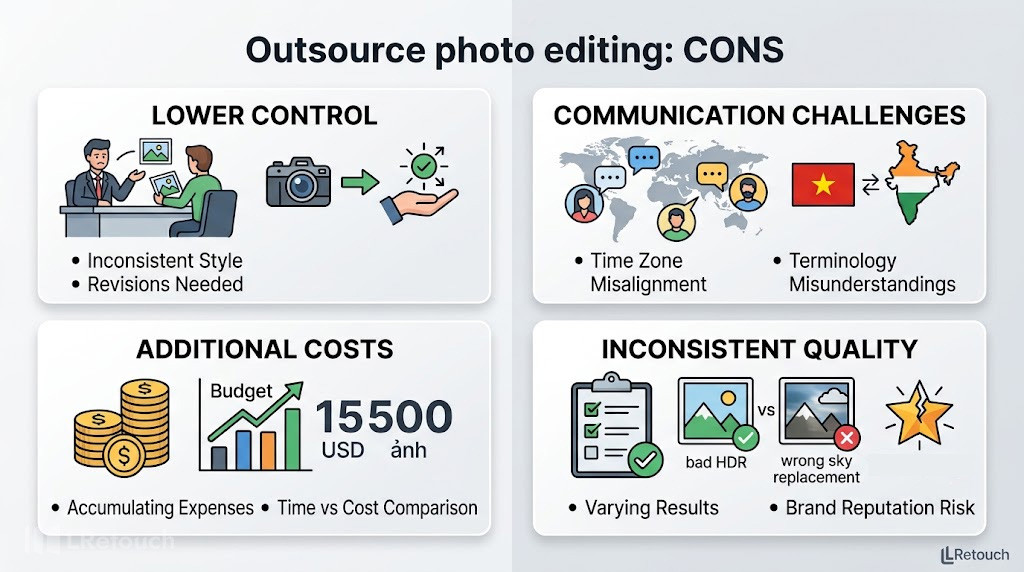
When you send your images to another editor, you give up some direct control over the post-production process. The editor may interpret your preferred style differently.
For example, you may prefer bright interiors with natural colors. An editor might produce images that look too bright or heavily processed. You may then need to request revisions.
A clear editing guide and sample images can help maintain consistency.
2. Communication Challenges
An offshore editing service may work in a different time zone or use a different communication style. This can make it harder to explain small details at first.
For example, terms such as “natural colors” or “subtle window pull” can mean different things to different editors. Clear instructions, reference images, and feedback can reduce misunderstandings.
3. Extra Costs
Outsourcing does not mean free editing. You still pay for every image or editing package. The cost can add up when you handle hundreds of photos each month.
For example, editing 500 images at $0.30 each costs $150. You should compare this expense with the time you would spend editing the same files yourself.
4. Quality May Vary
Not every editing provider delivers the same quality. Some teams may produce inconsistent results across different projects. Poor editing can affect your photography brand and client satisfaction.
Before committing, request test edits and check reviews. Choose a provider that can match your style consistently.
How to choose the right offshore editing service?
Choosing the right offshore editing service can make outsourcing easier and more reliable. Price matters, but it should not be the only factor.
A cheap service may save money at first but create extra revisions later.
When you outsource photo editing, focus on quality, turnaround time, communication, and workflow.
How to choose the right offshore editing service?
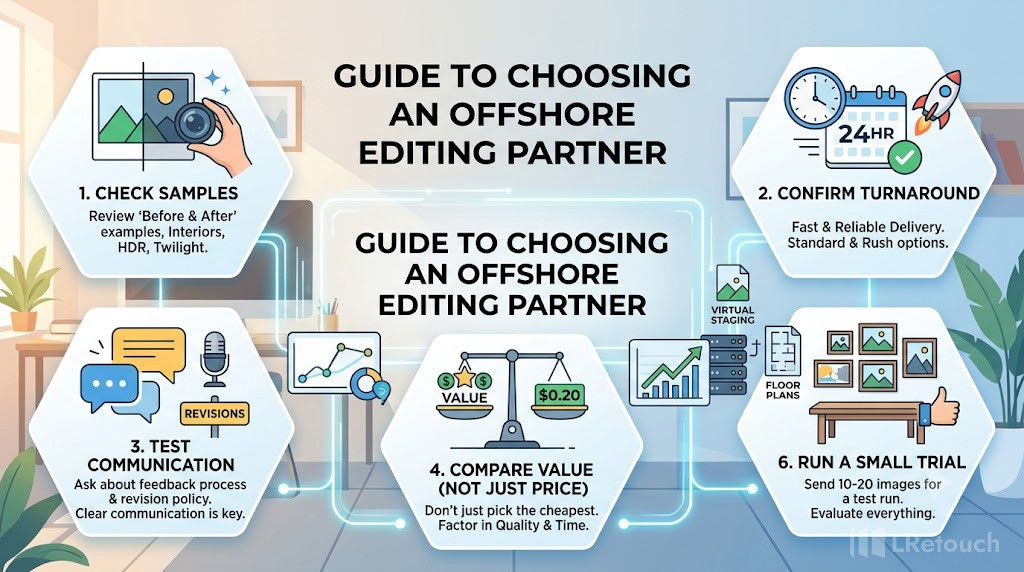
1. Check Real Estate Editing Samples
Review before-and-after samples before placing a large order. Look for experience with interiors, exteriors, HDR blending, twilight edits, and window views. The service should produce natural results that match your preferred style.
2. Confirm Turnaround Time
Ask how quickly the team delivers completed images. Many real estate photographers need photos within 24 hours. Also, check whether the provider offers rush delivery when you have a same-day listing deadline.
3. Test Communication and Revisions
Good communication prevents repeated mistakes. Ask how you can send instructions and feedback. Check the revision policy before starting. A professional team should accept clear feedback and adjust its editing process.
4. Compare Cheap vs Premium Photo Editing
Do not choose a service based only on the lowest price. Compare cheap vs premium photo editing based on quality, turnaround, revisions, and included services.
For example, a $0.20 edit may look attractive. However, if it requires several revisions, the lower price may not save you time.
5. Check Scalability
Your editing needs may increase as your business grows. Choose a provider that can handle larger batches. Some services also offer virtual staging, floor plans, and other real estate services.
6. Run a Small Trial
Start with 10–20 images before sending hundreds of files. This lets you test image quality, communication, turnaround, and file handling.
The best partner should fit your outsource photo editing workflow, not simply offer the lowest price. A reliable service can help you deliver consistent results while saving valuable production time.
Closing thoughts
Outsourcing can give real estate photographers a more flexible and scalable post-production workflow. The right service should match your style and workload while keeping costs predictable. When managed carefully, outsource photo editing can become a valuable part of a growing real estate photography business.