
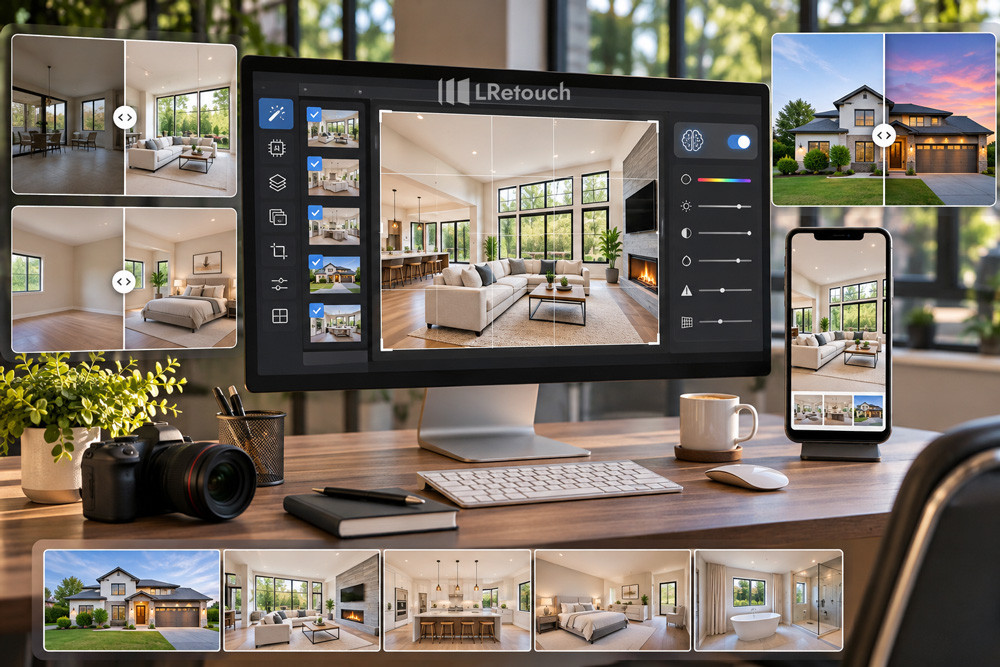
Photo editing for real estate agents is evolving with AI, mobile marketing, and realistic visual enhancements. In 2026, realtors need high-quality images to attract buyers and showcase properties effectively. Understanding these trends helps agents improve marketing, maintain visual consistency, and stand out in competitive markets.
1. AI-Powered Workflow and Batch Editing
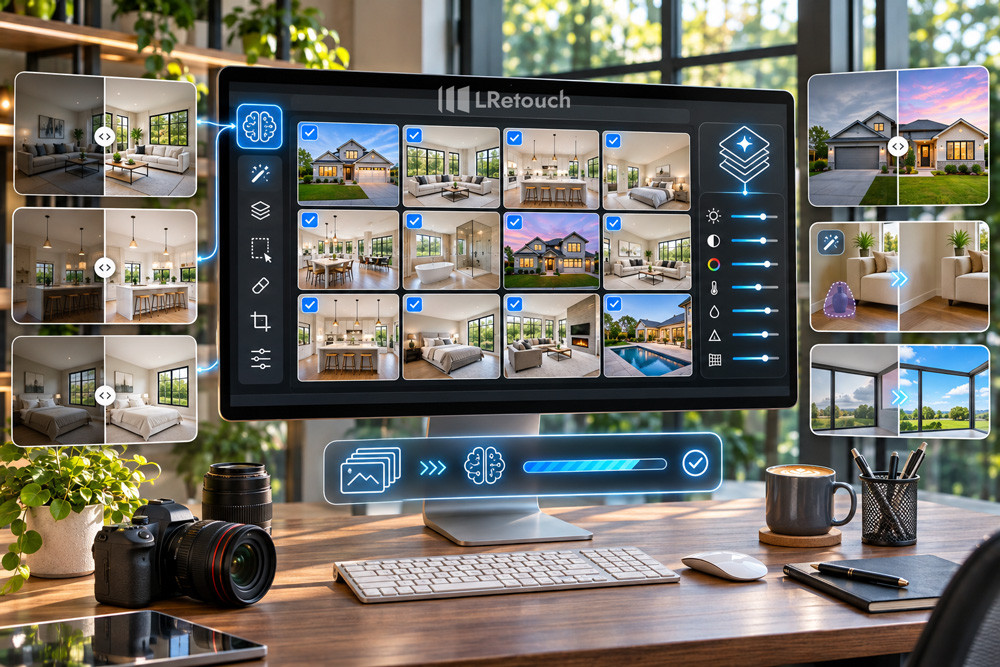
Artificial intelligence is transforming real estate photography editing. AI tools automate repetitive tasks and help editors process large image collections faster.
Automated Color and Exposure Correction
AI-powered software can adjust exposure, white balance, and color consistency. Some tools also support HDR merging and personalized editing presets.
Batch editing helps agents process multiple property photos efficiently. Editors can apply consistent settings across similar images and refine individual photos when necessary.
AI-Assisted Editing and Cleanup
AI tools can remove minor distractions and simplify image corrections. Depending on the software, editors can also adjust selected areas using automated tools.
These features help improve listing photos without excessive manual work. However, human review remains essential. Editors should check edges, reflections, textures, and architectural details before publishing.
AI-Powered Workflow and Batch Editing
2. True-to-Life Colors and Ethical Transparency
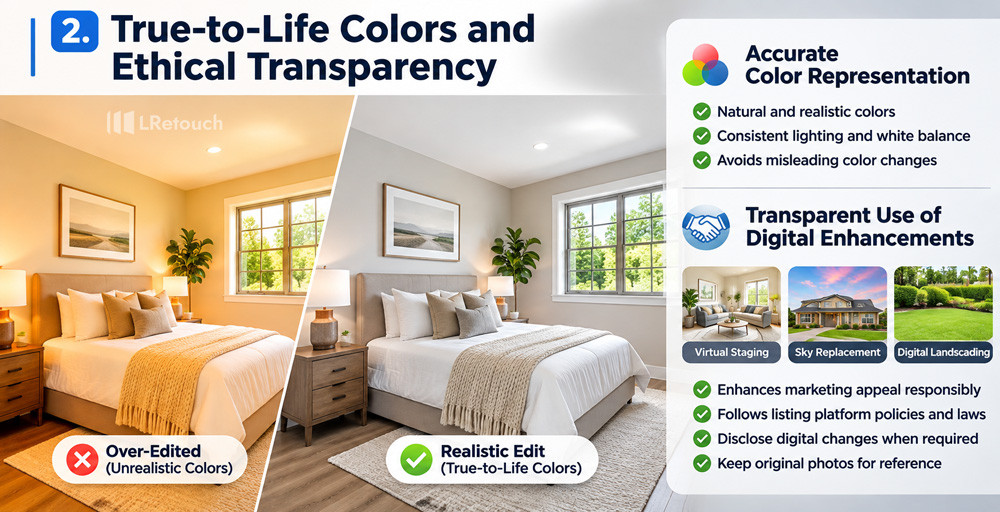
Accurate colors help buyers understand a property’s actual appearance. Professional property photo editing should enhance images without misrepresenting the property.
Accurate Color Representation
Incorrect colors can create unrealistic expectations. Overly warm editing may change the appearance of walls, floors, and furniture.
Professional editors should preserve natural colors and realistic lighting. Monitor calibration and consistent editing settings can also improve image accuracy.
Transparent Use of Digital Enhancements
Virtual staging, sky replacement, and digital landscaping can make listings more attractive. However, these edits should not misrepresent the property’s condition.
Realtors should follow applicable laws and listing platform policies for disclosure. Keeping original photos also helps distinguish actual property features from digital enhancements.
Transparency builds trust and supports informed buying decisions.
True-to-Life Colors and Ethical Transparency
3. Vertical-First and Mobile-Optimized Images
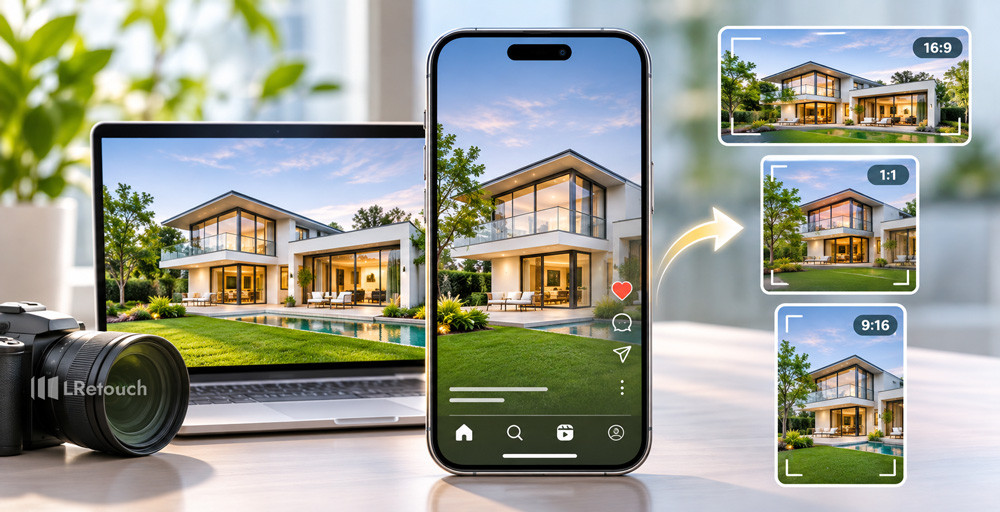
Many buyers discover properties through mobile devices and social media. Realtors increasingly need images tailored to different screen sizes and marketing channels.
Social Media-Friendly Cropping
Editors can prepare different versions for websites, Instagram, Facebook, and vertical video formats. Each crop should preserve important architectural features.
Avoid cutting off furniture, doorways, or windows. Maintain straight vertical lines and balanced compositions.
These adjustments make real estate photography editing more effective across digital platforms.
Motion Effects and Cinemagraphs
Subtle animation can help property content stand out in busy social feeds. Examples include moving clouds, flickering fireplaces, and gradual lighting transitions.
These effects should remain realistic and unobtrusive. Static images should still be available for traditional listings and platforms without motion support.
Vertical-First and Mobile-Optimized Images
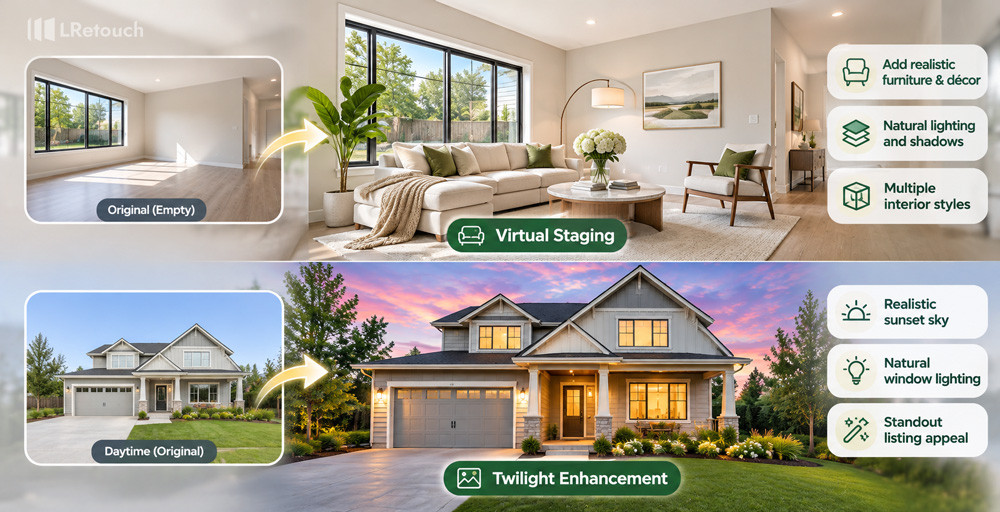
4. Hyper-Realistic Virtual Staging and Twilight Enhancements
Digital enhancements help realtors present properties more effectively. Virtual staging and twilight editing are useful options for suitable listings.
Realistic Virtual Staging
Virtual staging adds digital furniture and decor to empty rooms. It helps buyers visualize how a space could function.
Editors can create modern, minimalist, or traditional interiors. Realistic proportions, natural shadows, and suitable furniture placement are essential.
Virtual staging can also reduce the expense of physical staging. Realtors should disclose digital additions when required and retain original photos when possible.
Virtual Twilight Photography
Twilight editing transforms daytime exterior photos into evening-style images. Editors can adjust the sky and add realistic window lighting.
This technique creates distinctive marketing images without requiring an actual twilight shoot. However, the final image should remain believable. Avoid unrealistic skies, excessive glow, or misleading lighting.
Hyper-Realistic Virtual Staging and Twilight Enhancements
5. Clean Architectural Geometry and Window Pulls
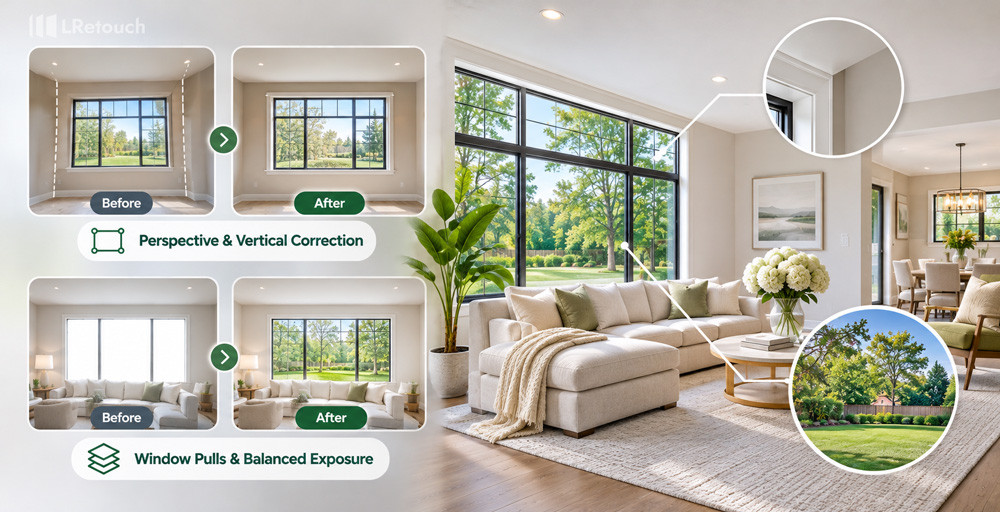
Architectural accuracy is essential for professional property photo editing. Straight lines and balanced exposure help rooms look natural.
Perspective and Vertical Correction
Wide-angle lenses can make walls and door frames appear tilted. Perspective correction helps restore straight lines and balanced proportions.
Editors should avoid stretching rooms unnaturally. Correct framing and distortion help preserve the property’s actual dimensions.
Window Pulls and Flambient Editing
Bright windows often lose outdoor details in interior photos. Window pulls combine exposures to balance exterior views and interior lighting.
Flambient editing combines flash and ambient exposures. This technique helps produce balanced colors and natural-looking interiors.
Both methods require careful blending and color correction. The goal is to reveal important details without making images look artificial.
Clean Architectural Geometry and Window Pulls
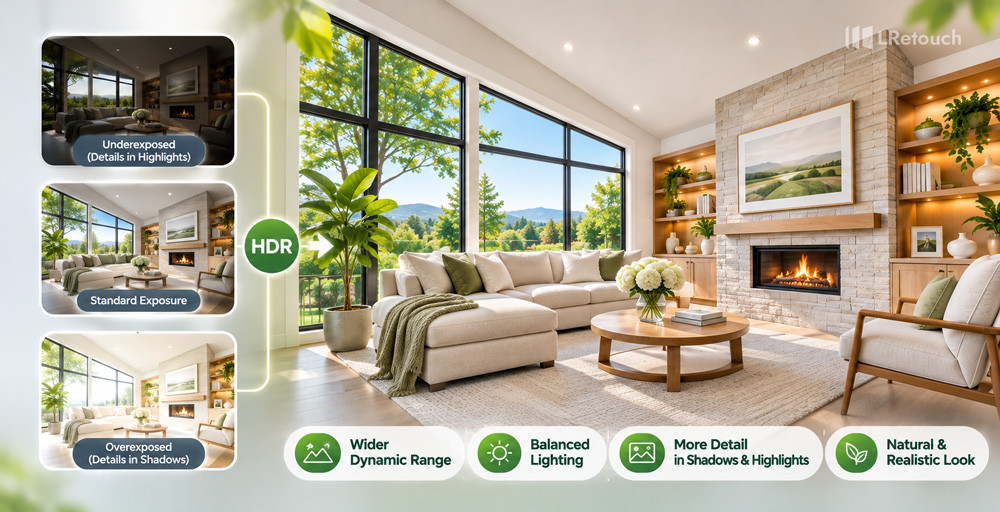
6. Natural HDR Editing and Balanced Lighting
HDR editing combines multiple exposures to capture a wider brightness range. It helps reveal details in shadows and highlights.
This technique is particularly useful for rooms with large windows or strong sunlight. However, excessive processing can create halos and unnatural colors.
Professional editors should preserve realistic contrast and natural lighting. Balanced results help buyers understand the property’s atmosphere and layout.
Natural HDR Editing and Balanced Lighting
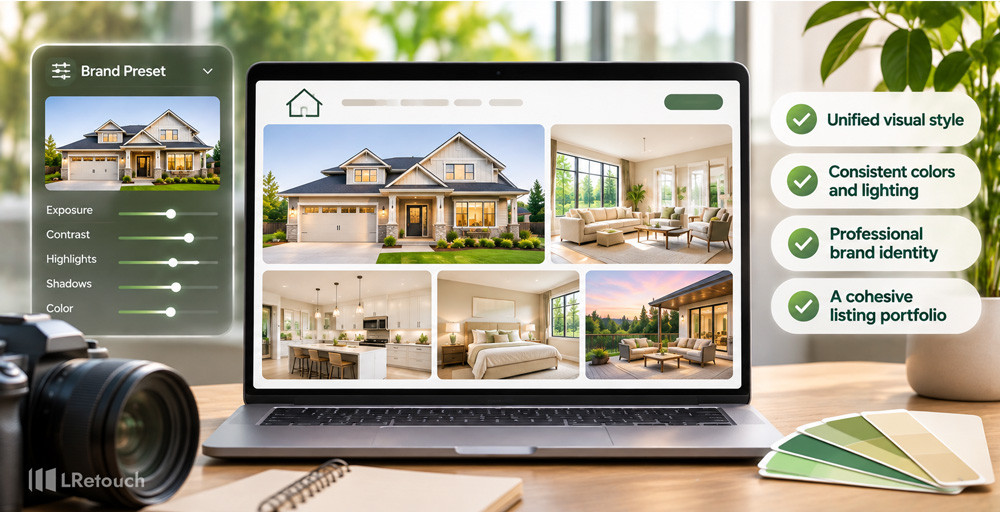
7. Consistent Branding Across Property Listings
Consistent editing helps realtors build a recognizable brand. Property galleries should share similar color balance, brightness, and visual style.
Editors can create presets for recurring lighting conditions. Standard export settings also help maintain consistent image quality across websites and social media.
However, every photo requires individual attention. Different lighting conditions may need different adjustments.
A consistent visual identity makes listing portfolios look more professional and organized.
Consistent Branding Across Property Listings
How To Choose The Best Photo Editing For Real Estate Agents
Choosing the best photo editor for real estate depends on image volume, budget, and editing requirements. Realtors can work with freelancers, professional editing companies, or in-house teams.
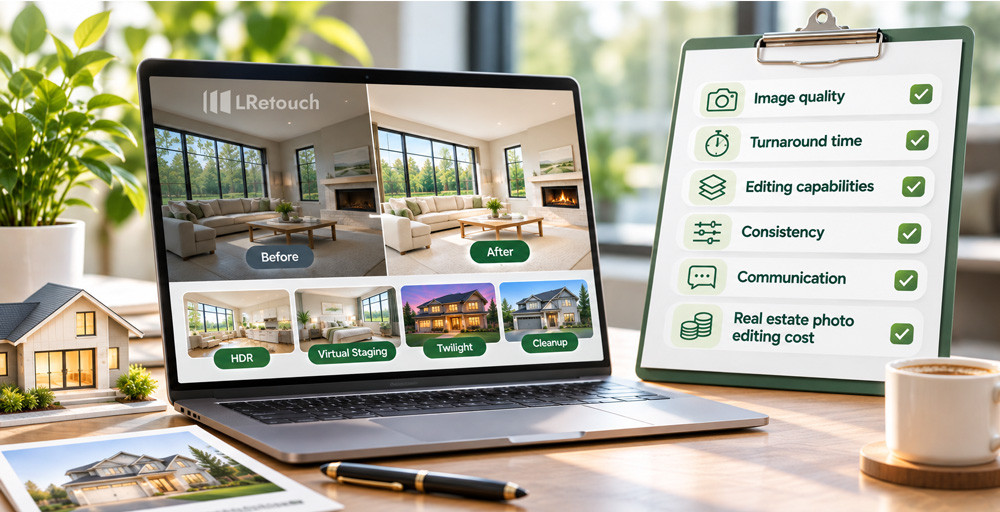
Consider these factors when evaluating your options:
- Image quality: Look for natural colors, balanced exposure, and accurate architectural lines.
- Turnaround time: Choose a service that meets your listing schedule.
- Editing capabilities: Check support for HDR blending, virtual staging, and advanced retouching.
- Consistency: Ensure the editor can maintain a uniform style across property galleries.
- Communication: Choose a provider that understands your instructions and revision requirements.
- Real estate photo editing cost: Compare pricing, included services, revision policies, and delivery times.
How To Choose The Best Photo Editing For Real Estate Agents
The lowest price does not always provide the best value. Evaluate sample images and compare the final results against your marketing goals.
Conclusion
Modern photo editing for real estate agents combines AI efficiency, accurate colors, virtual staging, and mobile optimization. These trends help realtors improve property marketing while maintaining realistic images. Choosing the right editing workflow can improve listing quality, strengthen brand consistency, and support better buyer engagement.