
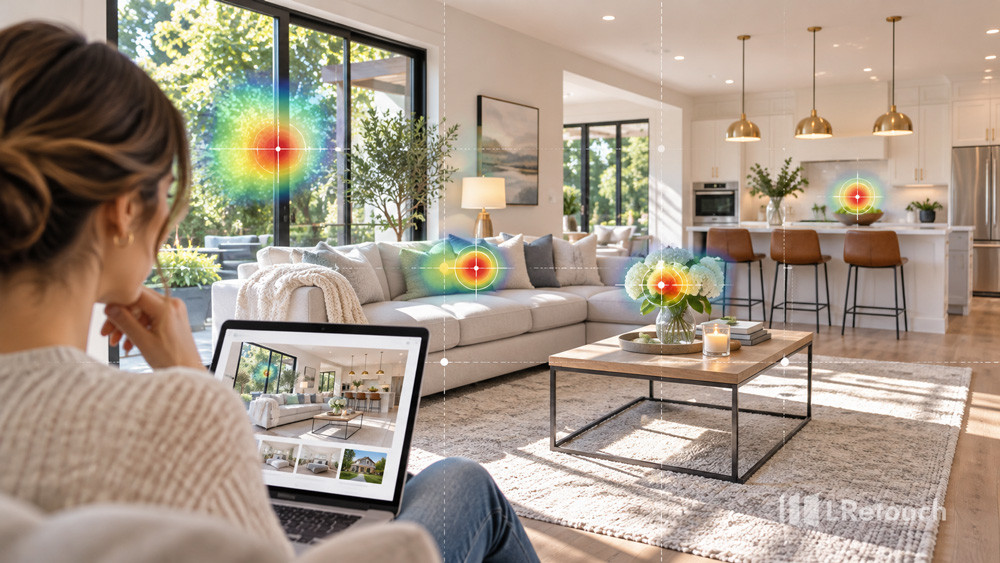
The psychology of real estate photos reveals how visual elements influence buyers’ emotions and property perceptions. Lighting, colors, staging, and composition all shape first impressions. Read this post to discover how these factors affect buyer behavior and how to create listing photos that attract more attention.
Key takeaway
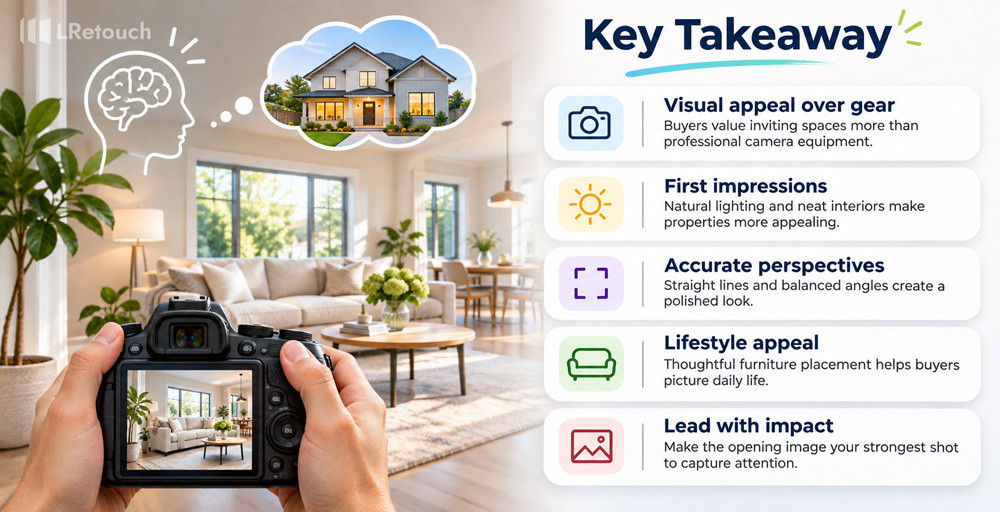
- Visual appeal over gear: Buyers value inviting spaces more than professional camera equipment.
- First impressions: Natural lighting and neat interiors make properties more appealing.
- Accurate perspectives: Straight lines and balanced angles create a polished look.
- Lifestyle appeal: Thoughtful furniture placement helps buyers picture daily life.
- Lead with impact: Make the opening image your strongest shot to capture attention.
Psychology of real estate photos: 6 Key Rules
The psychology of real estate photos influences how buyers perceive a property. Listing images shape first impressions, trigger emotions, and help buyers imagine living in a home. Bright, well-composed photos create interest, while dark or cluttered images can discourage potential buyers. Understanding these visual cues helps agents create more appealing listings.
1. First Impressions Form Within Seconds
Buyers often make quick judgments when browsing property listings. The first image has only a short window to capture their attention. Brightness, sharpness, composition, and overall presentation influence this initial response.
A clean living room with natural light can suggest comfort and good maintenance. In contrast, blurry images or dark corners may make a property appear neglected.
For example, consider two listings with similar layouts and prices. One features bright, professionally edited photos. The other uses poorly exposed images with distracting objects. Buyers may perceive the first property as more appealing before reading either description.
This makes the opening image especially important. Choose a strong exterior, inviting living room, or attractive kitchen as the hero photo.
2. Emotional Connection Helps Buyers Imagine Living There
Buyers do not simply purchase rooms and square footage. They also imagine the lifestyle a property can offer.
A welcoming living room may suggest relaxing evenings with family. A bright kitchen can evoke shared meals and social gatherings. A peaceful bedroom can communicate comfort and privacy.
These emotional responses help buyers connect with a property before visiting it.
To create this connection:
- Use natural light to make rooms feel warm and inviting.
- Arrange furniture to show practical living spaces.
- Remove personal belongings that distract from the home.
- Include lifestyle details without overcrowding the scene.
Thoughtful staging helps buyers picture themselves in the property. The goal is to make each room feel usable, comfortable, and realistic.

Emotional Connection Helps Buyers Imagine Living There
3. Clean Spaces Reduce Cognitive Load
Clutter makes it harder for buyers to process visual information. Too many objects compete for attention and hide important property features.
This creates additional mental effort. Buyers must look past personal belongings to understand the room’s size, layout, and potential.
Decluttering helps reduce this distraction. Clear countertops, organized shelves, and simple furniture arrangements allow buyers to focus on the property itself.
For example, removing excess chairs from a small dining area can reveal more floor space. Clearing kitchen countertops can make storage and work surfaces easier to evaluate.
When considering what buyers look for in listing photos, remember that visual clarity matters. Buyers want to understand the space without searching through unnecessary details.
4. Color and Lighting Influence Emotions
Color and lighting can change how buyers feel about a property.
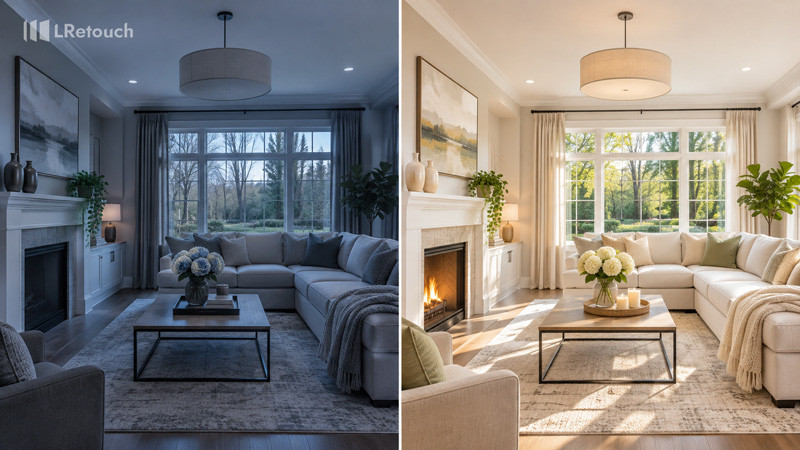
Natural daylight often creates a sense of openness and freshness. Warm lighting can make living spaces feel comfortable. Neutral colors also help create a clean and balanced appearance.
However, inconsistent white balance can make interiors look unnatural. Strong yellow, blue, or green color casts may reduce visual appeal.
Professional photo editing should preserve realistic colors while improving exposure and brightness.
For example, correcting a yellow color cast can make white walls look cleaner. Balancing window exposure can also reveal outdoor views without making the interior too dark.
The objective is not to change the property’s appearance. It is to present the space accurately and attractively.
Color and Lighting Influence Emotions
5. Visual Hierarchy Guides Buyers’ Attention
The human eye naturally looks for structure, balance, and visual order. This explains the importance of visual hierarchy in real estate marketing.
A well-composed image directs attention toward the most important features. Leading lines, balanced furniture placement, and straight vertical edges help viewers understand the room.
For instance, a hallway photograph can use floorboards and wall lines to guide the eye toward the living area. A kitchen image can emphasize the island, countertops, and overall layout.
Camera height also affects spatial perception. A suitable wide-angle lens can show more of a room while maintaining realistic proportions. Excessive stretching, however, can make furniture and walls look distorted.
Straight vertical lines and natural proportions help create a professional presentation.
6. Eye Tracking Reveals How Buyers Browse Listings
The concept of eye tracking home listings helps explain how people interact with property images.
Eye-tracking technology records where viewers look, how long they focus on specific areas, and how their attention moves across a screen.
In real estate marketing, useful areas to examine include:
- The first listing image and its main subject.
- Bright windows and distinctive architectural features.
- Kitchens, living rooms, and other key spaces.
- Image thumbnails and visual consistency across the gallery.
There is no universal attention percentage that applies to every listing. Results depend on the platform, audience, image quality, and viewing conditions.
Still, the practical lesson is clear: prioritize important features and avoid distracting visual elements.

Eye Tracking Reveals How Buyers Browse Listings
7. Professional Editing Strengthens Visual Trust
Editing quality influences how buyers perceive the entire listing. Poor exposure, distorted perspectives, and inconsistent colors can make a property look less professionally presented.
A reliable best real estate photo editing service can help agents maintain consistent image quality across multiple listings.
Common editing improvements include:
- Exposure and brightness correction.
- White balance and color adjustments.
- Lens distortion and perspective correction.
- Window view enhancement.
- Object removal and image cleanup.
Agents managing large photo volumes can also consider affordable real estate photo editing solutions. Outsourcing can help reduce editing workloads while maintaining a consistent visual standard.
However, editing should always represent the property honestly. Avoid adding features or changing structural details that do not exist.
The bottom line
The psychology of real estate photos explains why strong listing images influence more than visual appeal. Lighting, composition, color, and staging shape buyers’ first impressions and emotional responses. By reducing clutter, guiding visual attention, and presenting realistic spaces, agents can create more engaging listings and encourage potential buyers to take the next step.