
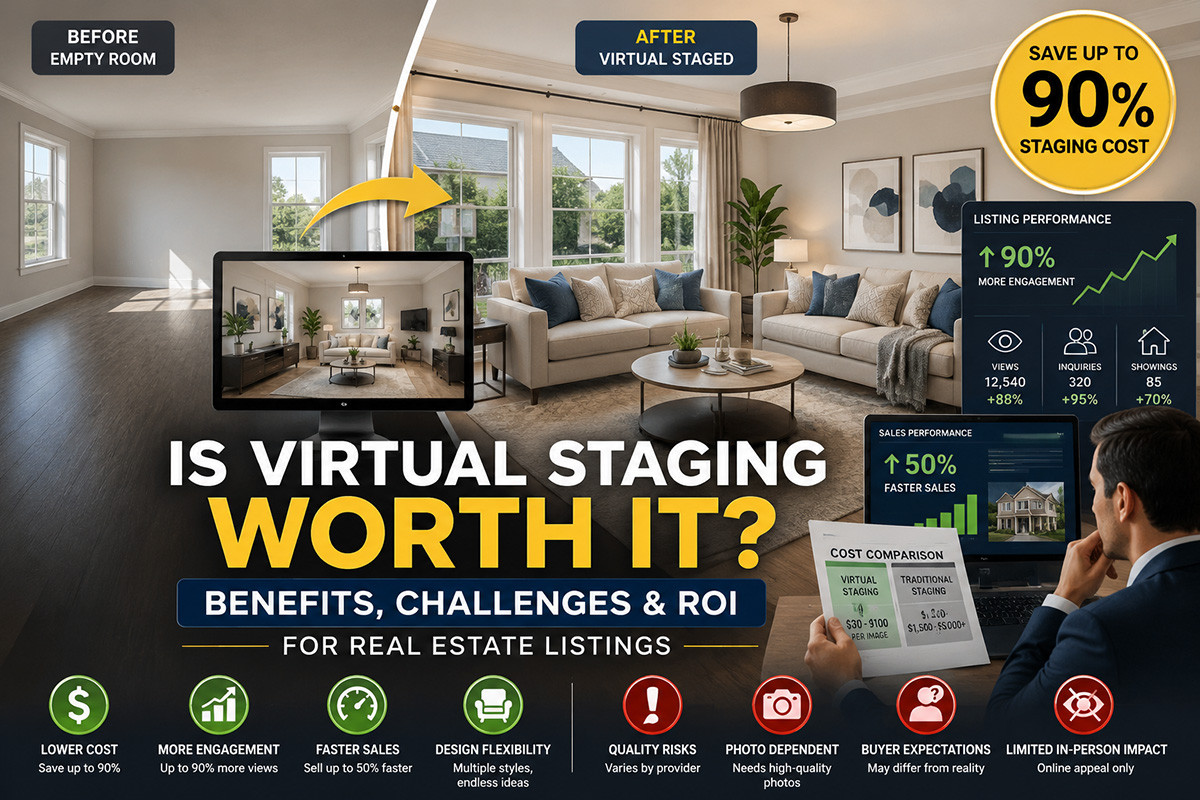
Is virtual staging worth it? This question is becoming essential in today’s real estate market as digital presentation plays a major role in attracting buyers online. Virtual staging offers a faster, more cost-effective alternative to traditional staging, making it a popular choice for modern listings.
About virtual staging
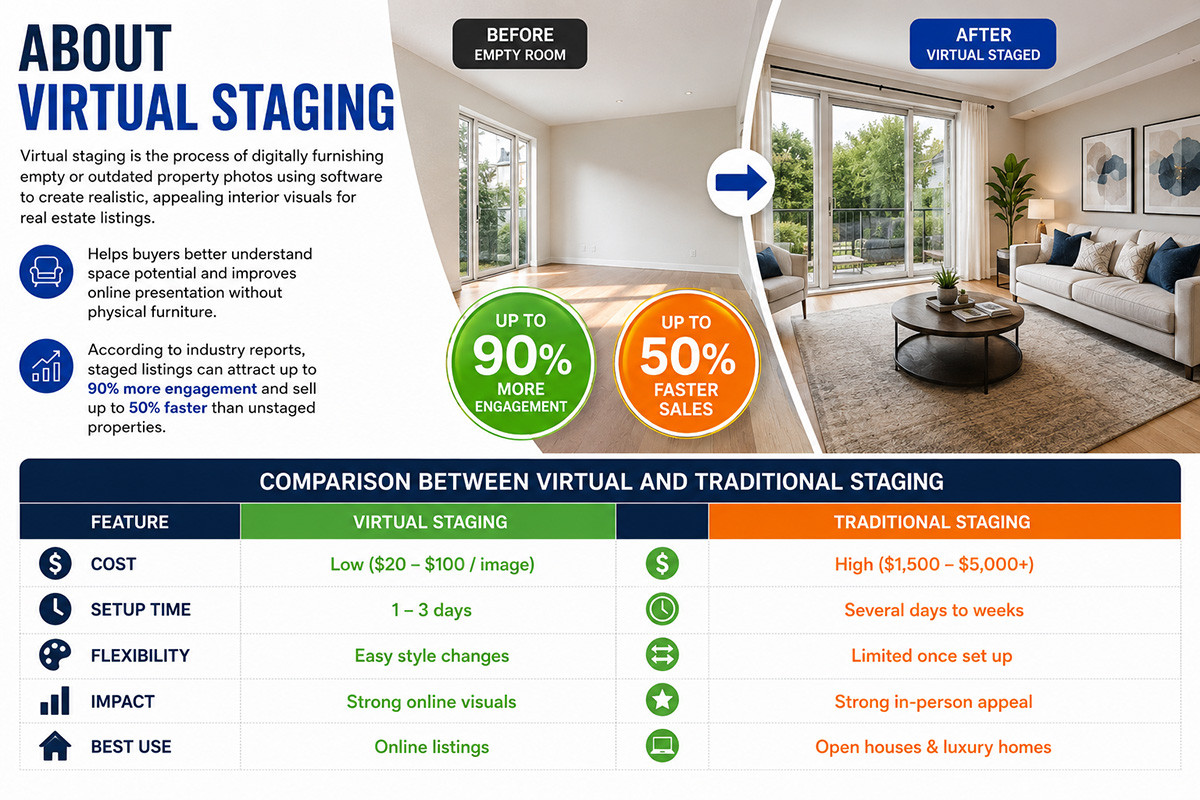
Virtual staging is the process of digitally furnishing empty or outdated property photos using software to create realistic, appealing interior visuals for real estate listings.
It helps buyers better understand space potential and improves online presentation without physical furniture.
According to industry reports, staged listings can attract up to 90% more engagement and sell up to 50% faster than unstaged properties.
To better understand the differences, here is a clear comparison between virtual staging and traditional staging based on key factors such as cost, time, and overall effectiveness in real estate marketing.
About virtual staging
Comparison between Virtual and Traditional Staging
| Feature | Virtual Staging | Traditional Staging |
| Cost | Low ($20–$100/image) | High ($1,500–$5,000+) |
| Setup Time | 1–3 days | Several days to weeks |
| Flexibility | Easy style changes | Limited once set up |
| Impact | Strong online visuals | Strong in-person appeal |
| Best Use | Online listings | Open houses & luxury homes |
Is virtual staging worth it?
When evaluating is virtual staging worth it, the answer often depends on how effectively it supports marketing goals, reduces costs, and improves buyer engagement.
Virtual staging has become a key tool in modern real estate marketing visuals, helping agents present properties most appealingly without the expense and limitations of physical furniture.
1. Creative Design Flexibility
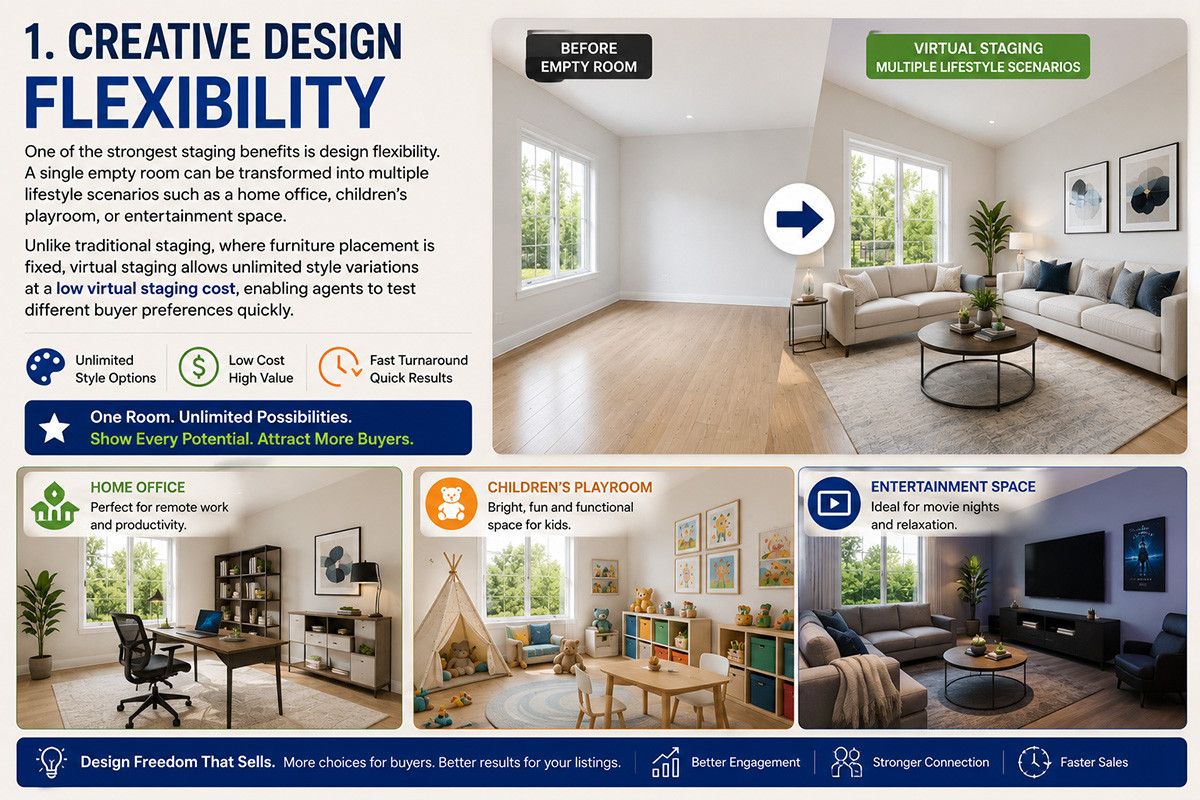
One of the strongest staging benefits is design flexibility. A single empty room can be transformed into multiple lifestyle scenarios such as a home office, children’s playroom, or entertainment space.
Unlike traditional staging, where furniture placement is fixed, virtual staging allows unlimited style variations at a low virtual staging cost, enabling agents to test different buyer preferences quickly.
Creative Design Flexibility
2. Stronger buyer attraction and competition advantage
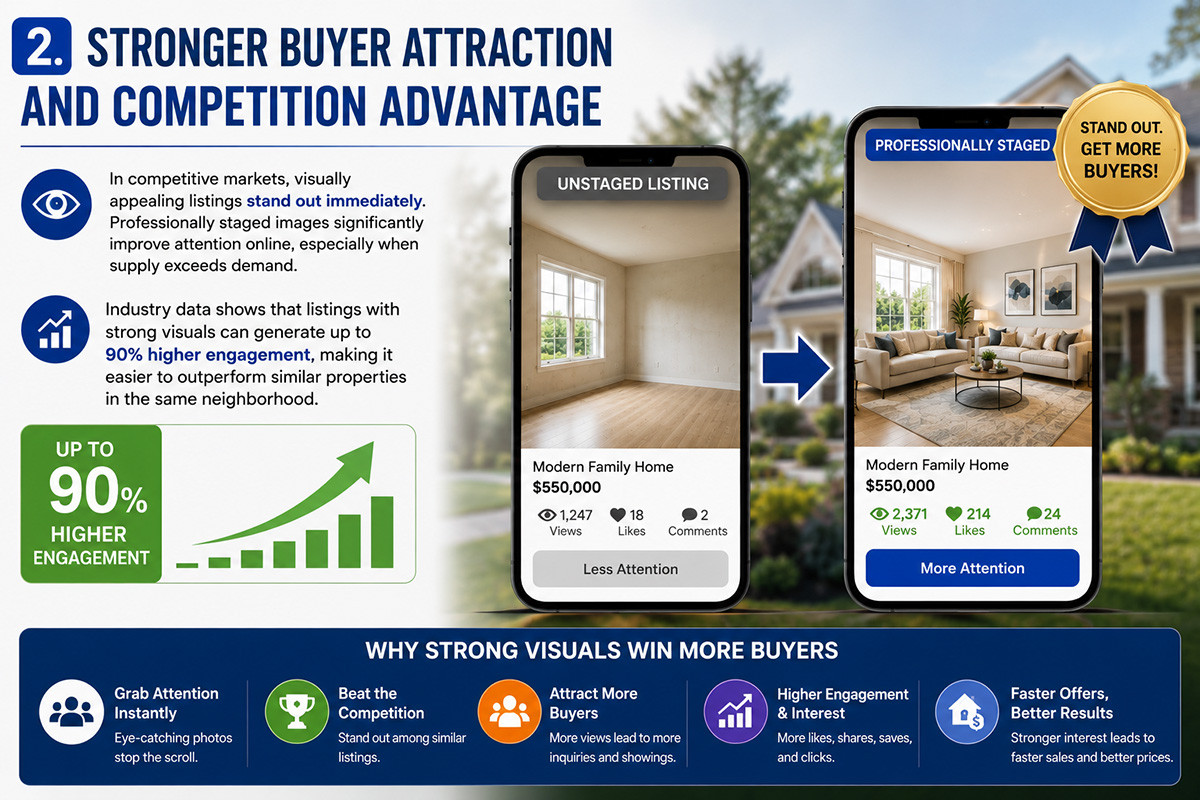
In competitive markets, visually appealing listings stand out immediately. Professionally staged images significantly improve attention online, especially when supply exceeds demand.
Industry data shows that listings with strong visuals can generate up to 90% higher engagement, making it easier to outperform similar properties in the same neighborhood.
Stronger buyer attraction and competition advantage
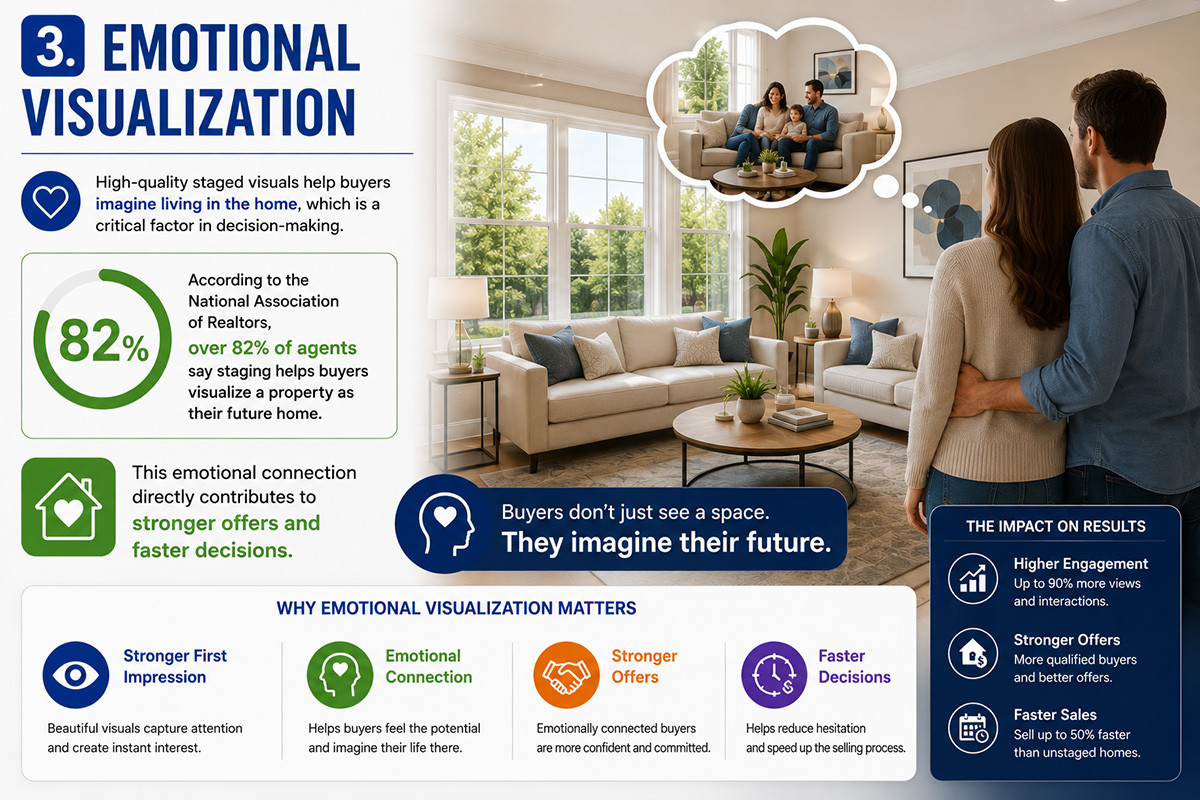
3. Emotional Visualization
High-quality staged visuals help buyers imagine living in the home, which is a critical factor in decision-making.
According to the National Association of Realtors, over 82% of agents say staging helps buyers visualize a property as their future home. This emotional connection directly contributes to stronger offers and faster decisions.
Emotional Visualization
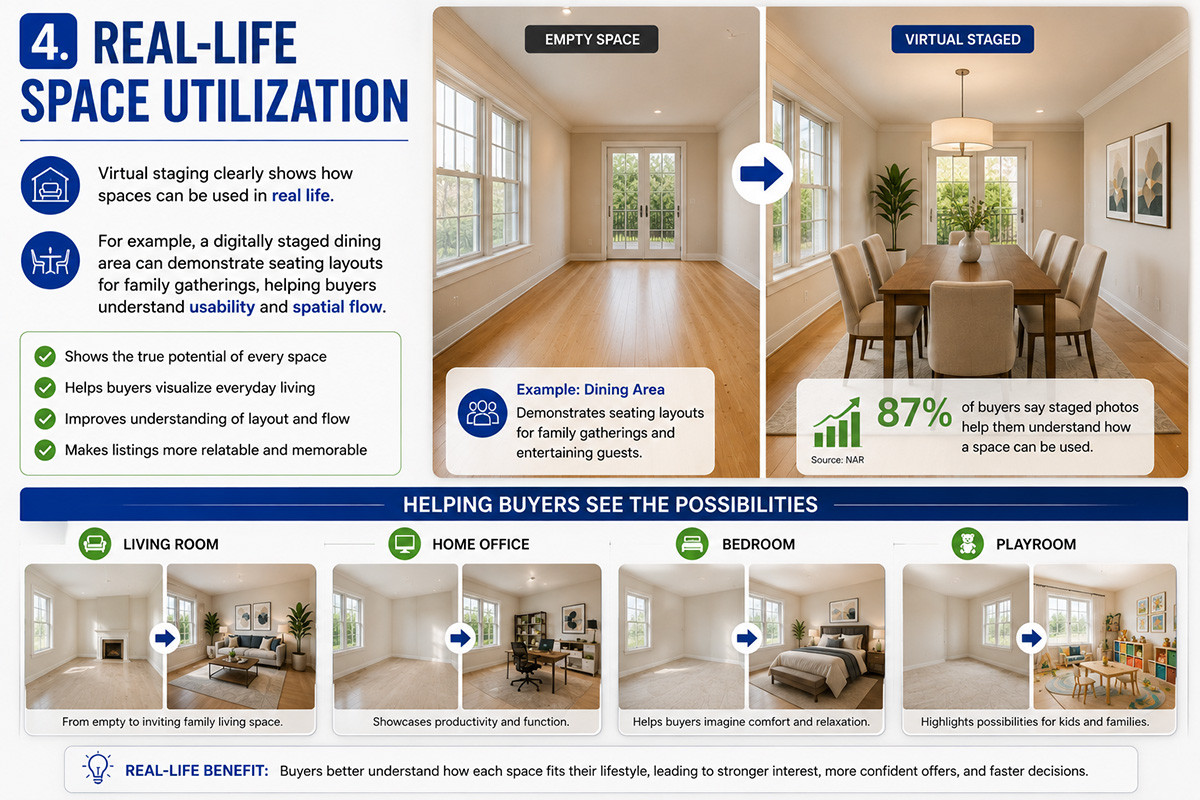
4. Real-Life Space Utilization
Virtual staging clearly shows how spaces can be used in real life.
For example, a digitally staged dining area can demonstrate seating layouts for family gatherings, helping buyers understand usability and spatial flow.
Real-Life Space Utilization
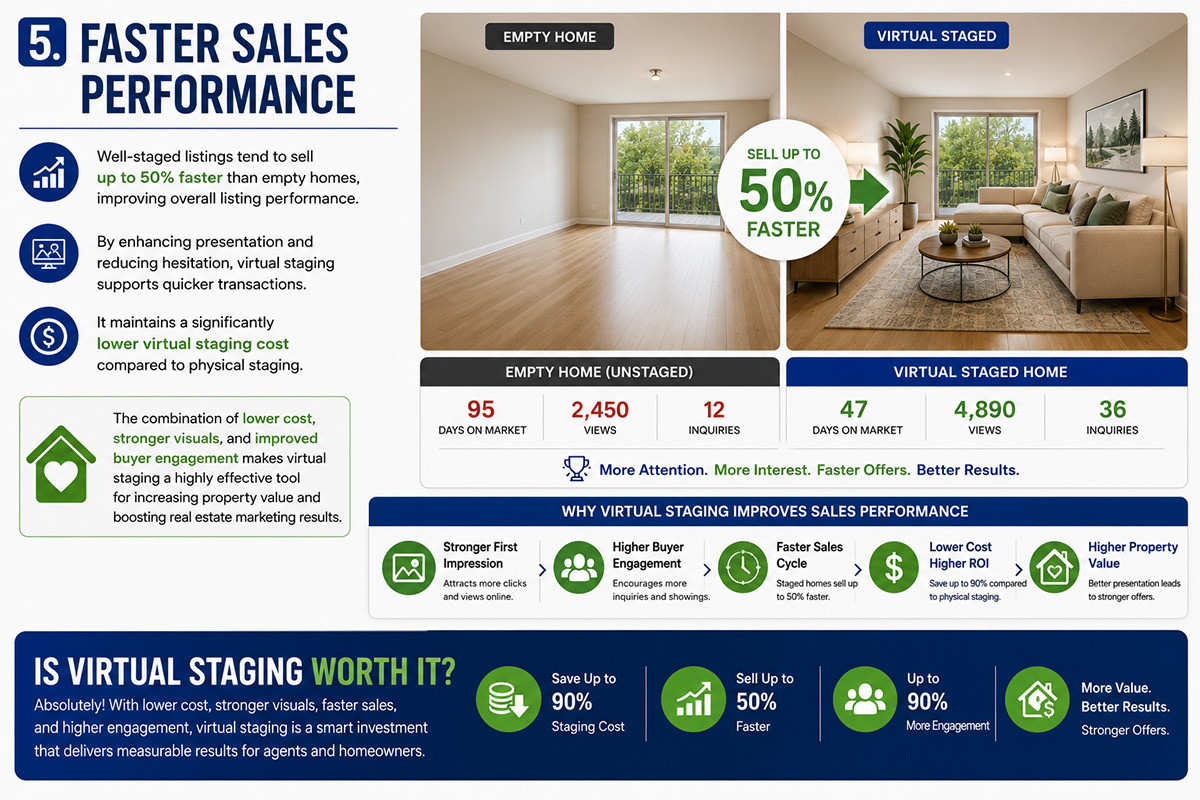
5. Faster Sales Performance
Well-staged listings tend to sell up to 50% faster than empty homes, improving overall listing performance.
By enhancing presentation and reducing hesitation, virtual staging supports quicker transactions while maintaining a significantly lower virtual staging cost compared to physical staging.
Overall, when asking is virtual staging worth it, the combination of lower cost, stronger visuals, and improved buyer engagement makes it a highly effective tool for increasing property value and boosting real estate marketing results.
Faster Sales Performance
Challenge of virtual staging
When considering is virtual staging worth it, it is important to understand that while it offers strong marketing advantages, several challenges can impact staging ROI and overall listing performance.
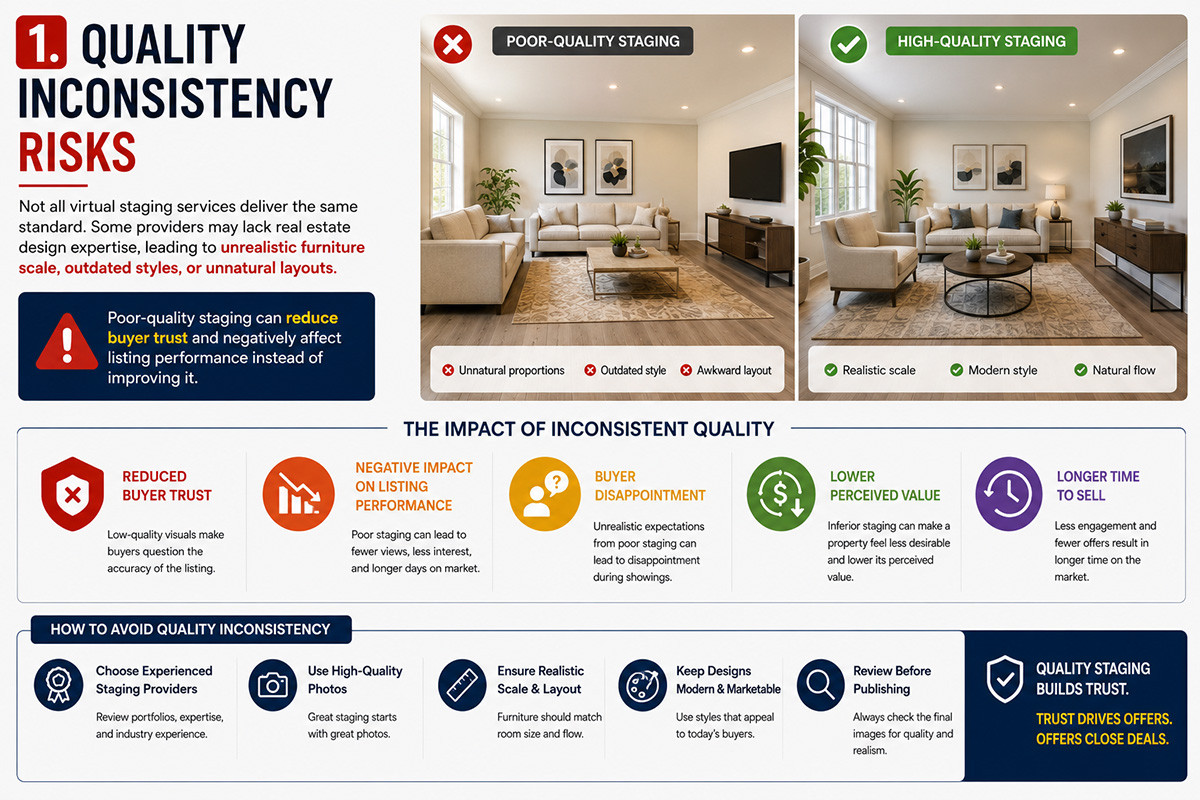
1. Quality Inconsistency Risks
Not all virtual staging services deliver the same standard. Some providers may lack real estate design expertise, leading to unrealistic furniture scale, outdated styles, or unnatural layouts.
Poor-quality staging can reduce buyer trust and negatively affect listing performance instead of improving it.
Quality Inconsistency Risks
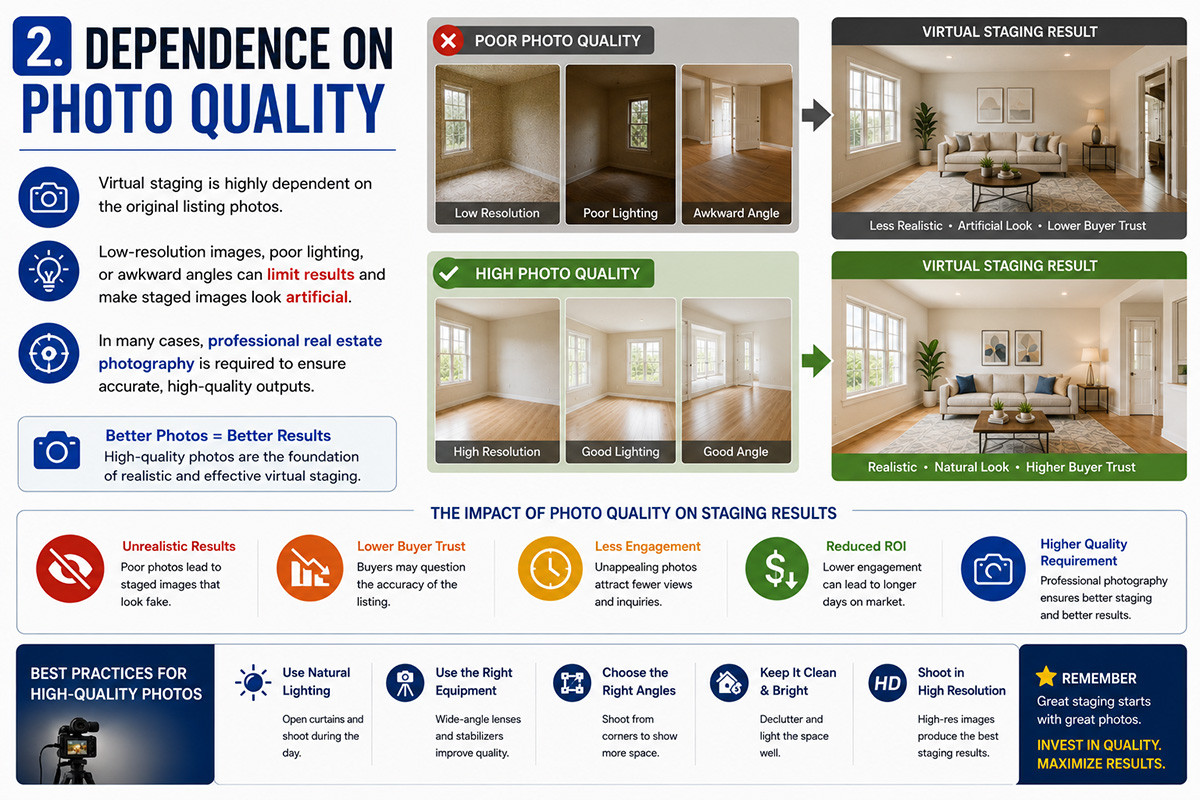
2. Dependence on photo quality
Virtual staging is highly dependent on the original listing photos. Low-resolution images, poor lighting, or awkward angles can limit results and make staged images look artificial.
In many cases, professional real estate photography is required to ensure accurate, high-quality outputs.
Dependence on photo quality
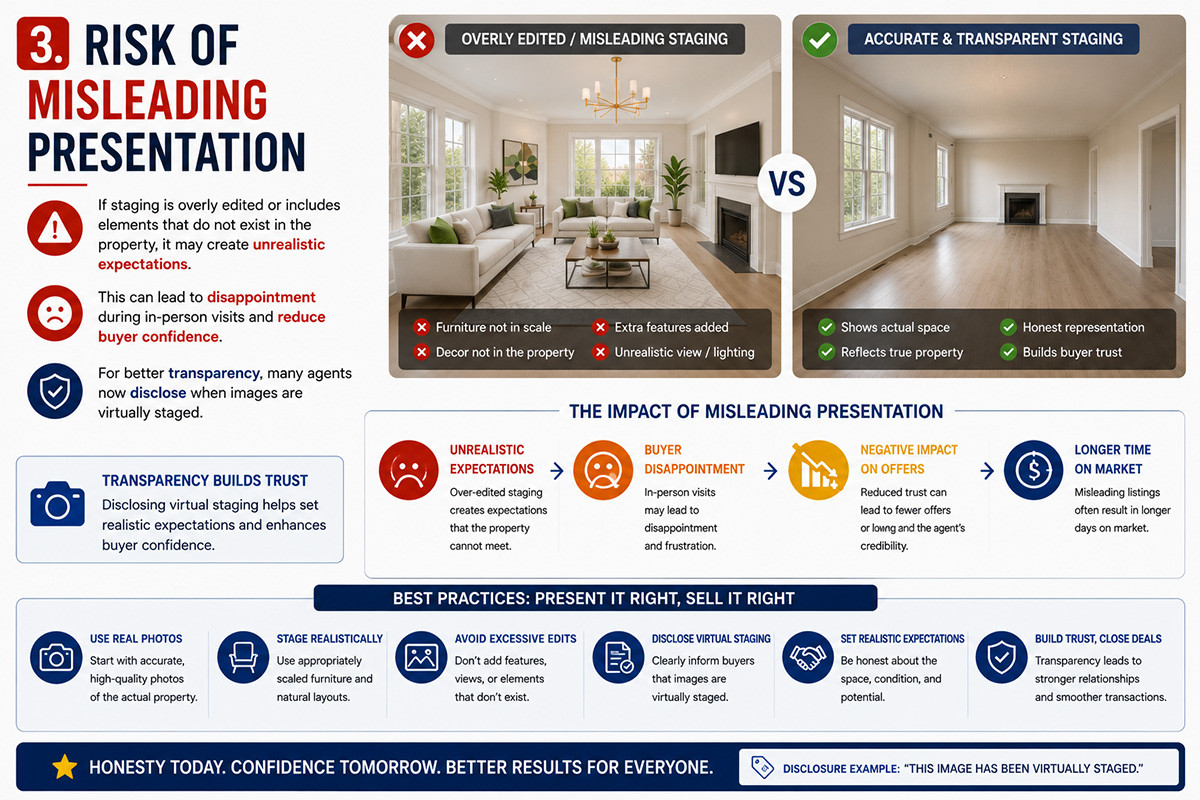
3. Risk of misleading presentation
If staging is overly edited or includes elements that do not exist in the property, it may create unrealistic expectations.
This can lead to disappointment during in-person visits and reduce buyer confidence.
For better transparency, many agents now disclose when images are virtually staged.
Risk of misleading presentation
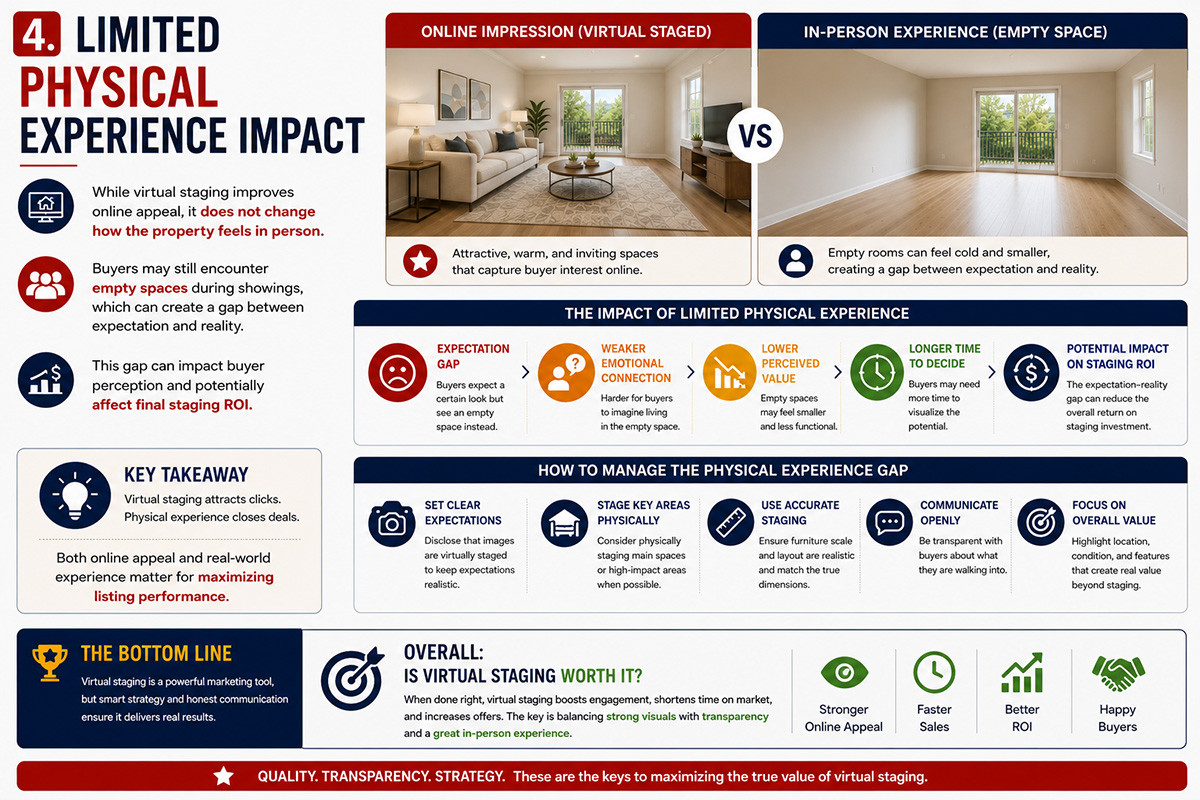
4. Limited physical experience impact
While virtual staging improves online appeal, it does not change how the property feels in person.
Buyers may still encounter empty spaces during showings, which can create a gap between expectation and reality, potentially affecting final staging ROI.
Overall, these challenges highlight why agents must carefully evaluate quality and strategy when deciding is virtual staging worth it for maximizing listing performance.
Limited physical experience impact
Best practices for virtual staging in real estate
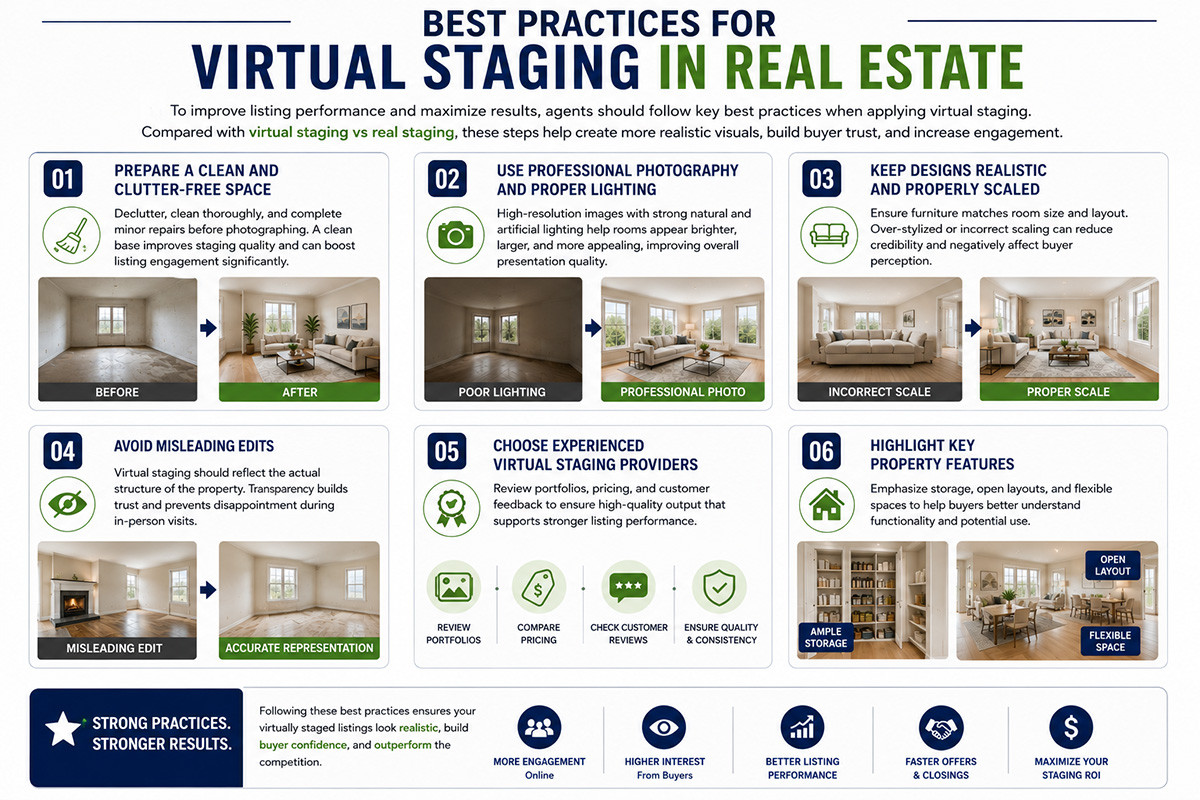
To improve listing performance and maximize results, agents should follow key best practices when applying virtual staging.
Compared with virtual staging vs real staging, these steps help create more realistic visuals, build buyer trust, and increase engagement.
- Prepare a clean and clutter-free space
Declutter, clean thoroughly, and complete minor repairs before photographing. A clean base improves staging quality and can boost listing engagement significantly.
- Use professional photography and proper lighting
High-resolution images with strong natural and artificial lighting help rooms appear brighter, larger, and more appealing, improving overall presentation quality.
- Keep designs realistic and properly scaled
Ensure furniture matches room size and layout. Over-stylized or incorrect scaling can reduce credibility and negatively affect buyer perception.
- Avoid misleading edits
Virtual staging should reflect the actual structure of the property. Transparency builds trust and prevents disappointment during in-person visits.
- Choose experienced virtual staging providers
Review portfolios, pricing, and customer feedback to ensure high-quality output that supports stronger listing performance.
- Highlight key property features
Emphasize storage, open layouts, and flexible spaces to help buyers better understand functionality and potential use.
Best practices for virtual staging in real estate
The bottom line
Virtual staging can significantly improve listing performance, enhance buyer engagement, and reduce marketing costs when used correctly. However, its value depends on property type, presentation quality, and overall strategy. So, is virtual staging worth it? For most modern real estate listings, the answer is yes.