
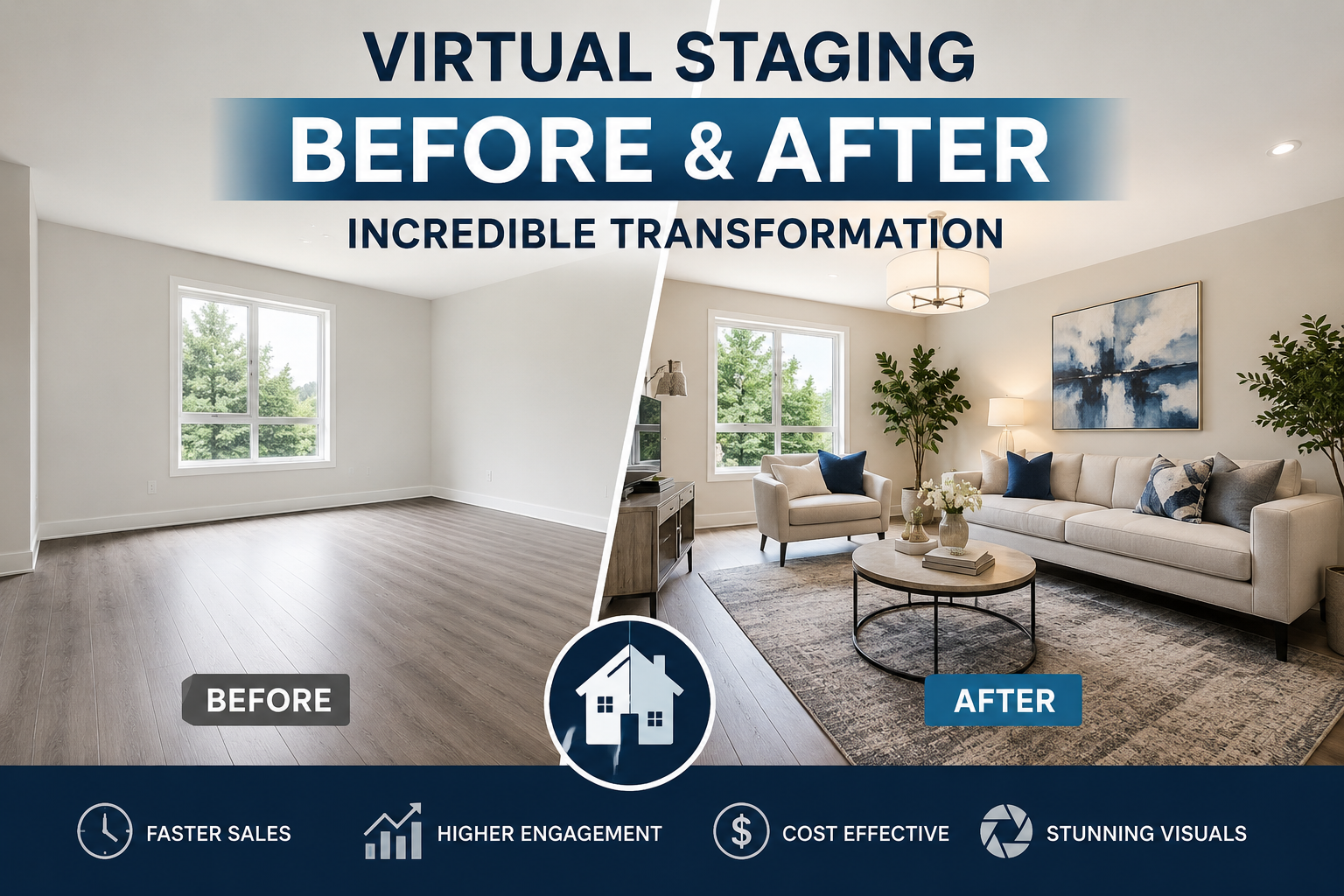
Virtual staging before and after shows how empty, outdated, or cluttered spaces can be transformed into visually appealing, fully furnished homes using digital design. It helps buyers better imagine themselves living in the property and improves overall listing presentation. This technique is widely used to attract more attention and support faster home sales at better prices.
About virtual staging
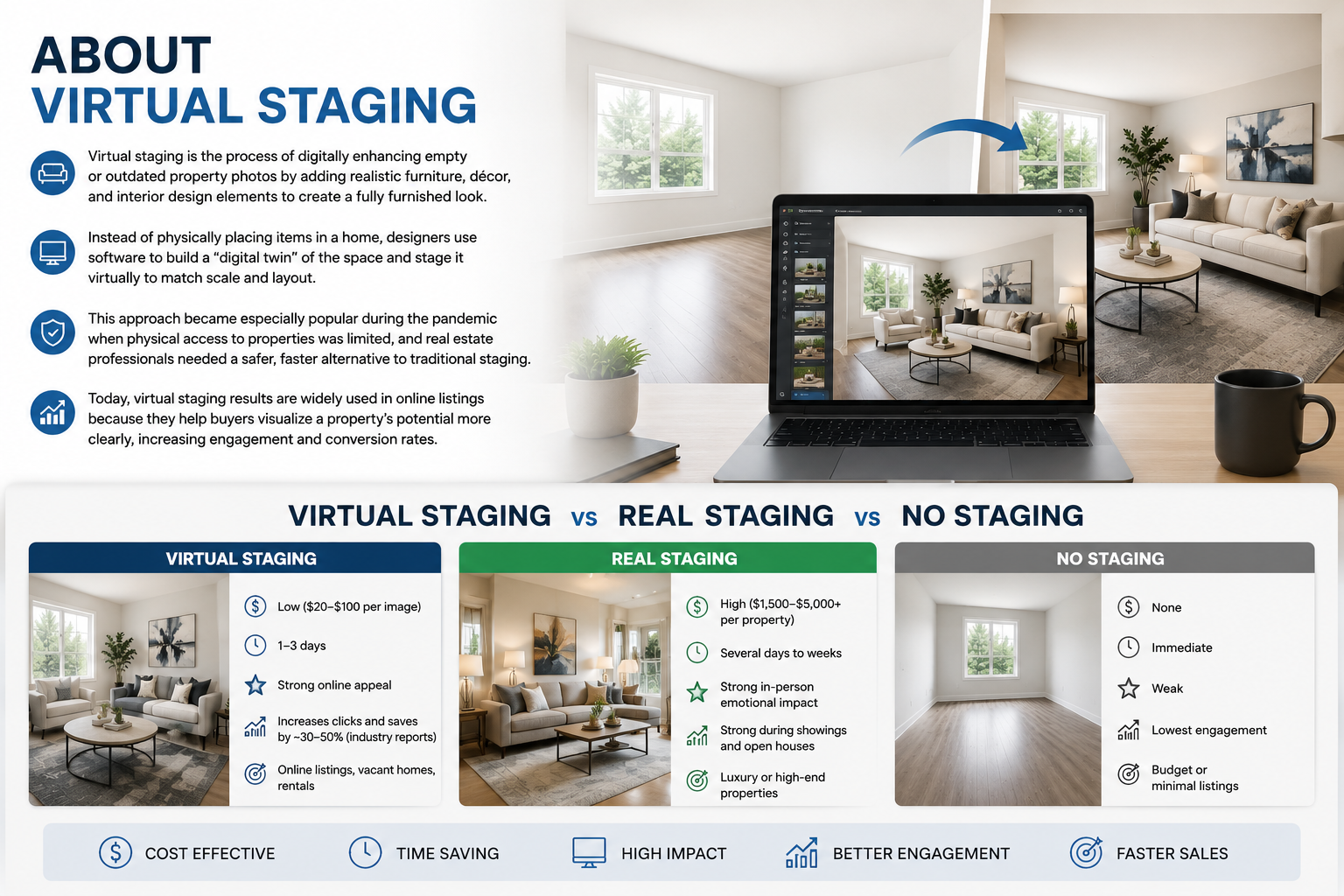
Virtual staging is the process of digitally enhancing empty or outdated property photos by adding realistic furniture, décor, and interior design elements to create a fully furnished look.
Instead of physically placing items in a home, designers use software to build a “digital twin” of the space and stage it virtually to match scale and layout.
About virtual staging
This approach became especially popular during the pandemic when physical access to properties was limited, and real estate professionals needed a safer, faster alternative to traditional staging.
Today, virtual staging results are widely used in online listings because they help buyers visualize a property’s potential more clearly, increasing engagement and conversion rates.
Virtual Staging vs Real Staging vs No Staging
| Feature | Virtual Staging | Real Staging | No Staging |
| Cost | Low ($20–$100 per image) | High ($1,500–$5,000+ per property) | None |
| Setup Time | 1–3 days | Several days to weeks | Immediate |
| Visual Impact | Strong online appeal | Strong in-person emotional impact | Weak |
| Buyer Engagement | Increases clicks and saves by ~30–50% (industry reports) | Strong during showings and open houses | Lowest engagement |
| Best Use Case | Online listings, vacant homes, rentals | Luxury or high-end properties | Budget or minimal listings |
By combining affordability and speed, virtual staging has become a key marketing tool in modern real estate strategies.
Benefits of virtual staging
Virtual staging delivers high-impact visual marketing that boosts engagement, shortens time on market, and cuts costs for sellers and agents.
Real estate staging images made with virtual tools transform vacant or dated photos into emotionally engaging scenes that help buyers picture living in the space—82% of buyers’ agents say staging helps clients visualize a property as their future home (NAR).
That emotional connection drives faster decisions: listings using staged imagery can spend up to 50% less time on the market than empty listings.
Key benefits of virtual staging
- Higher engagement and traffic:
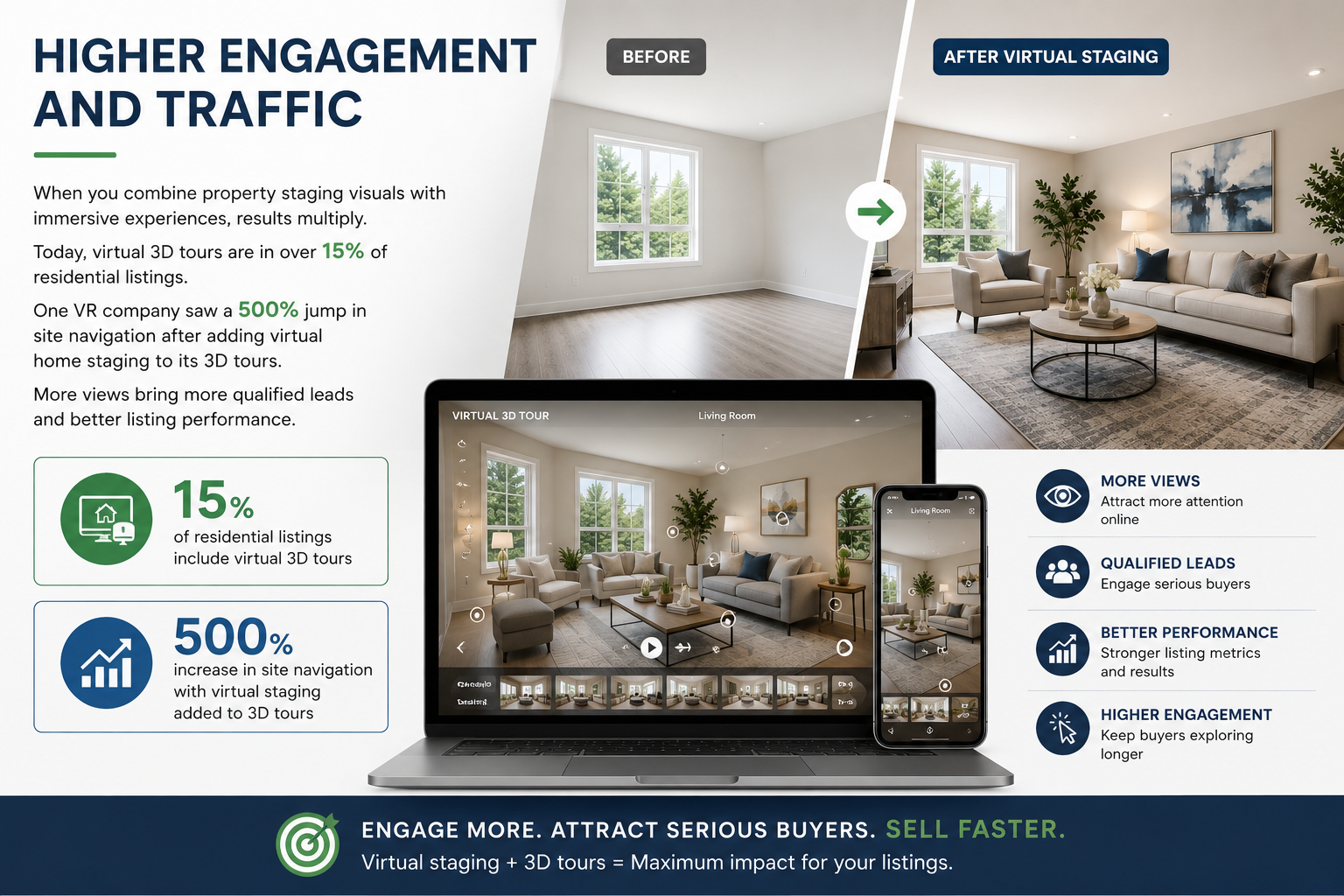
When you combine property staging visuals with immersive experiences, results multiply. Today, virtual 3D tours are in over 15% of residential listings. One VR company saw a 500% jump in site navigation after adding virtual home staging to its 3D tours. More views bring more qualified leads and better listing performance.
Higher engagement and traffic
- Cost efficiency:
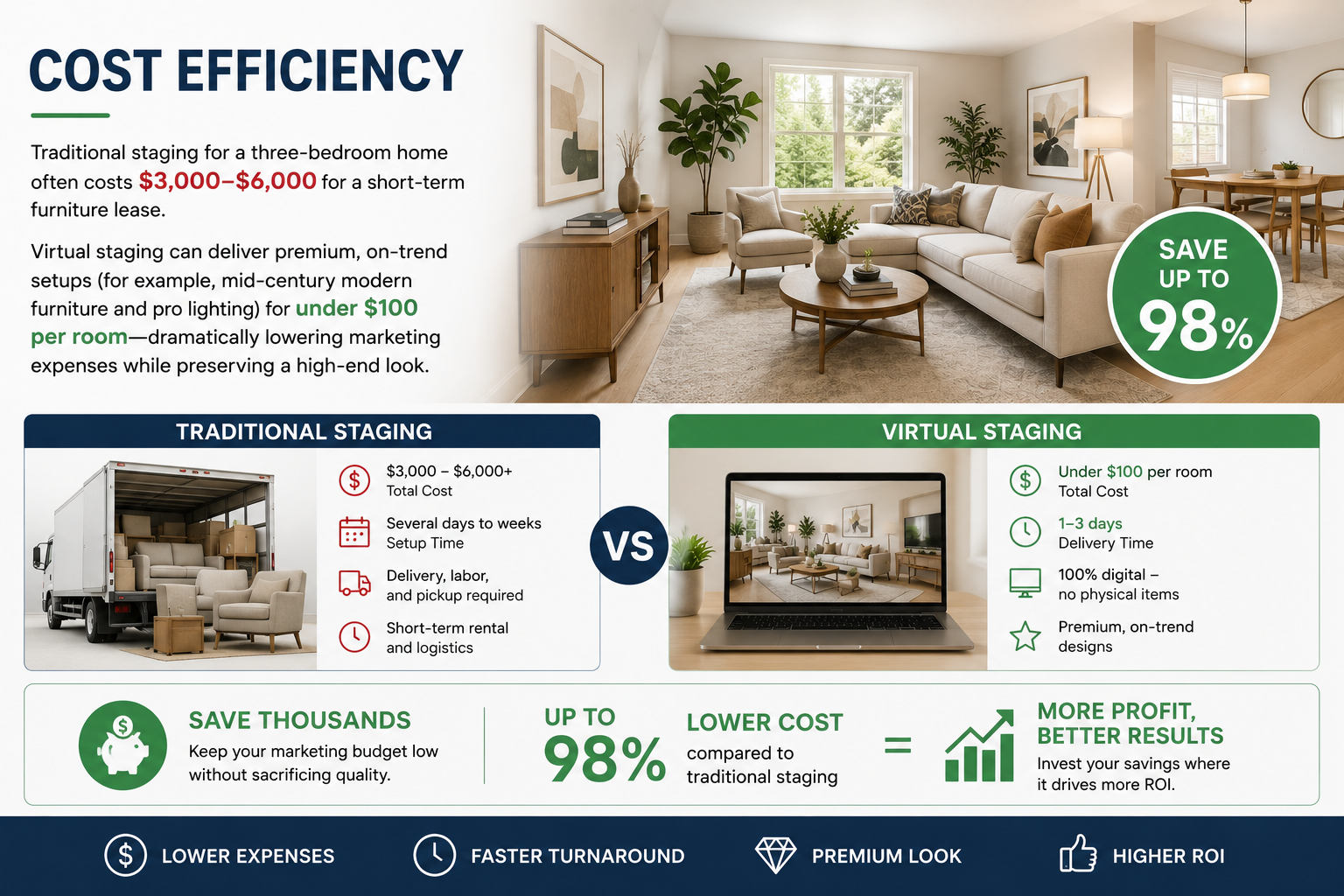
Traditional staging for a three-bedroom home often costs $3,000–$6,000 for a short-term furniture lease.
Virtual staging can deliver premium, on-trend setups (for example, mid-century modern furniture and pro lighting) for under $100 per room—dramatically lowering marketing expenses while preserving a high-end look.
Cost efficiency
- Faster sales and better positioning:
Staged images help listings stand out in crowded markets, especially in urban areas where vacant rooms appear smaller and less inviting.
Faster sales reduce carrying costs and can improve negotiating positions.
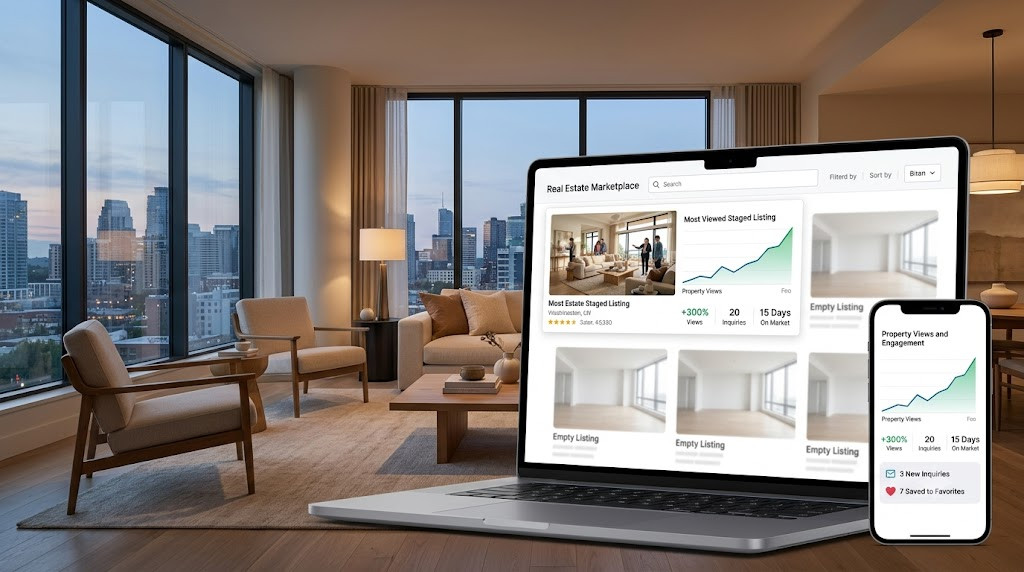
A virtually staged property receives higher visibility and buyer engagement than competing empty listings, helping it sell faster and achieve a stronger market position.
- Flexibility and scalability:
Virtual options let you test multiple styles, target buyer demographics, and update visuals quickly for seasonal or market-driven campaigns without repeat physical moves.
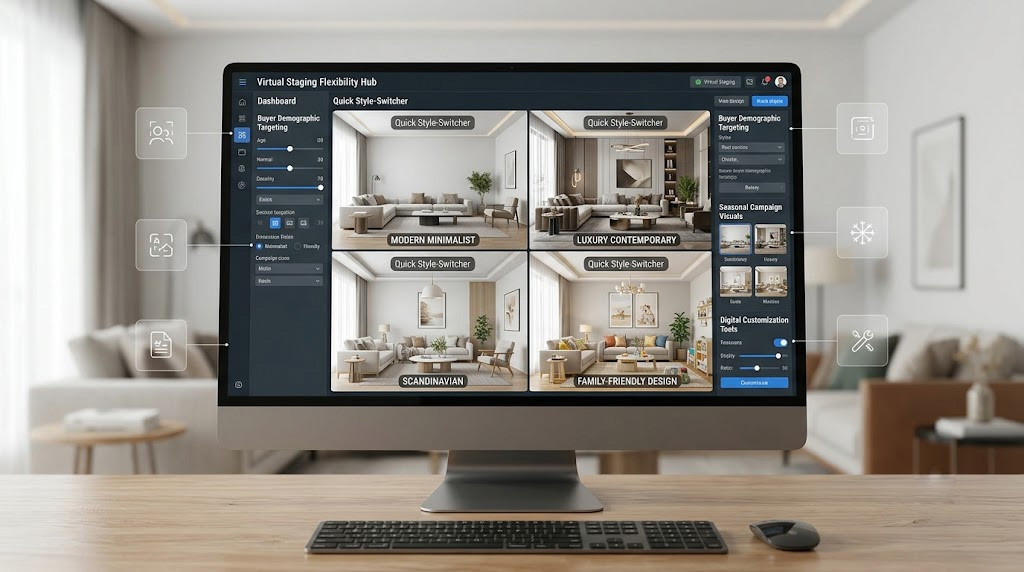
A virtual staging platform demonstrates how a single room can be instantly transformed into different interior styles, helping real estate professionals target various buyer demographics and marketing campaigns.
- SEO and listing optimization:
High-quality staged photos and virtual tours increase click-through rates on portals and social ads, improving organic visibility and paid campaign performance.
Is virtual staging worth it? Given proven boosts in engagement, lower costs, and measurable reductions in market time, virtual staging is a high-ROI tactic for modern real estate marketing.
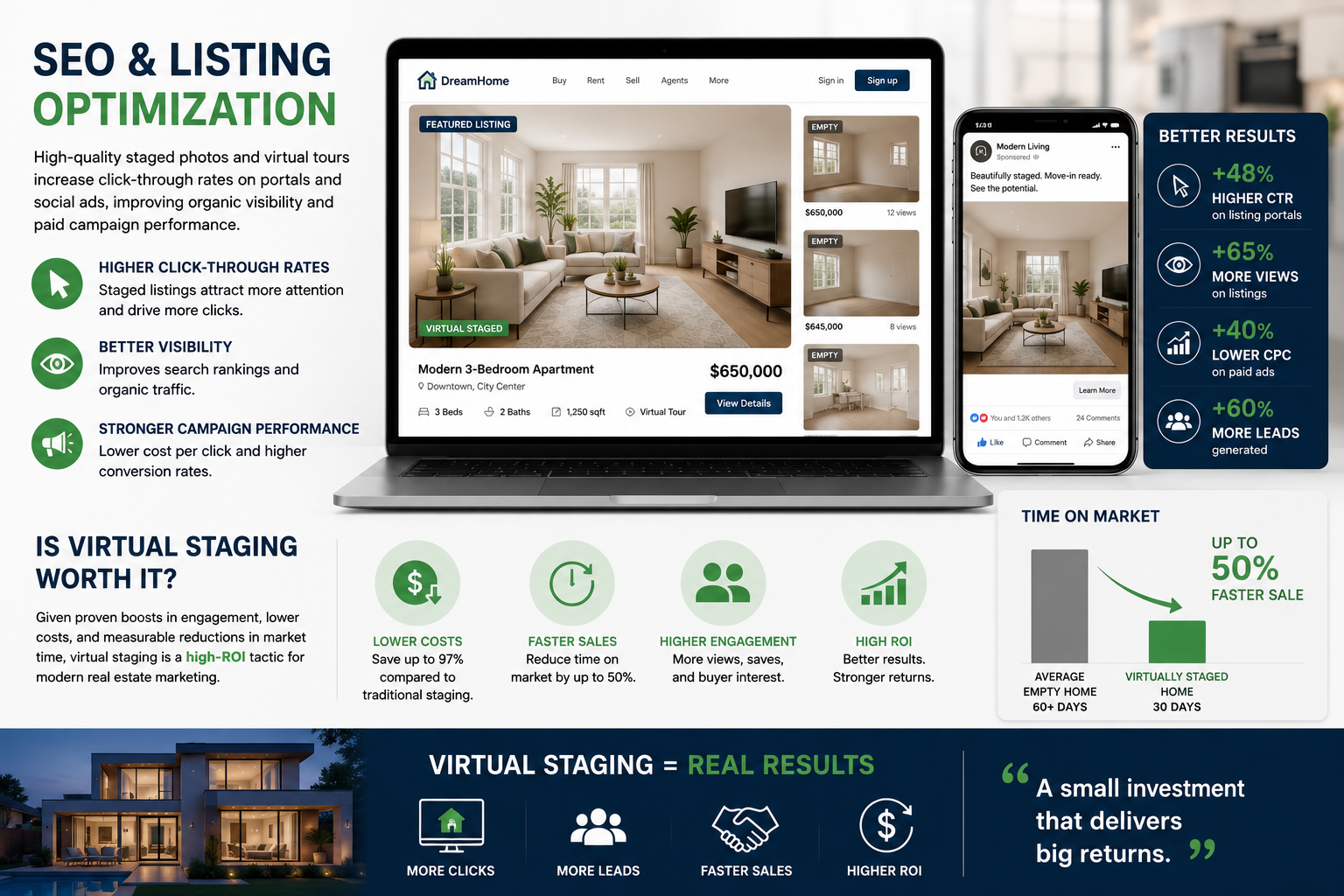
SEO and listing optimization
Virtual staging before and after examples
Explore how spaces are transformed through virtual staging with before-and-after examples that showcase the power of digital design.
These comparisons highlight how empty or outdated rooms can be turned into stylish, market-ready interiors within minutes.
By reviewing before-and-after visuals, buyers and sellers can better understand the impact of virtual staging on the presentation of real estate.
Staged vs empty rooms
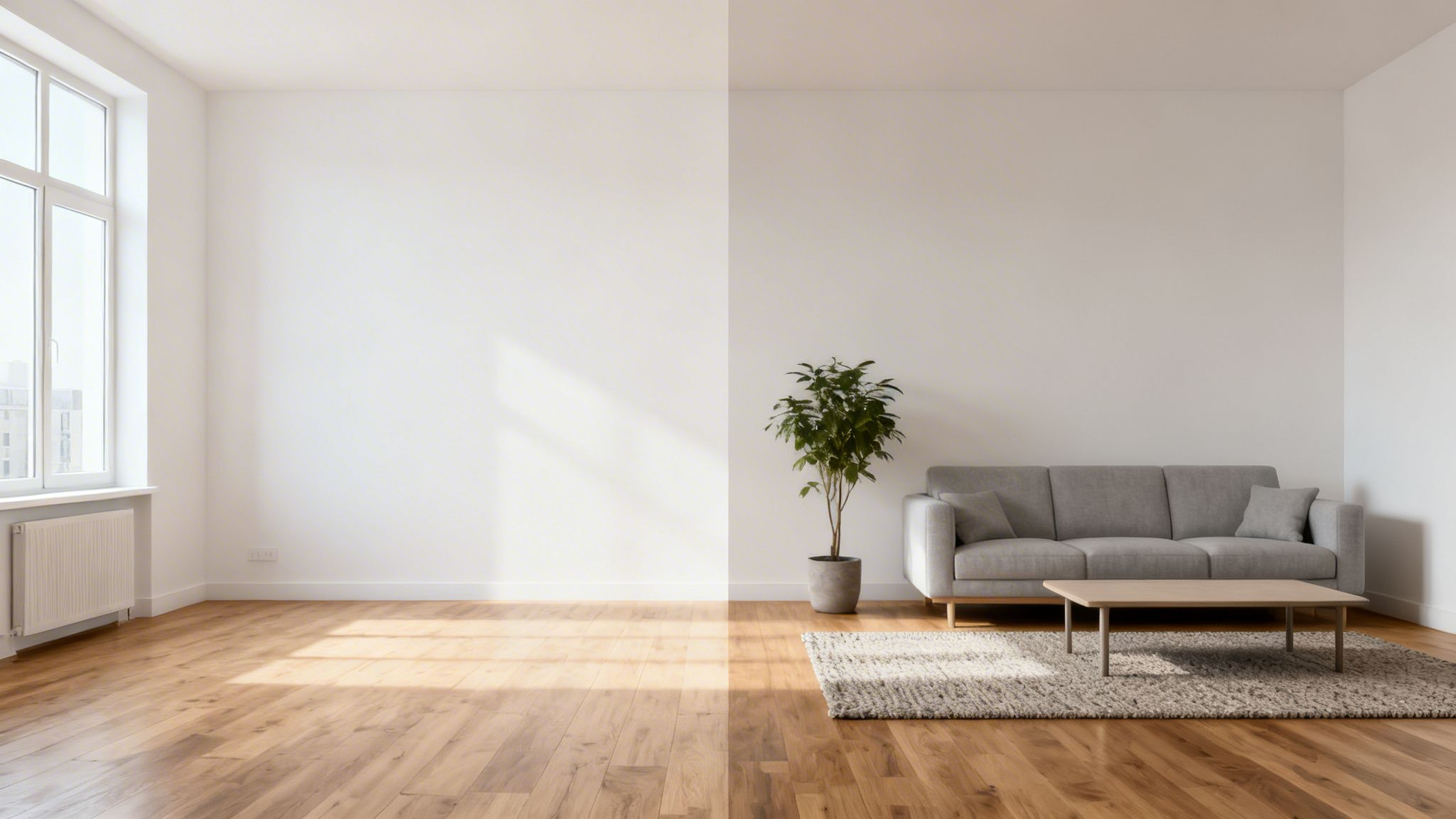
The image illustrates a clear comparison between a before-and-after staging transformation of the same interior space.
Before staging, the room appears empty, which makes it harder for buyers to understand scale, layout, and potential use.
After virtual staging, the same space is enhanced with furniture, décor, and visual balance, turning it into a warm and inviting living area.
This improvement highlights the power of virtual staging in real estate marketing by creating strong property staging visuals without physical setup. The benefits include better buyer engagement, improved listing appeal, and faster decision-making, helping empty spaces become highly attractive, market-ready homes.
Empty vs Staged Bedroom
Remove clutter for occupied properties
The image clearly illustrates how removing clutter from occupied properties can significantly improve real estate presentation through virtual staging.
In the “before” condition, the space is filled with boxes, scattered items, and personal belongings, making the room feel cramped and distracting buyers from its true size and layout.
After virtual staging, the same property is visually decluttered and refined into a clean, open, and well-structured interior.
This transformation highlights a major advantage of virtual staging in real estate marketing: the ability to digitally remove clutter and enhance property staging visuals without physical cleaning or renovation.
The result is more compelling real estate staging images that allow buyers to focus on space, flow, and potential rather than distractions. Ultimately, this improves listing appeal, strengthens first impressions, and increases buyer engagement, helping properties attract interest faster and more effectively.
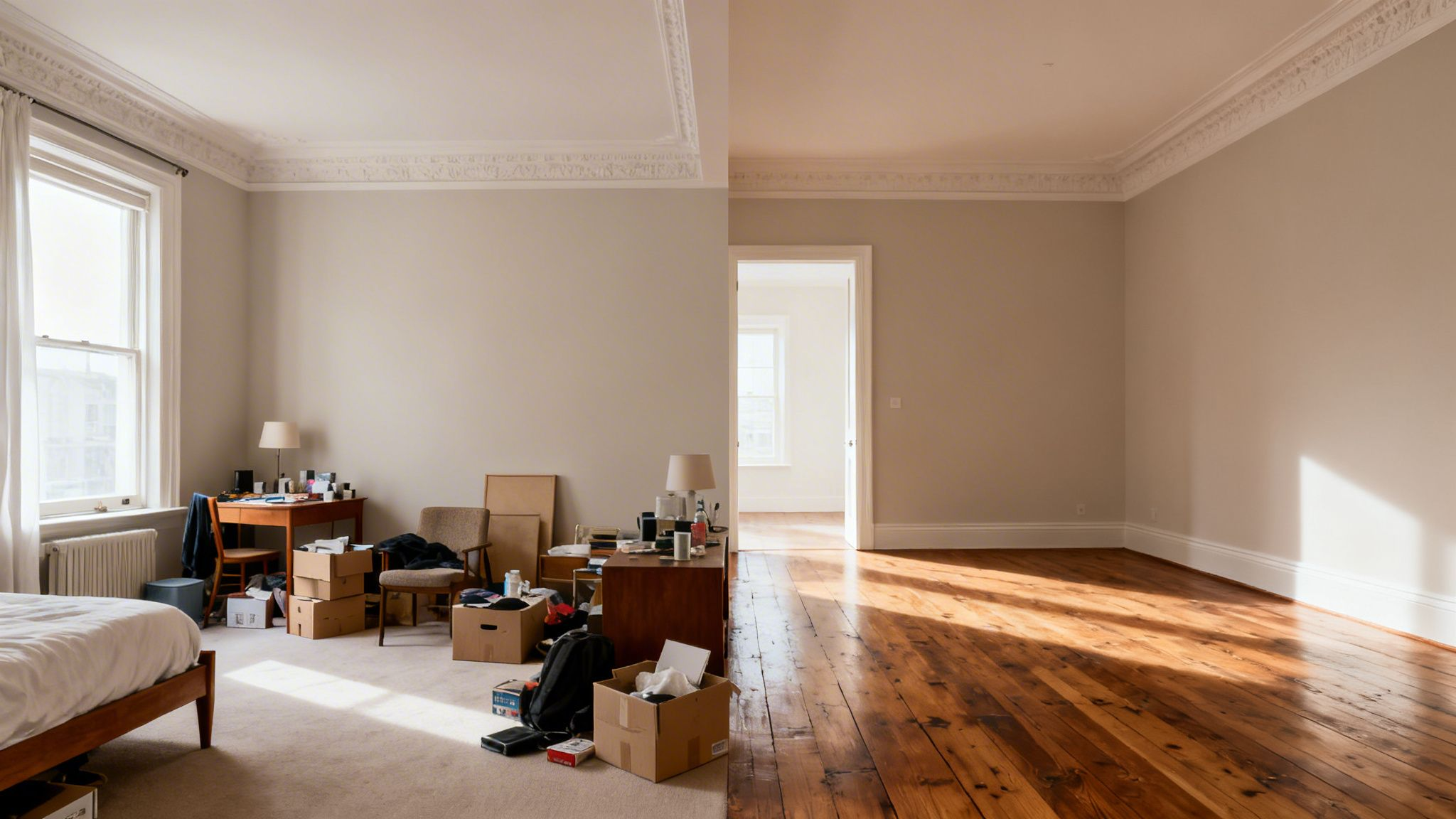
Remove clutter for occupied properties
Empty vs Staged Bedroom
This real estate photo case study shows the power of virtual staging before and after. The empty bedroom looks plain, cold, and smaller, with no clear sense of scale or style.
After virtual staging, the same room feels warm, modern, and move-in ready. A bed, side table, artwork, and lighting help buyers picture how the space can be used.
This makes the listing more appealing and easier to remember. Virtual staging also improves online presentation, creates stronger first impressions, and helps a property stand out in a crowded market.
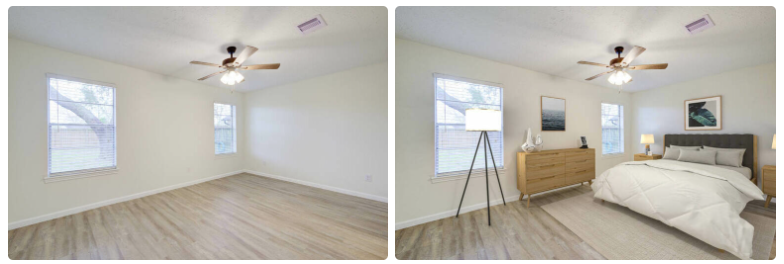
Empty vs Staged Bedroom
Conclusion
Ultimately, mastering home staging gives you full control over a property’s first impression. You are no longer limited by empty rooms, outdated furniture, or poor lighting, but instead can create a compelling visual narrative that attracts buyers and communicates value clearly. This approach strengthens emotional connection, improves listing performance, and helps drive faster, more profitable sales through virtual staging before and after.