
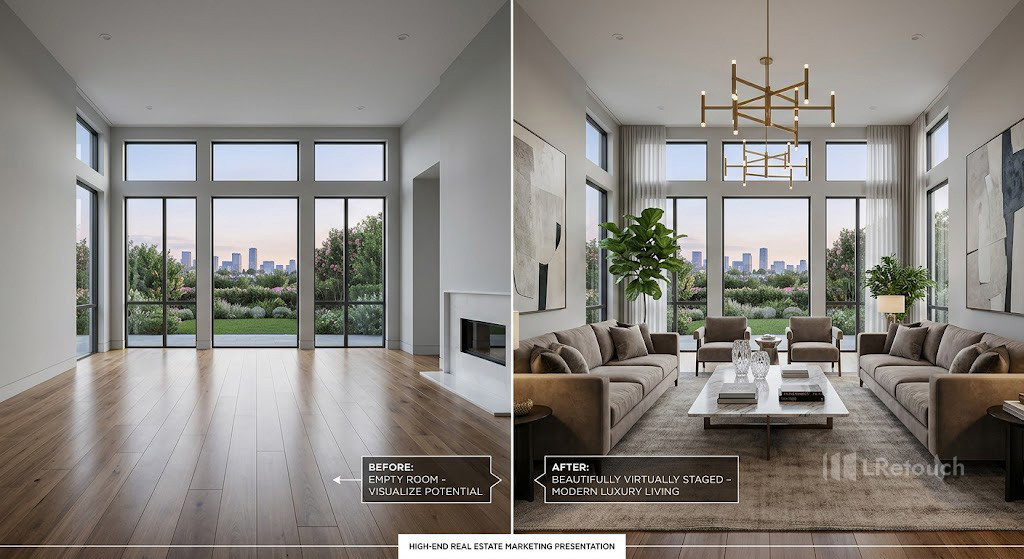
What is virtual staging, and why is it becoming so popular in real estate? As buyers increasingly search for homes online, attractive listing photos are essential for capturing attention. Virtual staging helps transform boring spaces into appealing, furnished rooms. This guide explains how virtual staging works and why it has become a valuable real estate marketing tool.
What is virtual staging?
Virtual staging has become a popular real estate marketing tool because it helps properties look more attractive online without the cost of physical furniture.
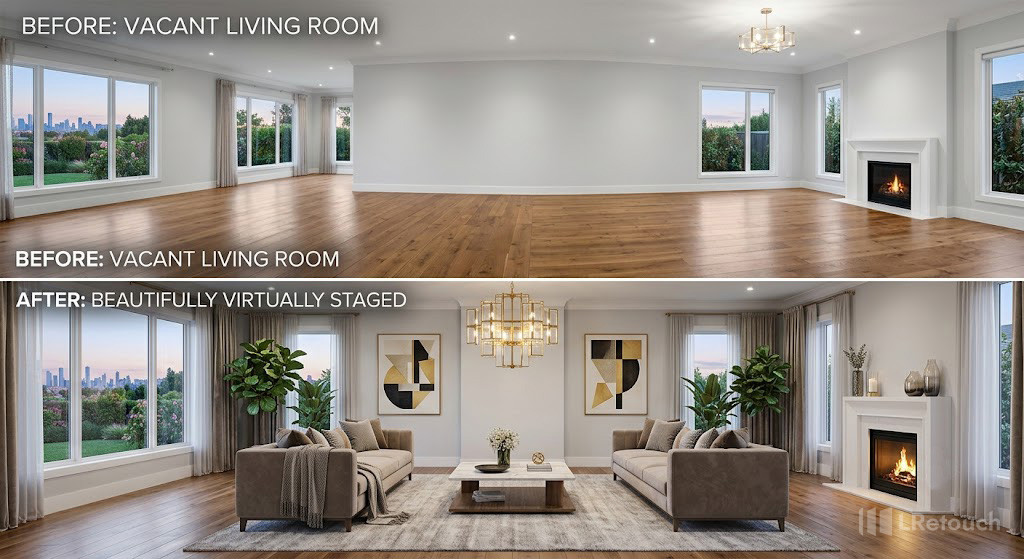
A vacant room digitally furnished using virtual staging techniques.
By transforming empty or outdated rooms into visually appealing spaces, it helps buyers better imagine a home’s potential.
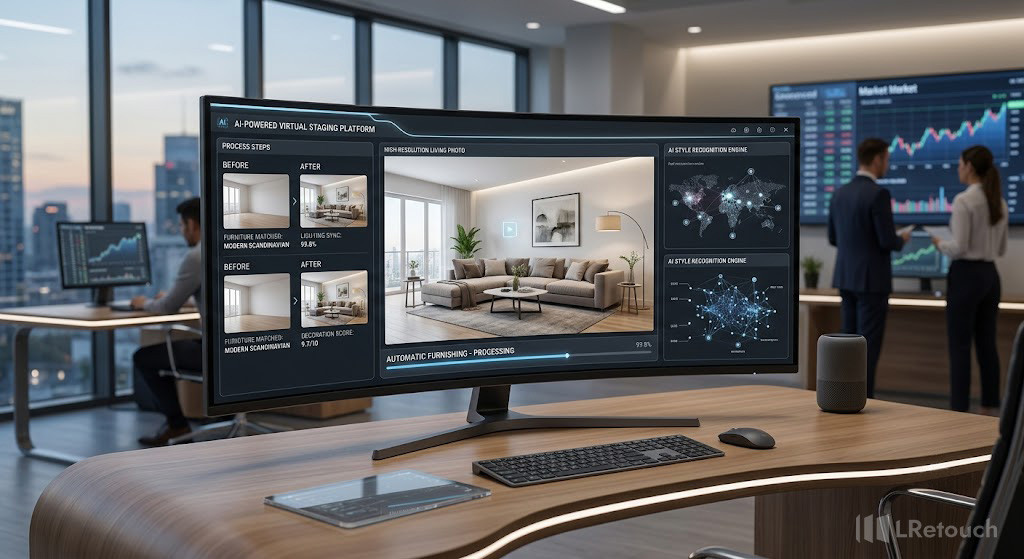
Artificial intelligence generating realistic furniture staging for a vacant property.
Key Statistics
- Rapid Market Growth
The virtual staging market reached $1.33 billion in 2026. Experts expect it to grow to $10.8 billion by 2033. This growth shows that more real estate professionals are using AI staging to market properties.
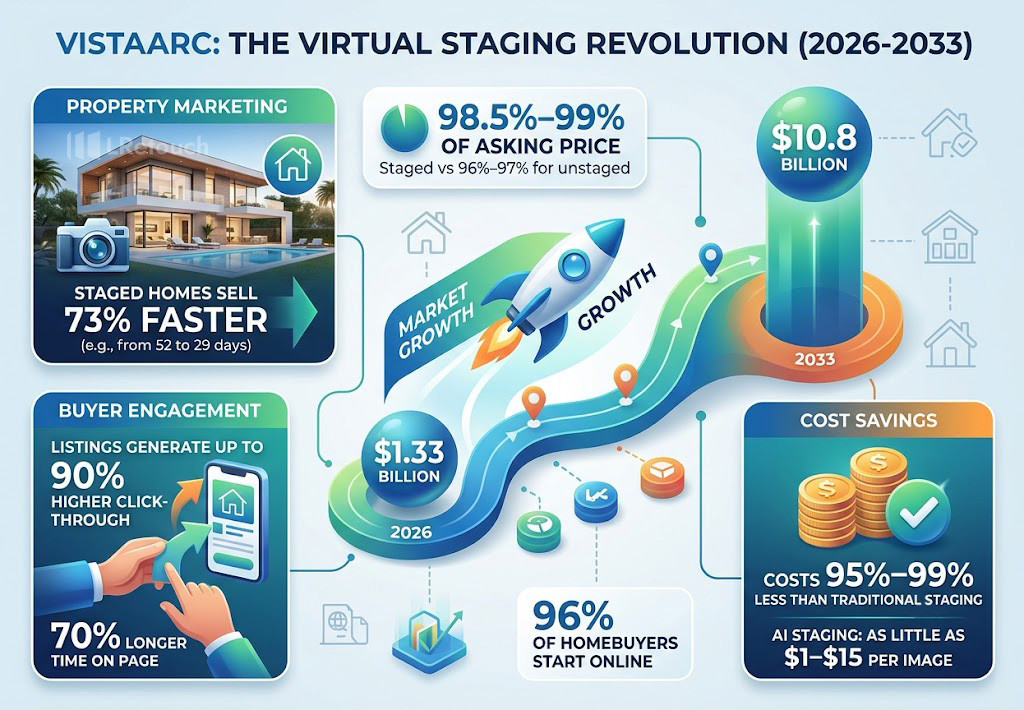
An infographic showing growth trends and benefits of virtual staging in real estate.
- Significant Cost Savings
Virtual staging costs 95%–99% less than traditional staging, with AI-powered services available for as little as $1–$15 per image.
- Faster Property Sales
Staged homes sell 73% faster on average, reducing time on the market from approximately 52 days to 29–31 days.
- Higher Sale Prices
Virtually staged properties typically achieve 98.5%–99% of their asking price, compared to 96%–97% for unstaged homes.
- Increased Buyer Engagement
Listings with virtual staging can generate up to 90% higher click-through rates and keep visitors on listing pages 70% longer.
- Aligned with Online Home Search Trends
Since 96% of homebuyers begin their search online, professional listing visuals and AI staging have become increasingly important for attracting buyer attention and improving listing performance.
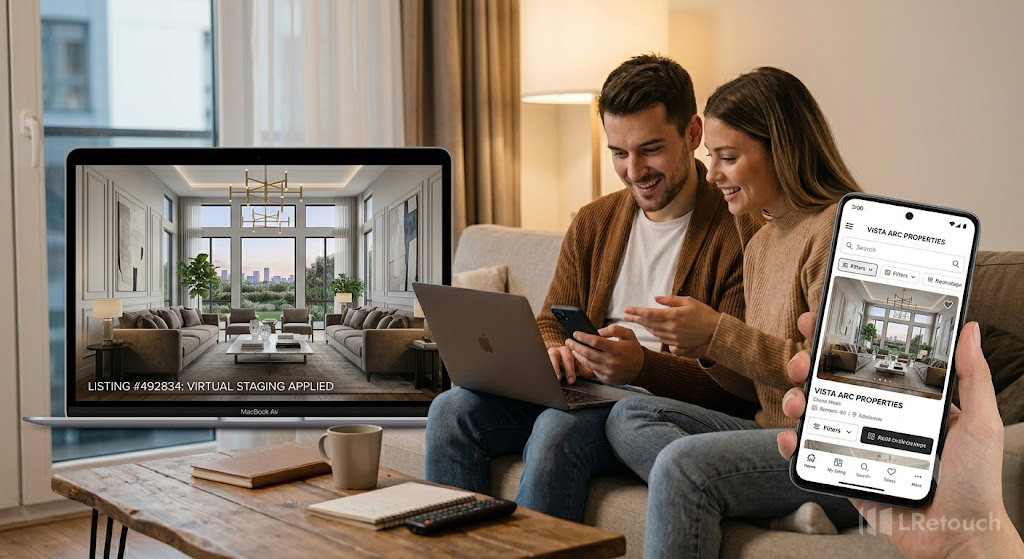
Potential buyers browsing property listings enhanced with virtual staging.
What is virtual staging real estate?
Virtual staging is a real estate marketing technique that uses digital technology to add furniture, décor, and design elements to property photos.
The staging process transforms empty, outdated, or cluttered rooms into attractive living spaces without physically moving furniture.
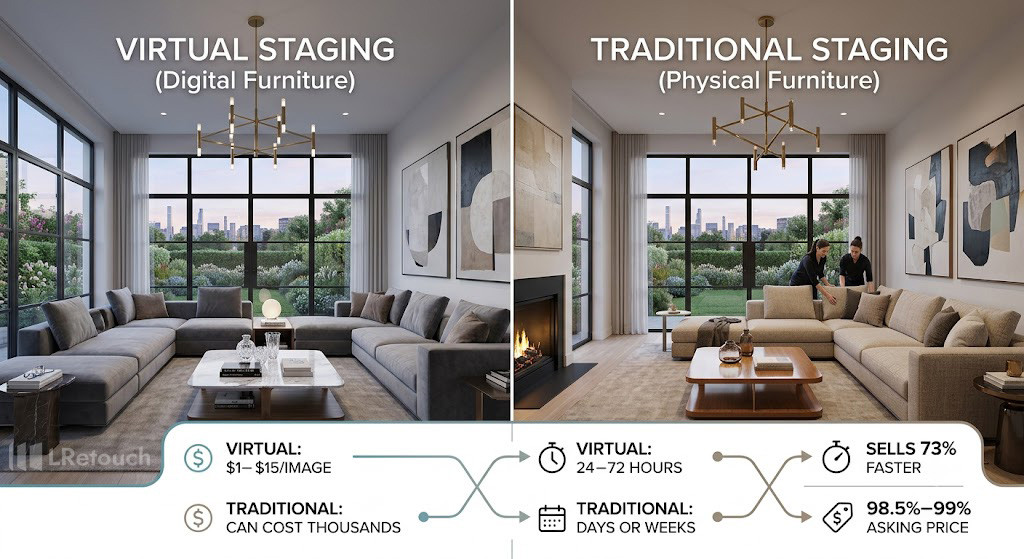
A visual comparison of virtual staging and traditional home staging methods.
Real estate agents use virtual staging to help buyers visualize a home’s potential and understand how each room can be used.
As a cost-effective alternative to traditional staging, it can improve listing presentation, increase online engagement, and attract more potential buyers.
Virtual staging vs Real staging: Key Distinction
Many people confuse virtual staging with traditional staging because both aim to make a property look more attractive to buyers. However, there are important differences in cost, speed, flexibility, and buyer experience.
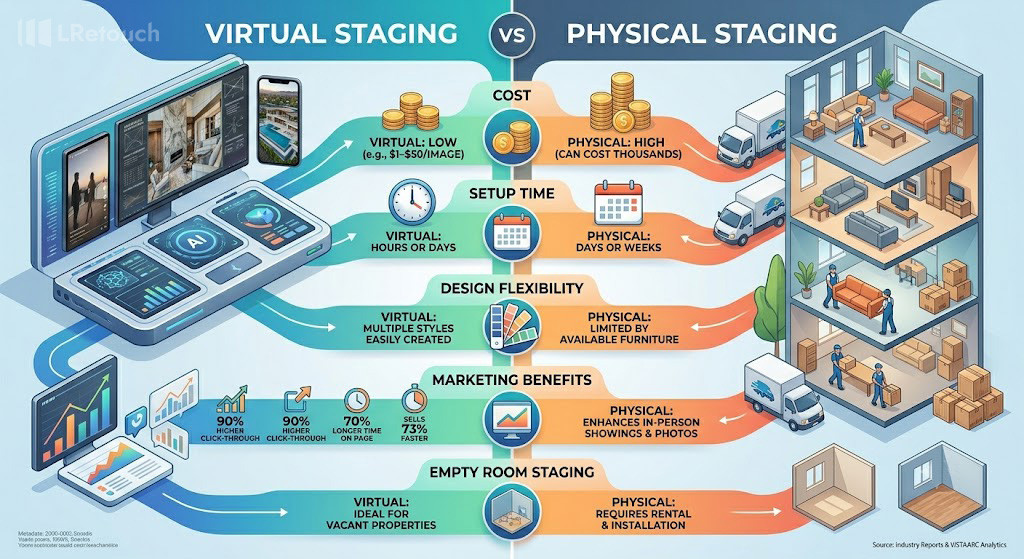
An infographic comparing costs and benefits of virtual and traditional staging.
Understanding virtual staging vs real staging helps real estate professionals choose the right marketing strategy for each property.
| Factor | Virtual Staging | Real Staging |
| Cost | Low cost, often $1–$50 per image | Can cost thousands of dollars |
| Setup Time | Hours or days | Several days or weeks |
| Design Flexibility | Multiple styles can be created easily | Limited by available furniture |
| Empty Room Staging | Ideal for vacant properties | Requires furniture rental and installation |
| Online Marketing | Enhances listing photos | Enhances both photos and showings |
| In-Person Experience | Digital only | Buyers see furnished rooms in person |
Who uses virtual staging?
After learning what is virtual staging, it becomes clear that this technology serves a wide range of professionals beyond traditional real estate sales.
- Real Estate Agents use virtual staging to create eye-catching property listings on MLS platforms and major real estate websites, helping attract more online buyers.
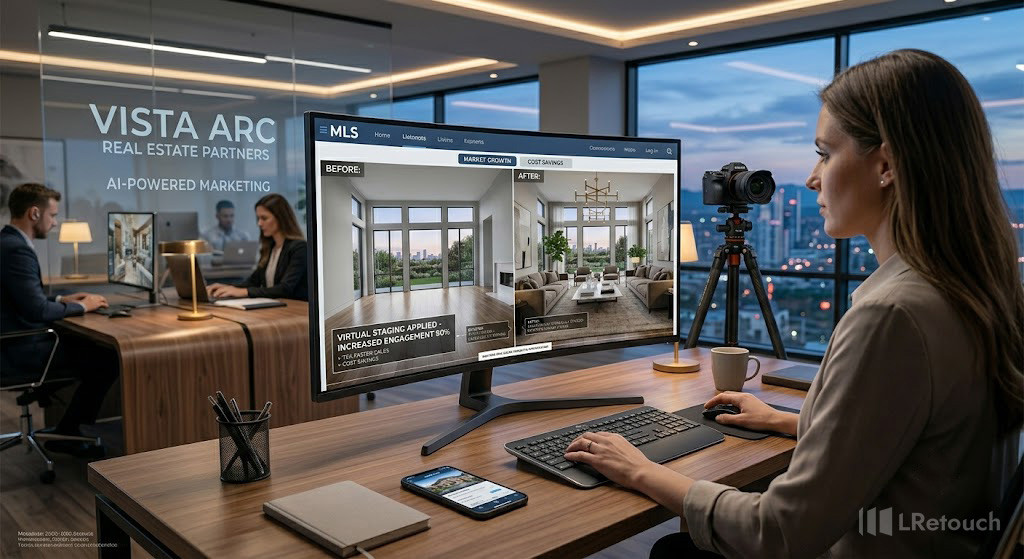
A real estate agent using virtual staging to improve listing presentation.
- Homeowners and Property Sellers can showcase vacant or outdated homes without the high costs associated with physical staging.
- Property Developers often use virtual staging to market newly built or pre-construction homes, allowing buyers to visualize completed living spaces before they are furnished.
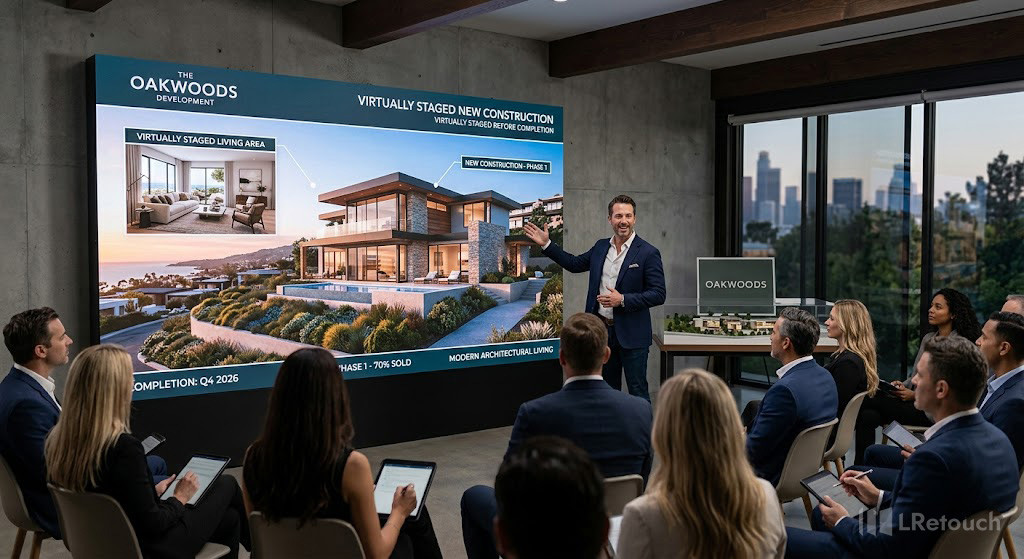
A property developer marketing unfinished homes through virtual staging.
- Rental Property Managers benefit from virtual staging by presenting apartments, vacation rentals, and short-term accommodations in their best light to potential guests and tenants.
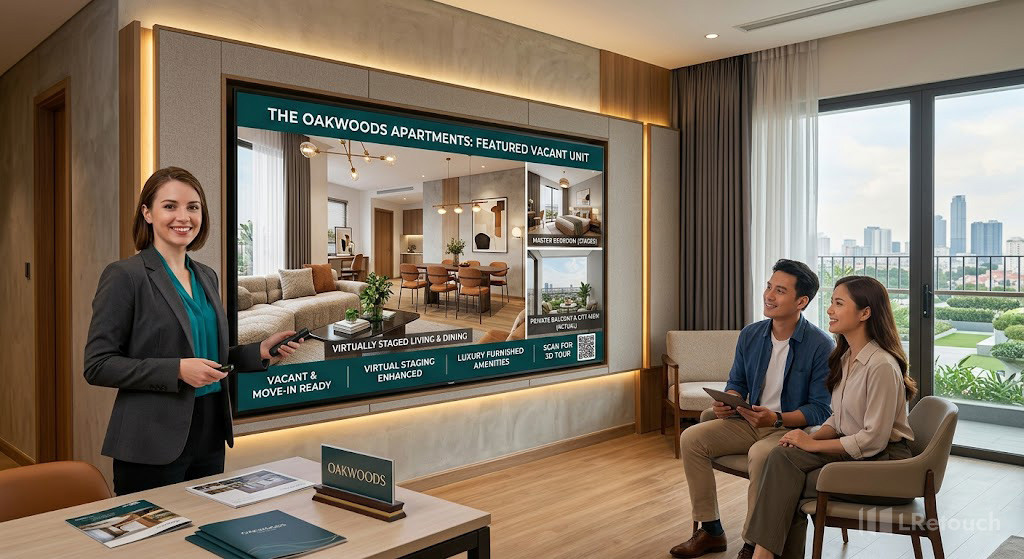
A rental property listing improved through digital furniture staging.
- Commercial Real Estate Professionals can apply virtual staging to offices, retail units, and commercial spaces, helping prospective tenants better understand the property’s potential layout and functionality.
How does virtual staging real estate work?
The staging process combines real estate photography, interior design, and digital editing to transform empty or outdated spaces into attractive, furnished rooms. The goal is to help buyers visualize the property’s potential before visiting in person.
The Virtual Staging Process
- Capture Professional Property Photos
High-quality images are the foundation of successful virtual staging. Bright lighting, proper angles, and high resolution help create realistic results.
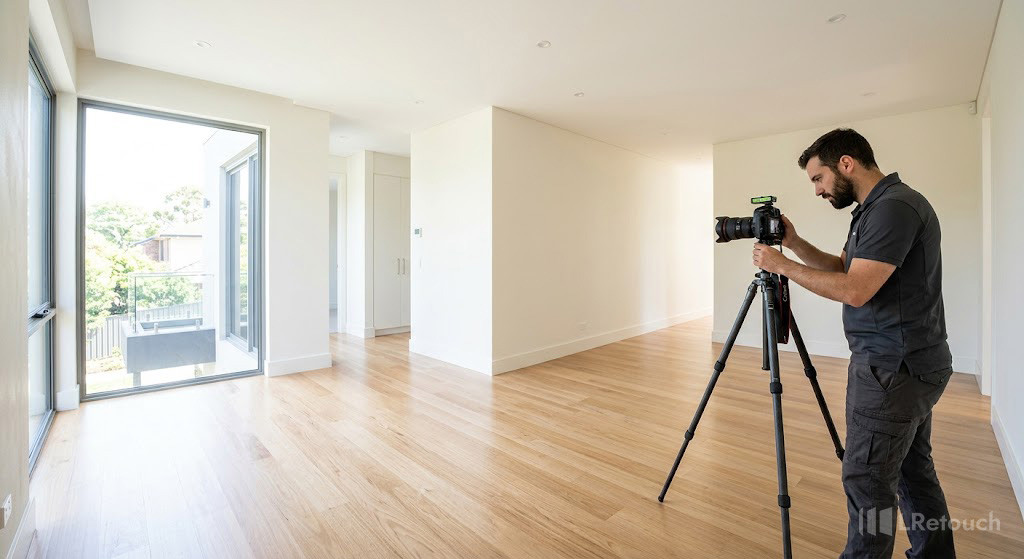
A photographer taking property images that will later be virtually staged.
- Upload Images to a Staging Platform
Agents, homeowners, or property managers submit photos to a virtual staging service or AI-powered platform for editing.
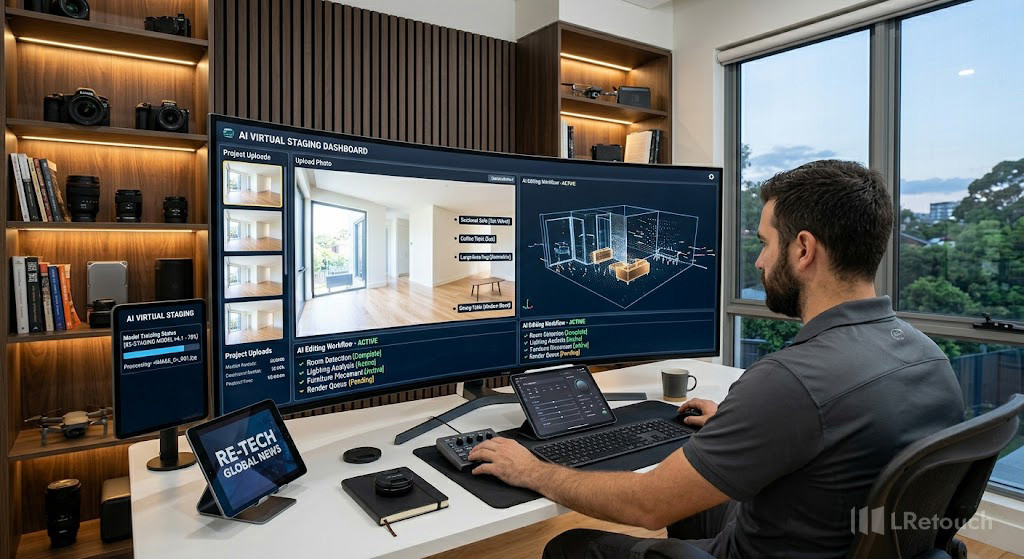
A digital workflow for submitting property images to a virtual staging service.
- Select a Design Style
The room is staged according to the target audience. For example, a modern condo may feature contemporary furniture, while a family home may use a more traditional design theme.
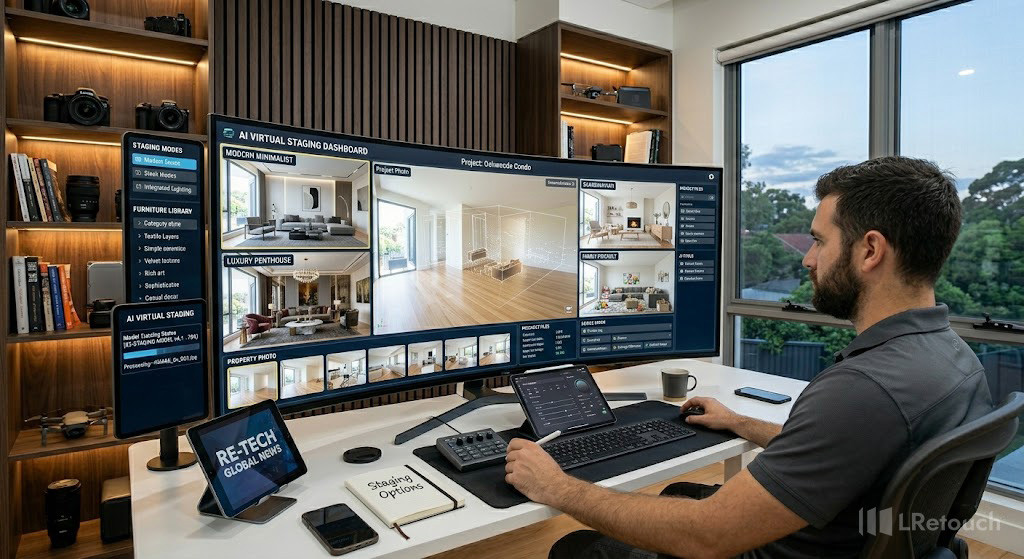
Different interior design styles available for virtual staging projects.
- Apply Digital Furniture Staging
Designers or AI software add furniture, rugs, artwork, lighting, and décor. Each item is scaled to fit the room naturally, creating a realistic and inviting appearance.
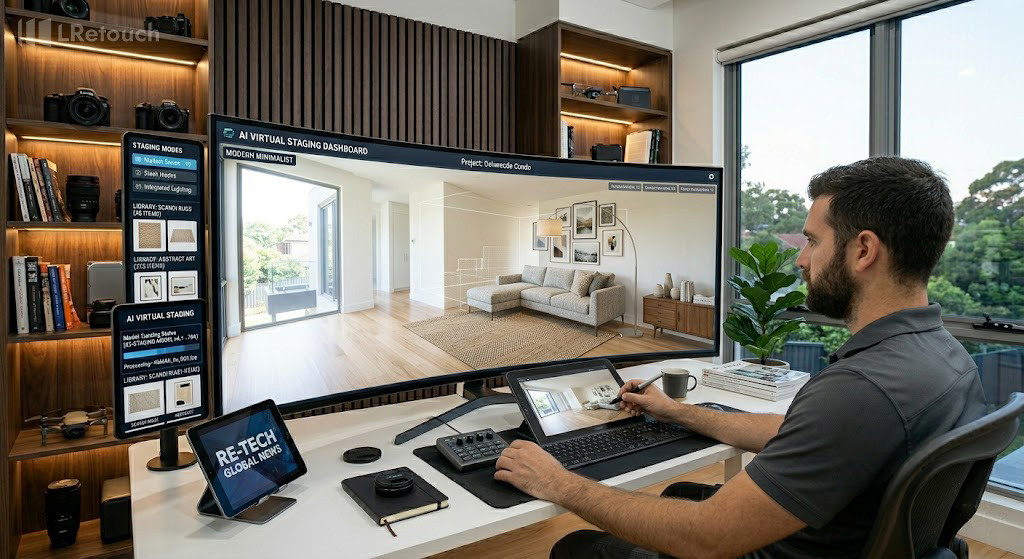
A virtual staging designer furnishing an empty room digitally.
- Review and Finalize the Images
The completed images are rendered in high resolution and can be adjusted if needed. Common revisions include changing furniture styles, colors, or layouts.
With nearly all homebuyers starting their search online, visually appealing listing photos are essential. Digital furniture staging helps vacant rooms look more functional and attractive, increasing buyer engagement while costing significantly less than traditional staging.
Most projects can be completed within 24–72 hours, making virtual staging a fast and efficient marketing solution.
Key benefits of virtual staging
In today’s digital-first real estate market, first impressions happen online. With most buyers browsing listings before scheduling a showing, eye-catching photos can make all the difference. Virtual staging is a really powerful marketing tool for agents and sellers.
- Lower Marketing Costs
One of the biggest advantages is affordability. Traditional staging can cost anywhere from $2,000 to $10,000, while virtual staging typically costs $30 to $100 per image. This allows agents to showcase multiple rooms for a fraction of the cost.
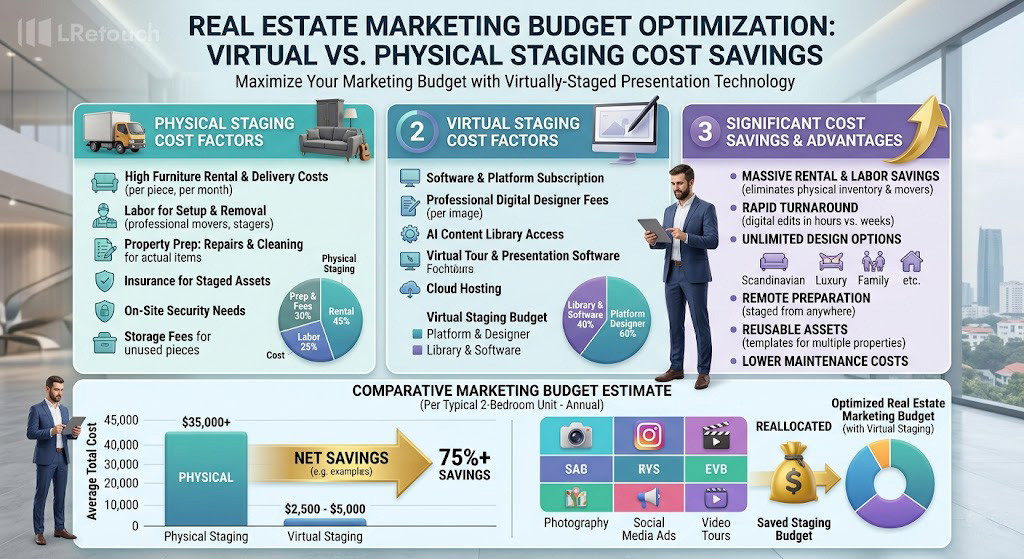
An infographic highlighting the affordability of virtual staging.
- Faster Listing Preparation
Virtual staging can usually be completed within 24 to 72 hours. Sellers do not need to wait for furniture delivery, setup, or removal before launching a listing. - Stronger Buyer Engagement
Well-presented homes attract more attention online. Studies show that staged properties often receive more views and inquiries because buyers are naturally drawn to inviting, furnished spaces.
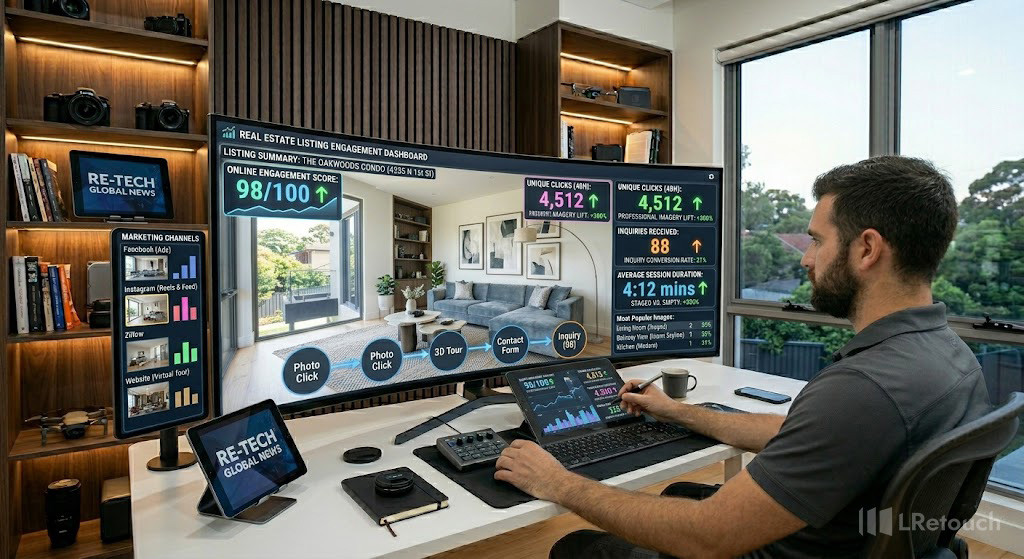
A property listing generating strong buyer interest through virtual staging.
- Better Space Visualization
Many buyers struggle to imagine how an empty room can be used. Digital furniture staging helps demonstrate realistic layouts, showing where a sofa, dining table, or bed can fit comfortably.
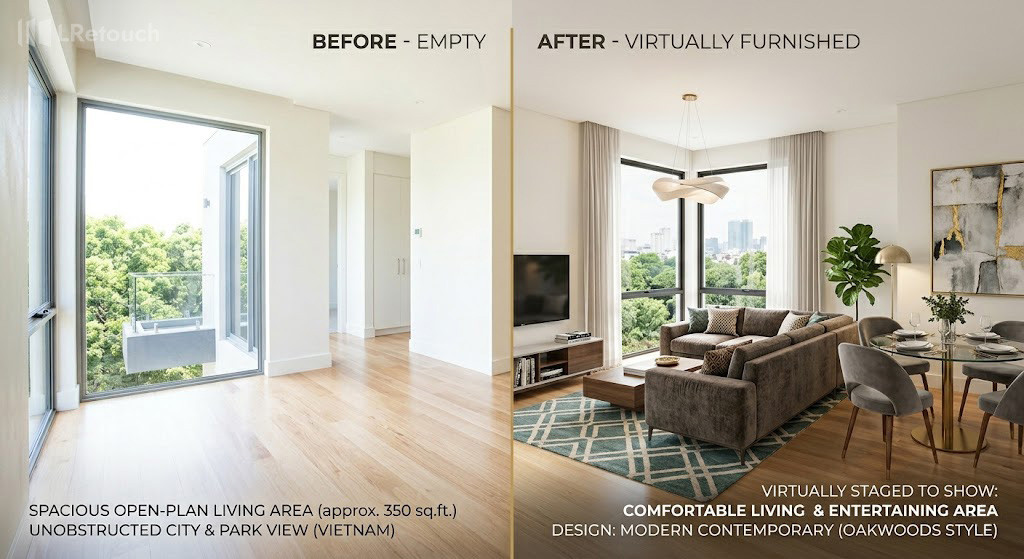
A comparison demonstrating how virtual staging helps buyers visualize living spaces.
- Flexible Design Options
A single room can be staged in different styles to appeal to different buyer groups. For example, the same living room can be designed as a modern urban space or a cozy family area.
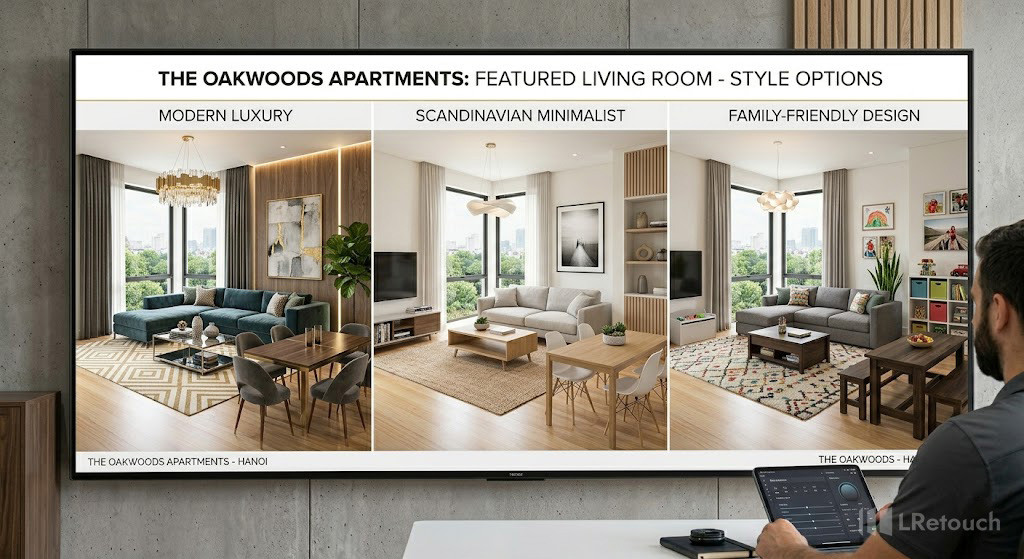
A room digitally staged in several styles to appeal to different buyer groups.
So, is virtual staging worth it? For many agents and sellers, the answer is yes. It offers a cost-effective way to improve listing presentation, attract more buyers, and increase marketing efficiency.
Cost of virtual staging
One reason virtual staging has become so popular is its affordability. Compared to traditional staging, which can cost thousands of dollars, the average virtual staging cost is much lower while still delivering professional-looking listing photos.
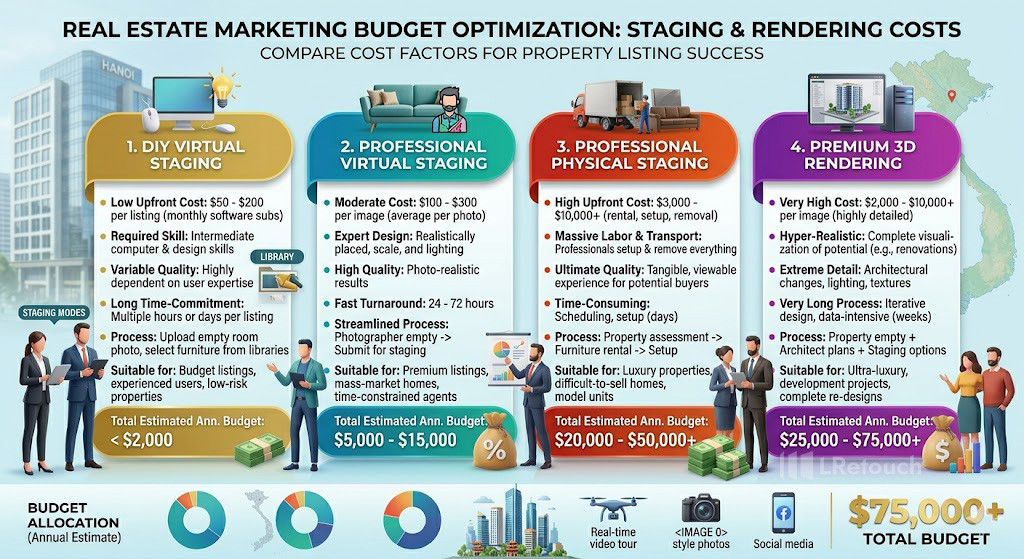
An infographic explaining the cost differences between virtual staging options.
| Service Type | Average Cost |
| DIY Staging Tools | $20–$40 per image |
| Professional Virtual Staging | $50–$100 per image |
| Premium 3D Rendering | $150–$300 per image |
Several factors can influence the final price:
- Number of Images: Staging more rooms increases the overall project cost.
- Room Complexity: Large spaces, open floor plans, and unusual layouts may require additional editing work.
- Design Style: Luxury interiors and highly customized designs typically cost more than standard staging.
- Delivery Speed: Expedited orders often include rush fees.
- Revision Requests: Additional design changes may result in extra charges.
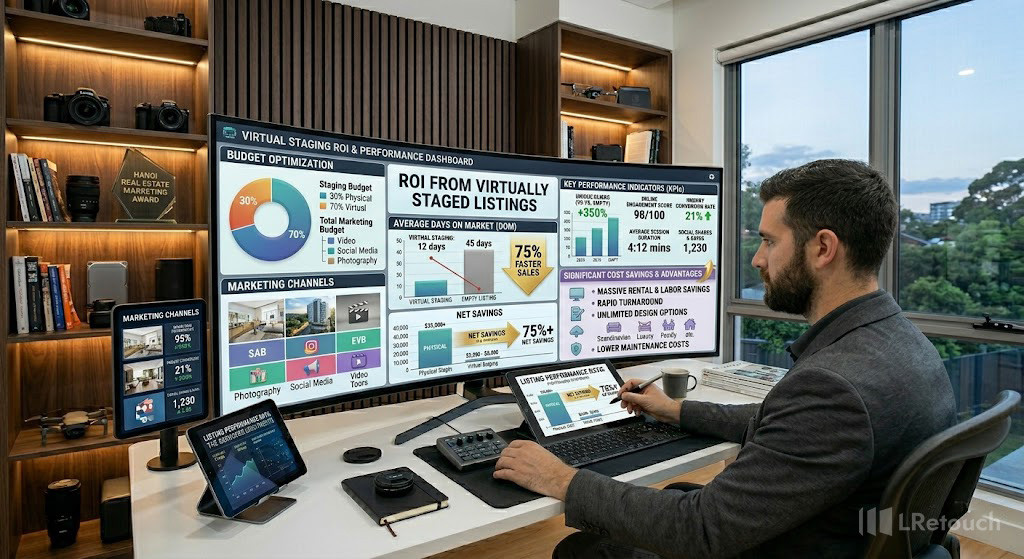
A real estate professional evaluating the business impact of virtual staging.
For example, staging five rooms through a professional service may cost between $250 and $500, while physical staging for the same property could easily exceed several thousand dollars. This makes virtual staging a cost-effective solution for agents, sellers, and property developers looking to enhance listing photos without a large marketing budget.
The bottom line
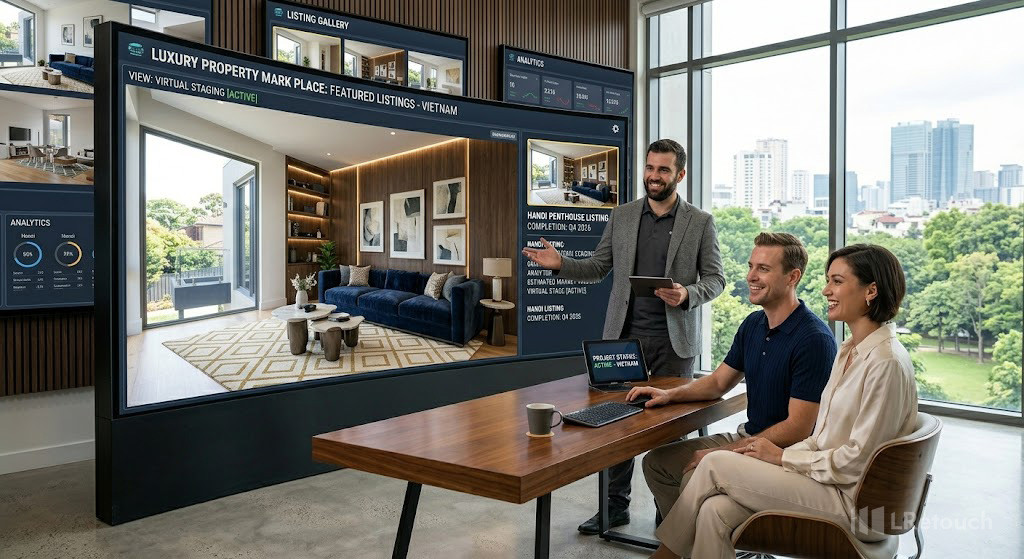
A successful property marketing campaign powered by professional virtual staging.
Virtual staging has become an essential tool for modern real estate marketing. It helps sellers present properties more effectively, attract buyer attention online, and reduce marketing costs compared to traditional staging. If you’re looking to improve listing performance and showcase a home’s full potential, understanding “what is virtual staging?” is the first step toward making smarter real estate marketing decisions.