
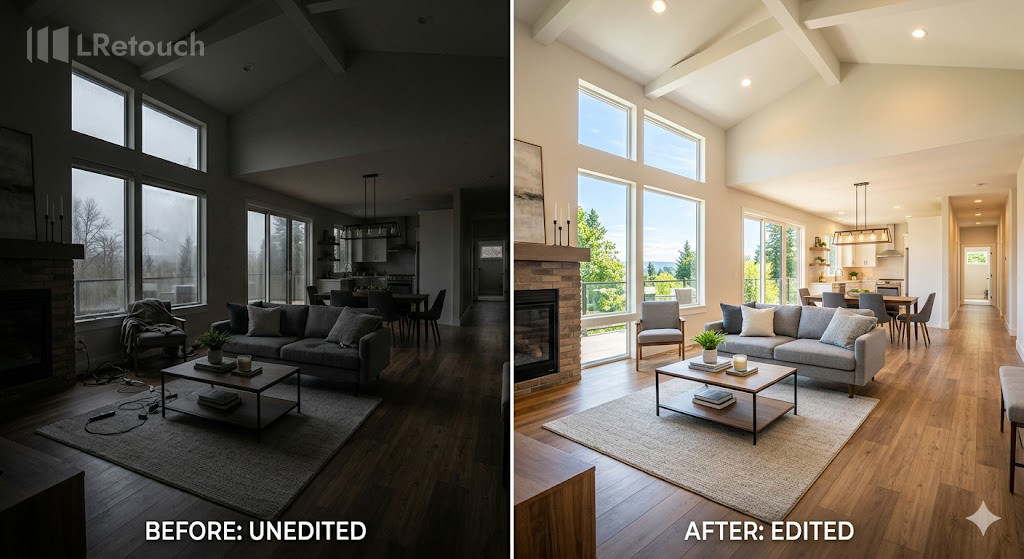
Real estate photo editing can transform ordinary property photos into compelling marketing assets. This process becomes essential in today’s digital-first property market. Buyers scroll through dozens, sometimes hundreds of listings before making a decision to click, and high-quality images consistently outperform average ones. In this guide, you’ll learn what real estate photo editing is, why it matters, the key elements involved, and the best tools professionals use to achieve high-quality results.
What Is Real Estate Photo Editing?
Real estate photo editing is the process of enhancing property images using specialized software to improve their visual quality, accuracy, and appeal.
Raw images taken with a camera often fail to capture the full dynamic range of a scene. For example, interiors may appear too dark while windows look overexposed, or colors may appear dull due to poor lighting. Real estate image editing corrects these limitations and produces balanced, attractive images suitable for online listings.
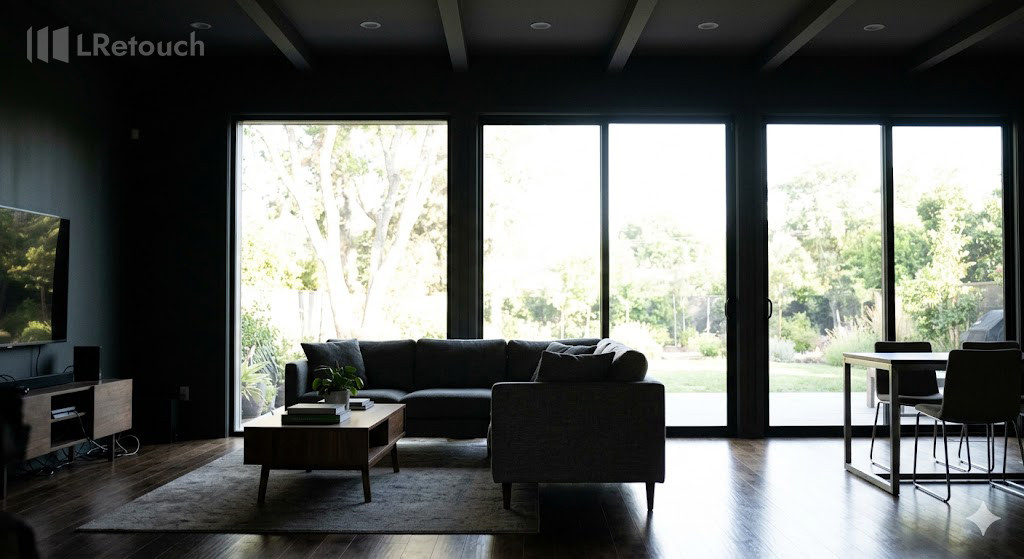
Raw image with lighting imbalance and exposure issues
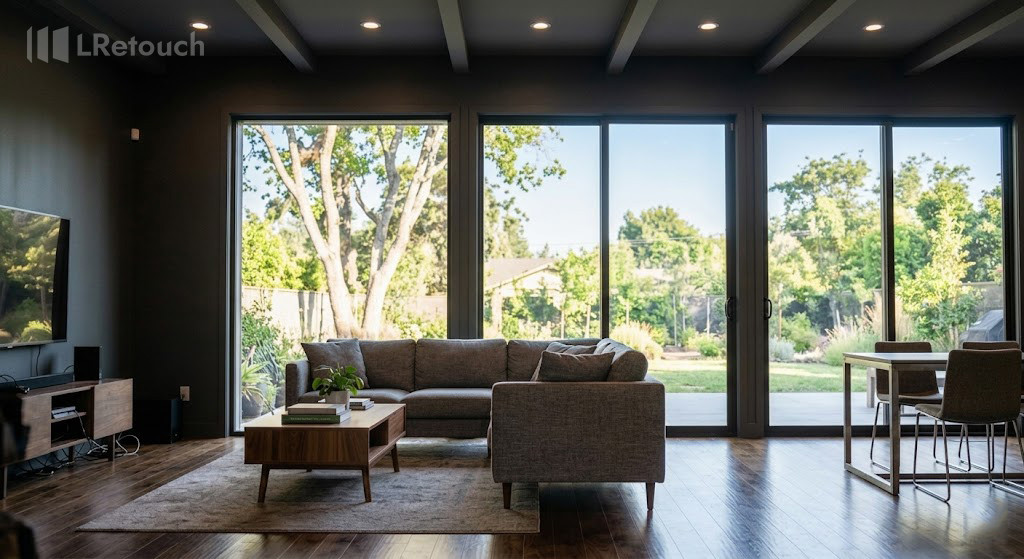
Edited image with balanced exposure and natural colors
This real estate editing process typically includes both basic adjustments, such as brightness, contrast, and white balance, and more advanced techniques like HDR blending, perspective correction, and object removal. Depending on the property type, editing can also include virtual staging or day-to-dusk conversion to enhance emotional appeal.
In essence, real estate photo editing bridges the gap between what a camera captures and what the human eye naturally perceives.
Why Does Real Estate Photo Editing Matter?
Real estate retouching plays a decisive role in how a property is perceived online.
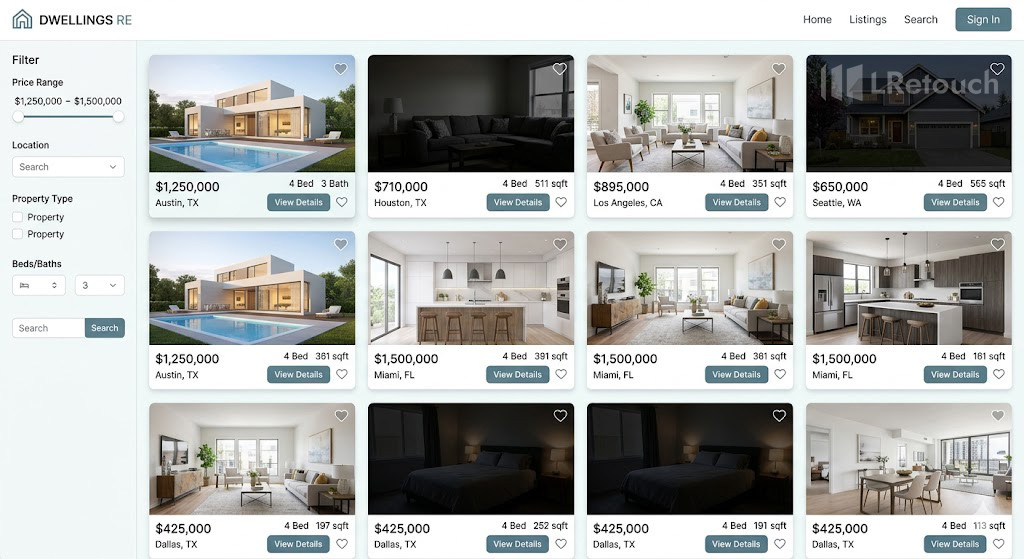
High-quality images stand out in property listings
Since most buyers begin their search on digital platforms, images are often the first and sometimes only chance to make a strong impression.
Strong First Impressions
Online listings rely heavily on visuals. Cameras don’t always capture scenes the way the human eye sees them.
Editing corrects lighting, colors, and perspective, ensuring the property looks natural and visually appealing without distortion or dullness.
Before & after real estate photo enhancement creates a significant difference.
High-quality edited photos immediately capture attention and encourage potential buyers to explore further.
Poor-quality images, on the other hand, can cause users to skip a listing altogether.
Increased Engagement and Click-Through Rates
Listings with professionally edited images tend to generate higher click-through rates.
Bright, sharp, and visually appealing photos stand out in search results, leading to more views and inquiries.
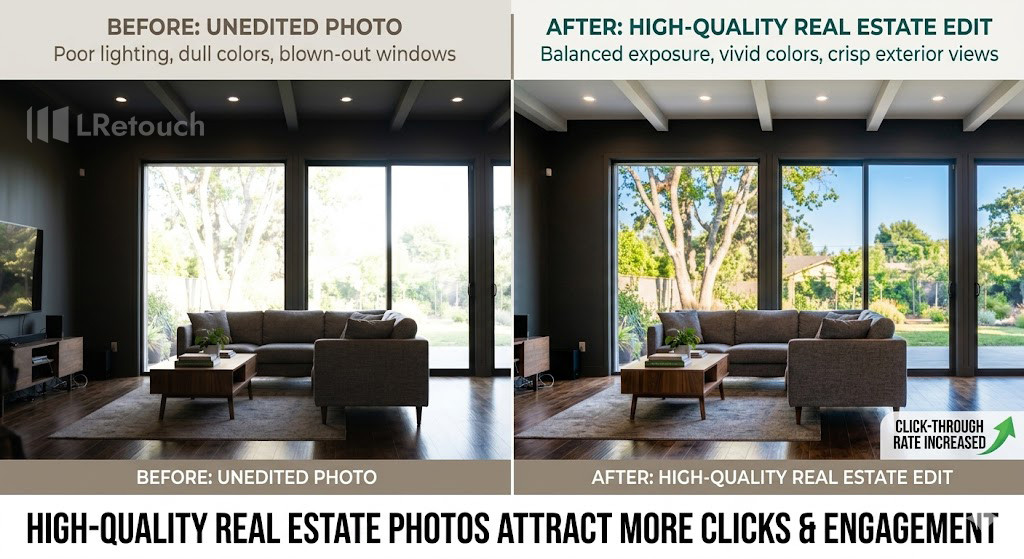
Better visuals increase click-through rates
Higher Perceived Property Value
Photo editing can subtly enhance the perceived value of a property.
Clean lines, balanced lighting, and vibrant colors make a space feel more premium, which can justify higher asking prices.
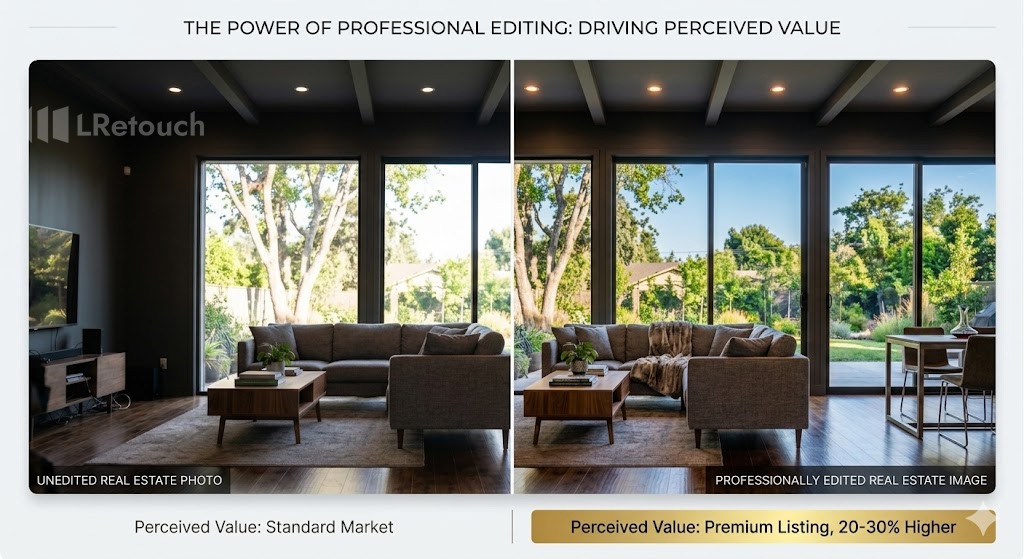
Editing enhances perceived property value
Competitive Advantage
In a crowded real estate market, professionally edited images give agents and sellers a clear edge.
Listings that look polished and consistent build trust and professionalism, which can influence buyer decisions.
Real estate photo editing has become a critical component of property marketing, especially across the US and EU. In both regions, the rise of digital platforms such as Zillow, Rightmove, and Idealista has driven the need for high-quality visuals as the primary point of engagement. Therefore, real estate photo editing continues to evolve as a strategic investment rather than an optional enhancement in property sales.
Key Elements Of Real Estate Image Editing
Real estate photo editing involves a combination of techniques designed to improve both aesthetics and accuracy.
Below are the most important elements of real estate image editing:
- Color & Exposure Correction: Balance bright windows with darker interiors (window pulls) and ensure accurate, true-to-life colors for a natural look.
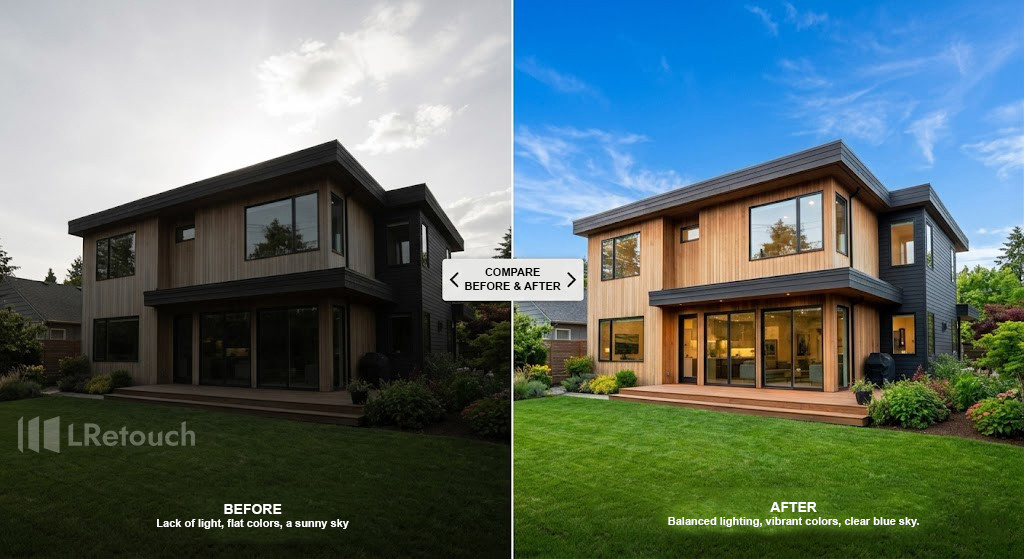
real estate photo color and exposure correction example
- HDR Blending: Combine multiple bracketed exposures to preserve details in both shadows and highlights, especially in high-contrast scenes.
HDR Blending
- Perspective Correction: Straighten vertical and horizontal lines so rooms appear balanced, proportionate, and professionally presented.
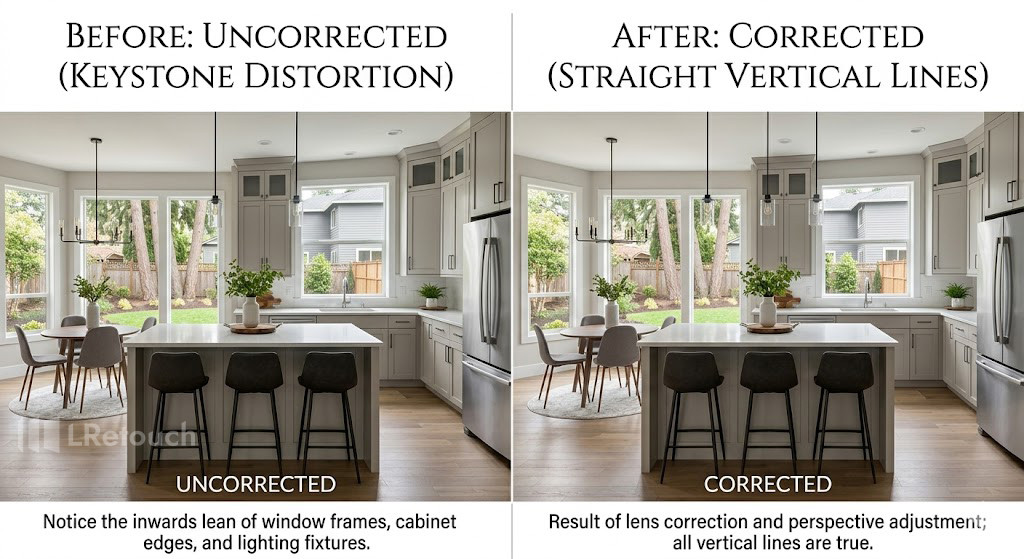
Perspective Correction
- Object Removal & Decluttering: Remove unwanted items such as cords, hoses, or personal belongings to create a clean and distraction-free image.
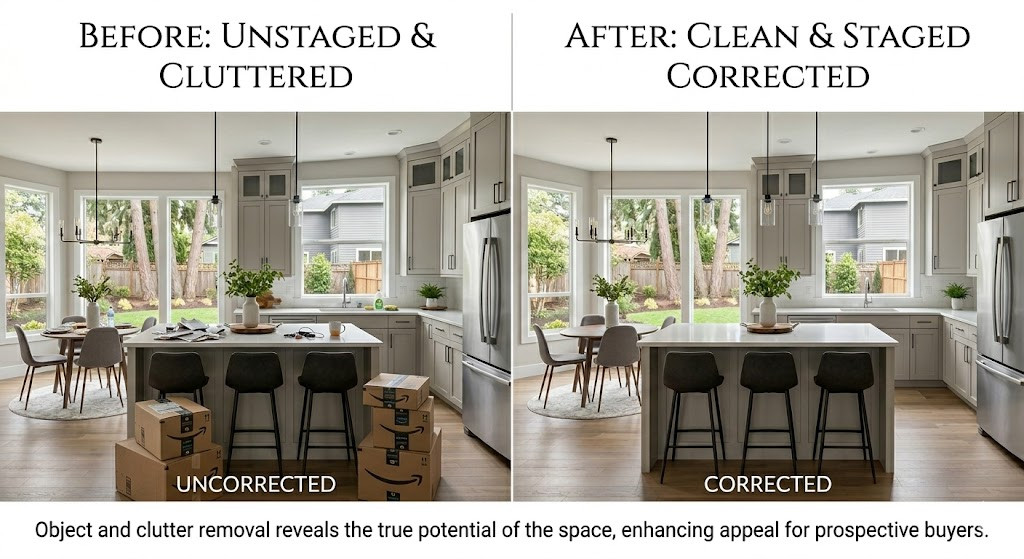
Object Removal
- Improve Clarity and Sharpness: Enhance image detail with sharpening tools like High Pass or Smart Sharpen, applied with restraint.
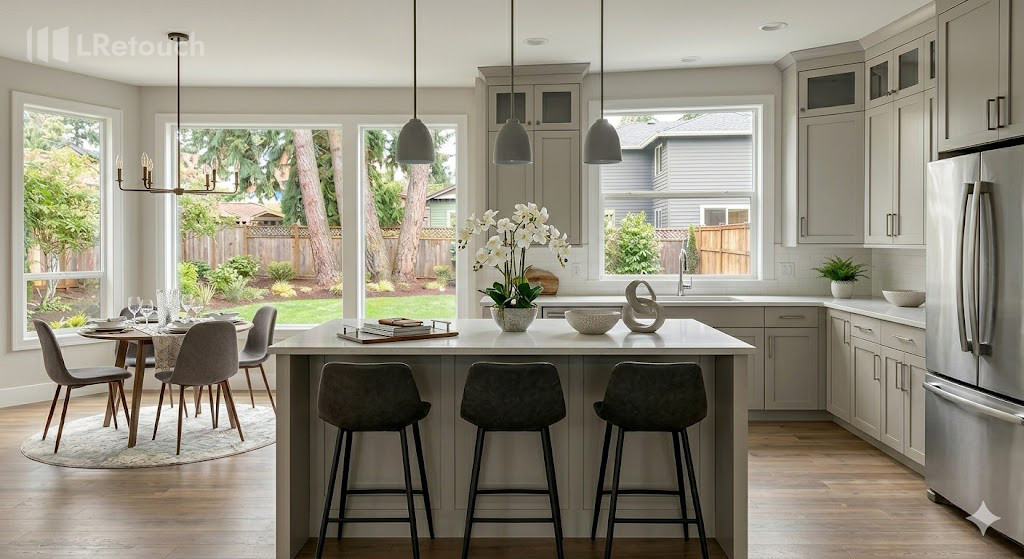
Sharpness
- Sky Replacement: To replace boring skies with realistic ones, use Photoshop’s Sky Replacement tool or hand masking. To achieve a natural-looking outcome, match color and lighting.
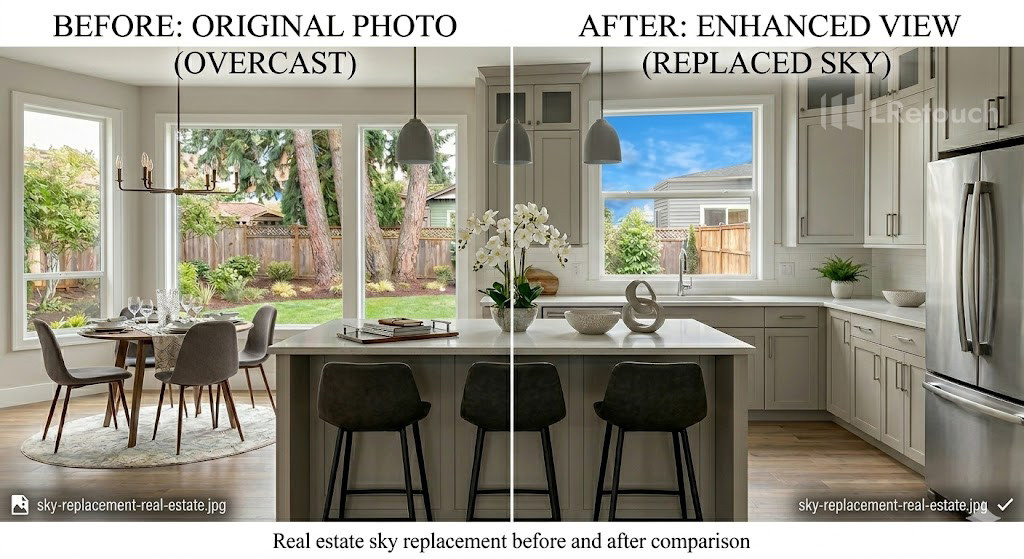
Sky Replacement
- Virtual Staging: Vacant spaces often appear stark and lack warmth, making them less appealing to potential buyers. Virtual staging digitally adds furniture and decor, helping buyers visualize how the space can be used.
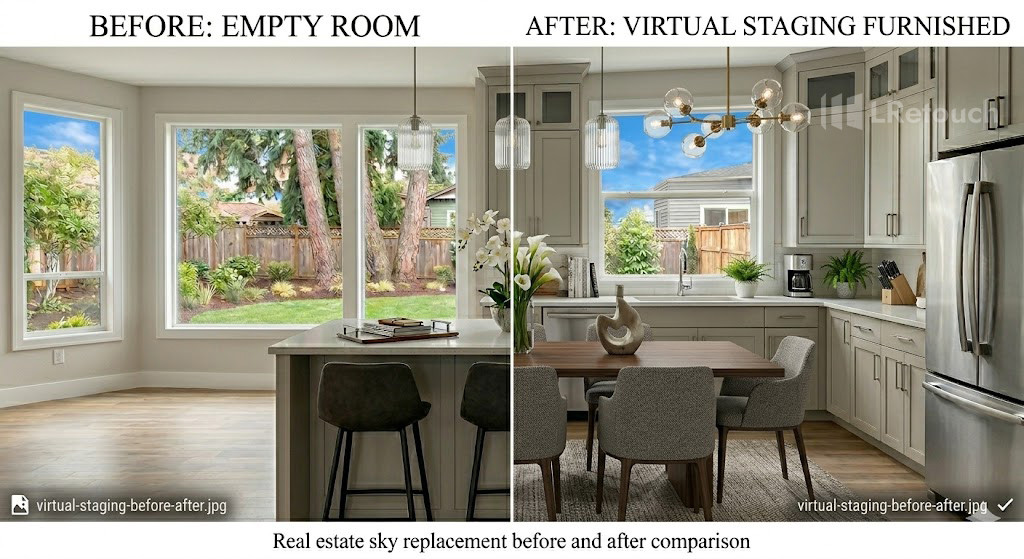
Virtual Staging
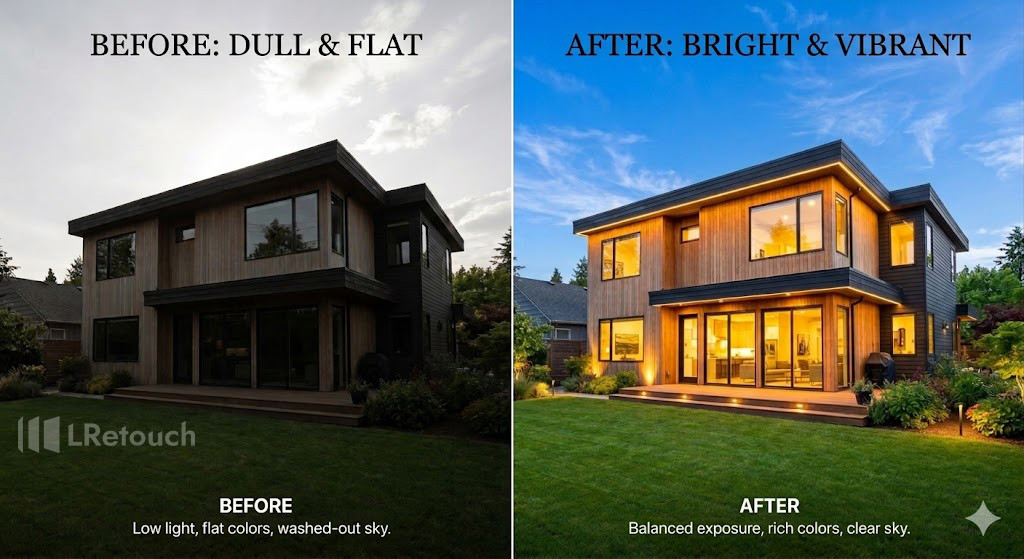
- Day-to-Dusk Conversion: Transform daytime exterior images into twilight scenes to create a warm, inviting, and high-end visual appeal.
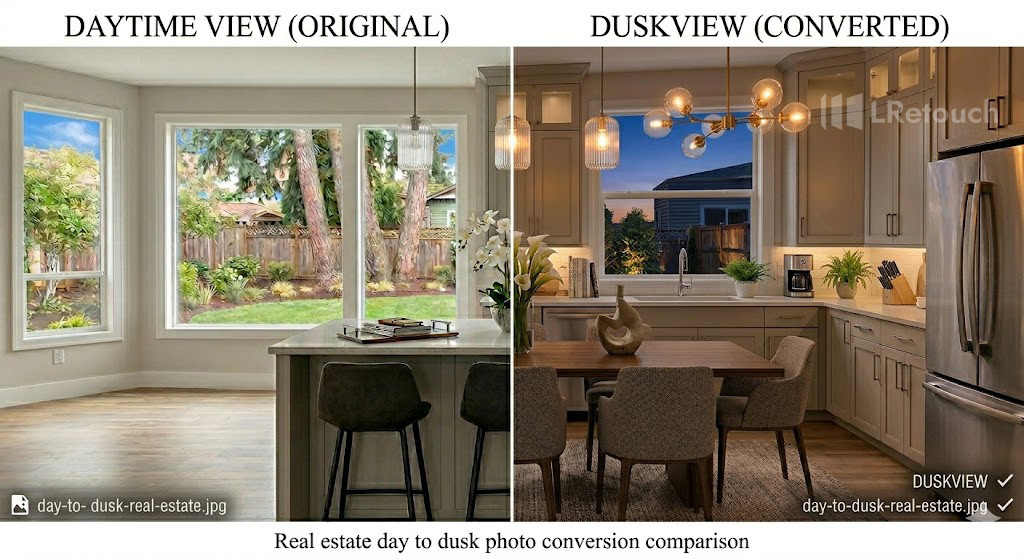
Day to Dusk
You may also like this: Real estate photo editing trends 2026
Common Tools and Workflow for Real Estate Photo Editing
When it comes to best tools for real estate photo editing, professionals typically rely on a combination of powerful software and efficient workflows.
Industry-standard programs like Adobe Lightroom and Photoshop remain the top tools photo editing for realtors, offering advanced capabilities for both batch processing and detailed retouching.
Lightroom is widely used to handle large volumes of images quickly, allowing photographers and agents to apply consistent adjustments across entire property shoots.
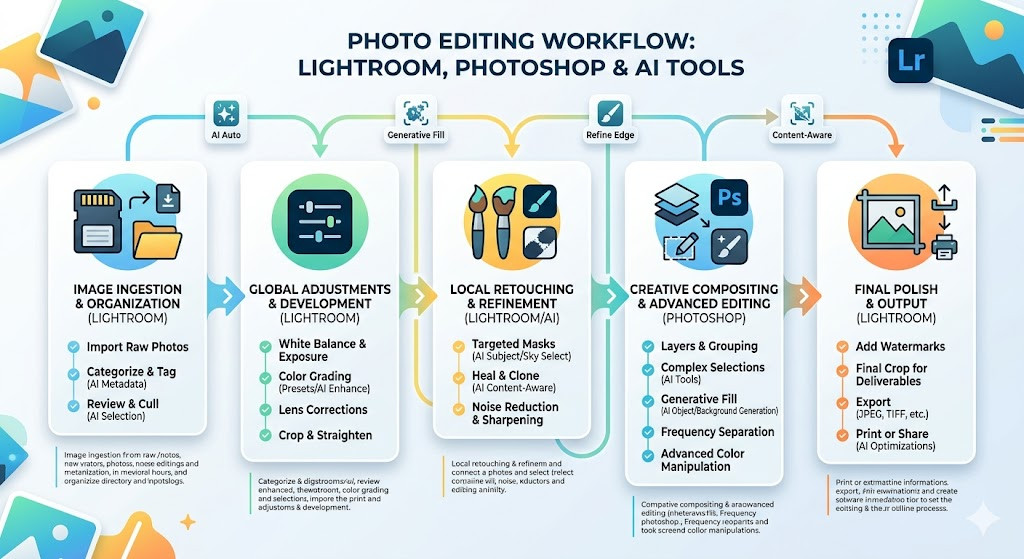
Editing workflow using Lightroom, Photoshop, and AI tools
Meanwhile, Photoshop is essential for more complex edits such as object removal, perspective correction, and sky replacement, ensuring each image meets professional standards.
In recent years, AI-powered solutions have become an integral part of modern real estate editing workflows.
These tools automate time-consuming tasks like sky replacement, lighting enhancement, and color balancing, significantly reducing editing time while maintaining high-quality results.
As a result, many real estate professionals now combine traditional software with AI tools to streamline their processes and improve efficiency.
Speed is another critical factor in real estate photo editing. In competitive markets, quick turnaround times can directly impact listing performance.
Many professionals aim to deliver fully edited images within 24 hours, ensuring that properties go live quickly with polished, visually appealing photos.
By leveraging the best tools for real estate photo editing and optimizing workflow efficiency, realtors and photographers can consistently produce high-quality images that attract buyers and drive faster sales.
Conclusion
High-quality visuals play a critical role in attracting buyers and improving listing performance in today’s digital market. From enhancing lighting to correcting perspectives, professional editing helps properties stand out and sell faster. By leveraging the right tools and techniques, agents can present homes at their absolute best and gain a competitive edge with effective real estate photo editing.