
Why your real estate photos look dull is a question many agents face when listings fail to attract attention. From poor lighting and weak composition to weather conditions and camera settings, several factors can drain vibrancy from your images. Understanding these issues is essential to creating visually compelling photos that capture buyer interest and improve listing performance.
Why your real estate photos look dull?
Dull real estate photos are a common concern that can directly impact listing performance and buyer engagement. From lighting issues to poor composition, several factors can make property images appear flat and uninviting.
Before diving into solutions, it’s important to understand the most common causes behind this problem.
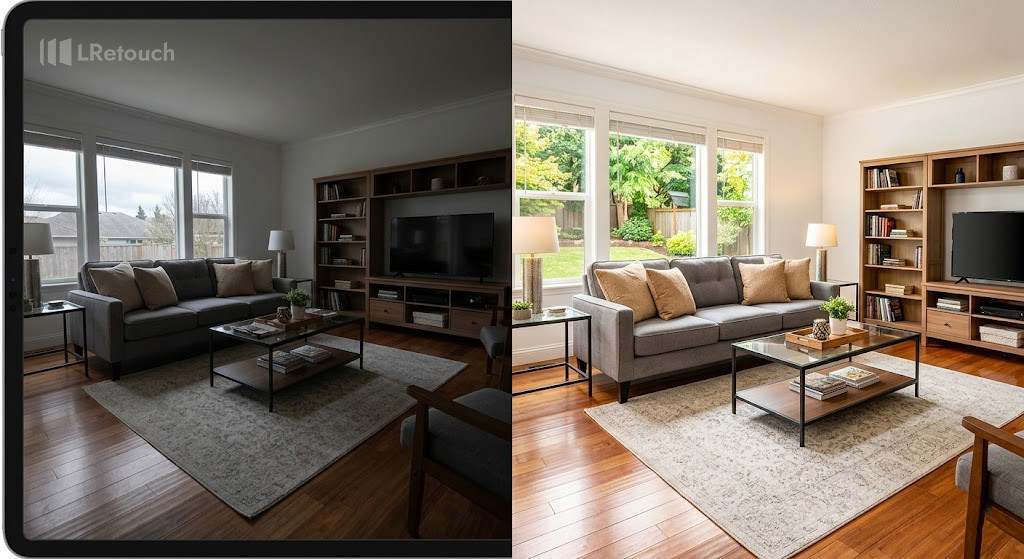
A striking visual comparison demonstrating the transformation of a property listing from a flat, dark camera shot to a professionally enhanced, bright, and welcoming living room.
Poor lightning & Exposure
Poor lighting and incorrect exposure are major reasons listings look unappealing. Lighting problems real estate photographers face often result from weak natural light, harsh shadows, or shooting at the wrong time of day.
Overexposed images wash out details, while underexposed photos hide key features. Without balanced brightness and proper camera settings, even attractive properties can appear flat, dark, and far less inviting to potential buyers.
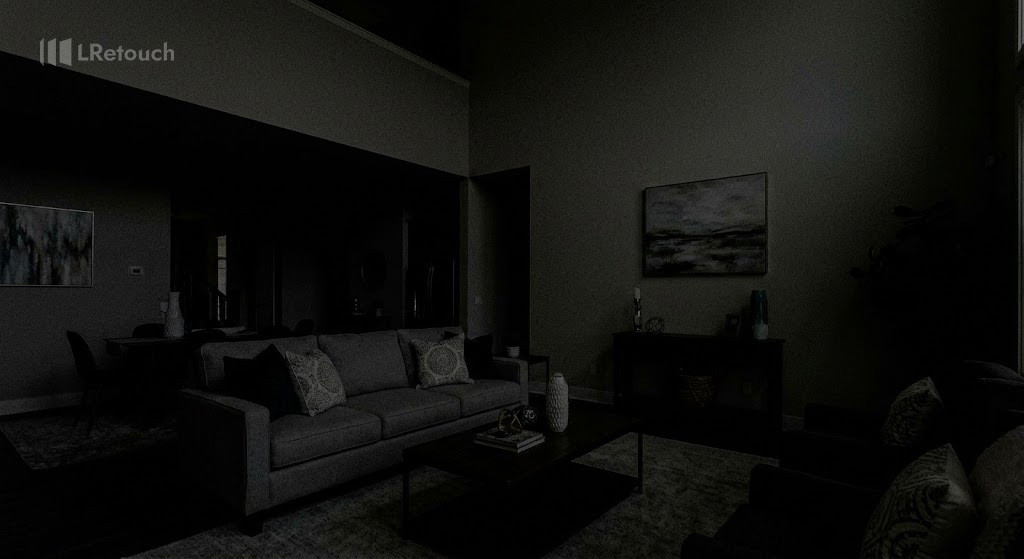
An example of poor exposure in property photography, where insufficient natural light and deep shadows hide important interior details and features.
Incorrect White Balance
Incorrect white balance is another key reason for bad image quality in property listings. When color temperature isn’t adjusted properly, interiors can appear too yellow, blue, or unnatural, making real estate photos look dull and unappealing.
This color distortion reduces visual accuracy and can misrepresent the property.
Proper white balance ensures true-to-life colors, helping spaces appear brighter, cleaner, and more attractive to potential buyers.
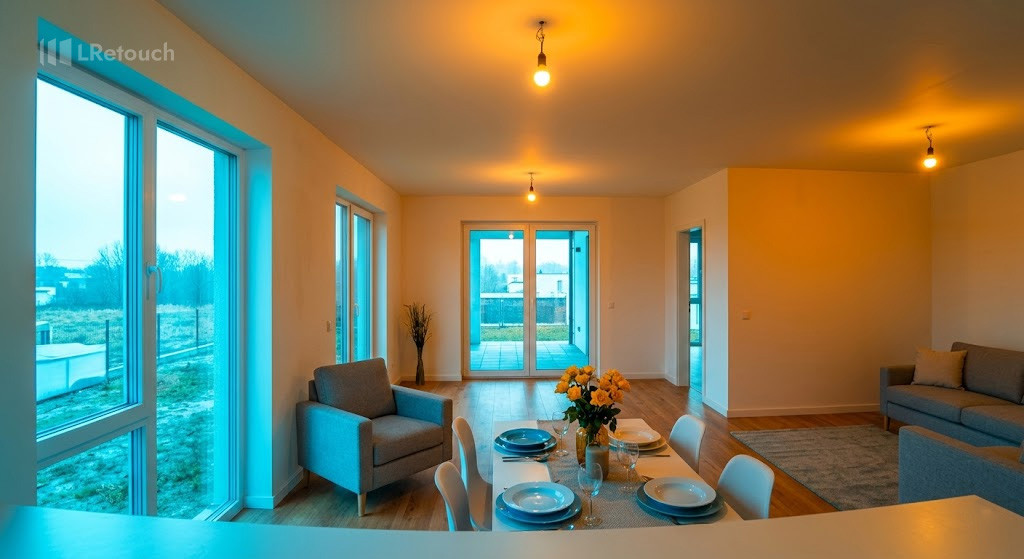
A demonstration of bad white balance in a room, where mixed light sources create distracting orange and blue tones on what should be clean, neutral walls.
High Contrast
High contrast is a common issue that can make real estate photos look dull and visually unbalanced. When there is a large difference between bright and dark areas, such as sunlit windows and shadowed interiors, cameras often struggle to capture details evenly.
This results in blown-out highlights or overly dark corners, reducing overall image quality. Without proper exposure blending or HDR techniques, important features can be lost.
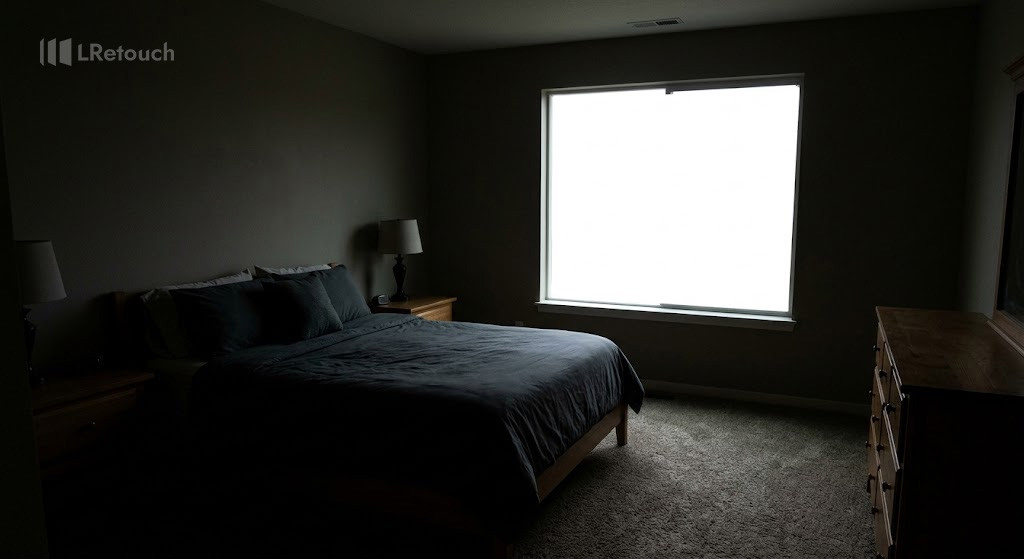
A high-contrast listing photo showing the camera’s failure to balance bright sunlight from the window with the darker shadow areas inside the bedroom.
Lack of Editing
Lack of editing is a common cause of flat, unappealing property images.
Without proper real estate photo editing, photos often retain dull colors, uneven lighting, and minor distortions straight from the camera. Inconsistent tones, low contrast, and uncorrected shadows can make spaces feel lifeless and less inviting.
These issues contribute to a lack of visual clarity and polish, reducing the overall impact of a listing. As a result, properties may appear less attractive, even if the actual space is well-designed and visually appealing in person.
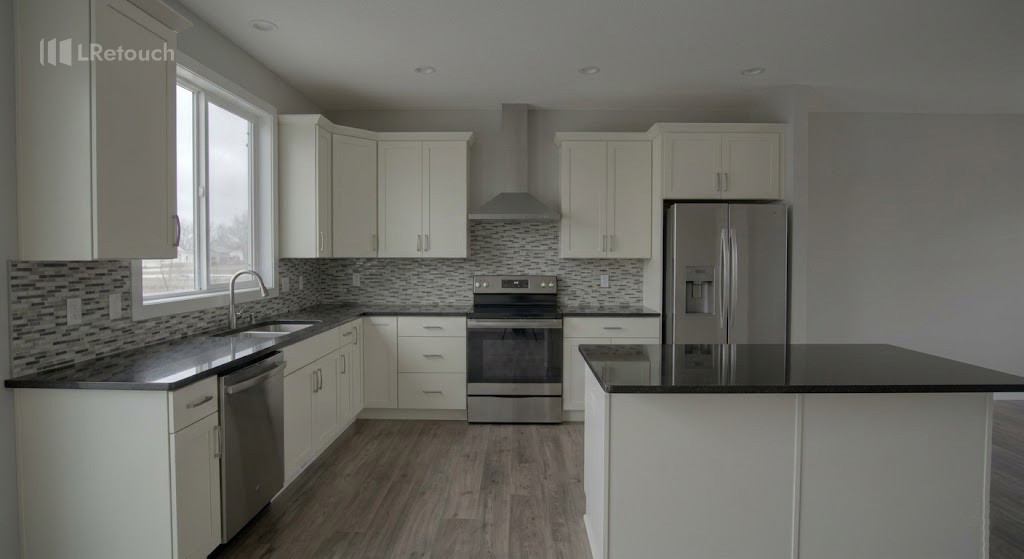
An unedited RAW real estate photograph illustrating how lack of post-processing leaves colors looking lifeless and the overall space uninviting.
Misuse of Flash
Misuse of flash is a frequent cause of bad image quality in property photography.
Direct or poorly balanced flash can create harsh reflections, blown-out highlights, and unnatural shadows across walls and furniture. It often produces uneven lighting, making spaces look flat or overly bright in some areas while dark in others.
This inconsistency reduces depth and realism, causing property images to appear less appealing and visually unprofessional.
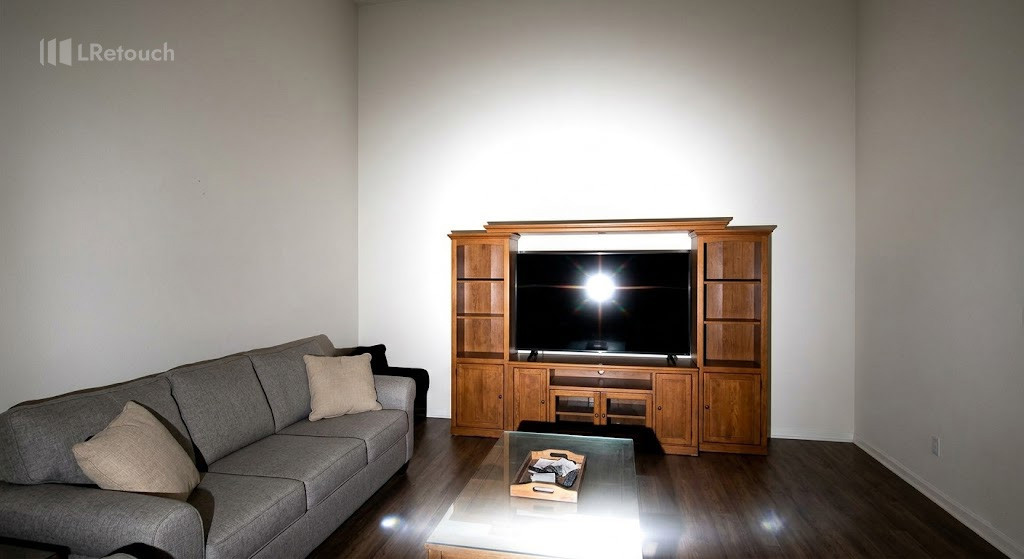
The negative impact of direct camera flash in interior photography, causing artificial glare, hotspots, and distracting shadows on walls and furniture.
Lack of Structure/ Perspective
Lack of structure and proper perspective is also a common reason real estate photos look dull and unprofessional. When lines are not straight or angles are poorly aligned, rooms can appear distorted, cramped, or visually confusing. \
Inconsistent framing and imbalance in composition reduce clarity and depth, making spaces feel less organized and appealing. This weak visual structure prevents viewers from accurately understanding the layout and overall flow of the property.
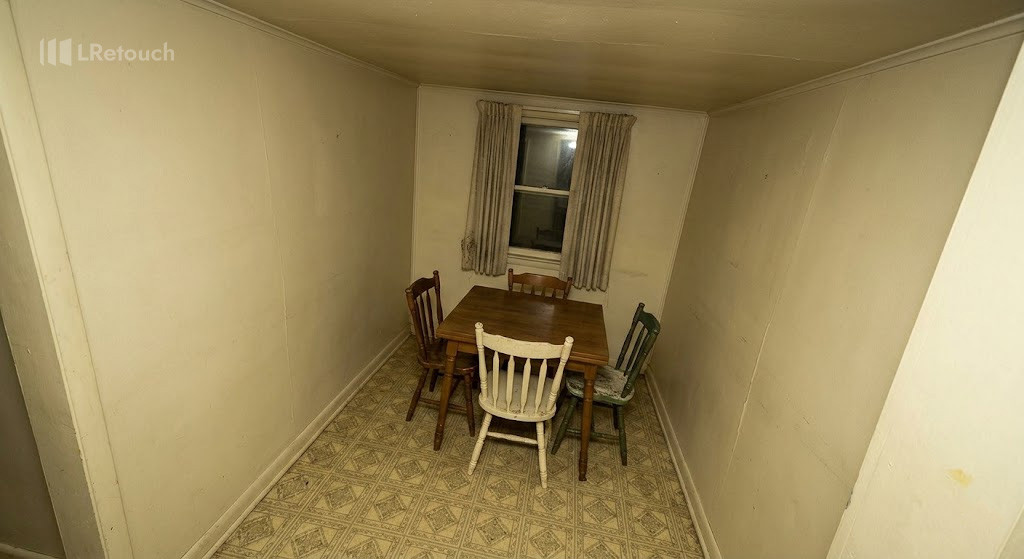
A poorly framed real estate shot where unaligned vertical lines and an incorrect camera angle distort the room’s true layout and size.
How to fix dull real estate photos?
Real estate photos look dull when key elements like lighting, color balance, and composition are not optimized—but the right fixes can quickly transform their impact.
From correcting exposure to refining visual clarity, targeted improvements can make listings more vibrant and engaging.
Applying these effective fixes helps enhance image quality and capture buyer attention more effectively.
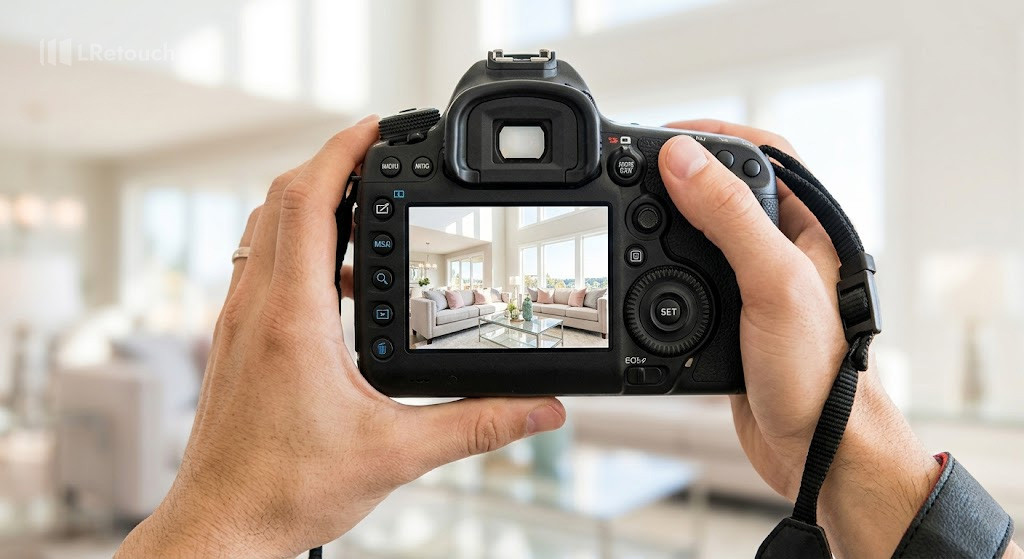
A sharp, high-quality preview of an optimized, bright property photo on a DSLR screen, representing solutions to fix dull listing imagery.
Use the Flambient Technique
Use the flambient technique to significantly improve lighting balance and image clarity in property photos. This method combines ambient light with controlled flash to capture both natural tones and detailed interiors without harsh shadows.
It helps eliminate uneven exposure and color inconsistencies, resulting in more realistic and visually appealing images.
Before & after real estate photo enhancement often highlights how flambient photography creates brighter, sharper, and more professional-looking listings that attract greater buyer interest.
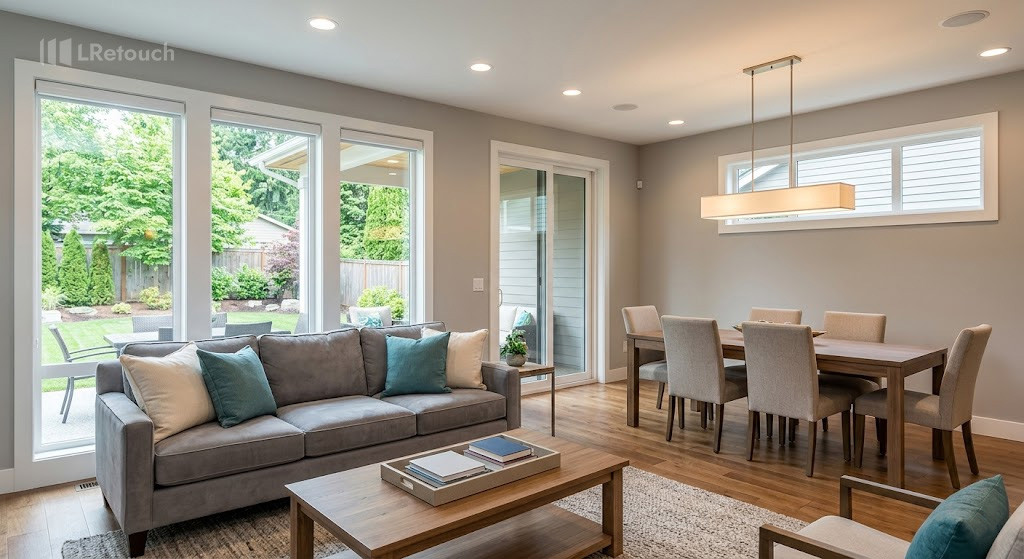
An interior photograph utilizing the flambient method to achieve perfect color accuracy, crisp details, and a natural blend of window light and flash.
Adjust White Balance Manually
Adjust white balance manually to achieve accurate, consistent color throughout your property photos. Relying on auto settings often leads to unwanted color casts, especially under mixed lighting conditions.
Fine-tuning temperature and tint ensures whites appear clean and other colors remain true to life, helping enhance photo colors effectively.
For example, a room lit by warm bulbs may appear overly yellow; adjusting the white balance can neutralize the tone, making walls and furniture look more natural and visually appealing.
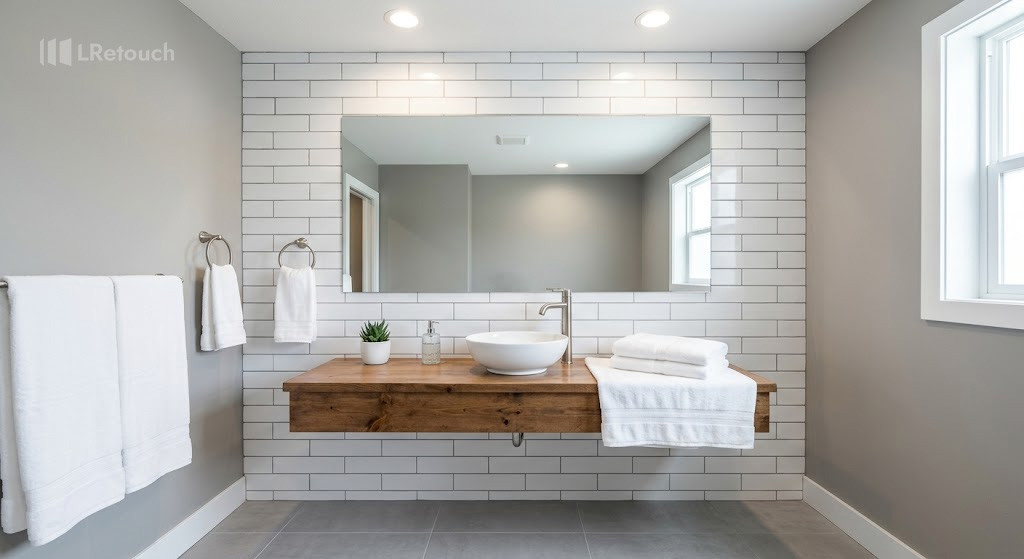
A clean and hygienic bathroom scene showing true-to-life colors and pure whites achieved through accurate manual white balance adjustment.
Properly Blend Exposures
Properly blend exposures to balance bright and dark areas within a single image. By combining multiple shots taken at different exposure levels, you can retain detail in both highlights and shadows.
This technique prevents blown-out windows and overly dark interiors. Exposure blending creates a more even, natural look, improving clarity and making property images appear more vibrant and professionally captured.
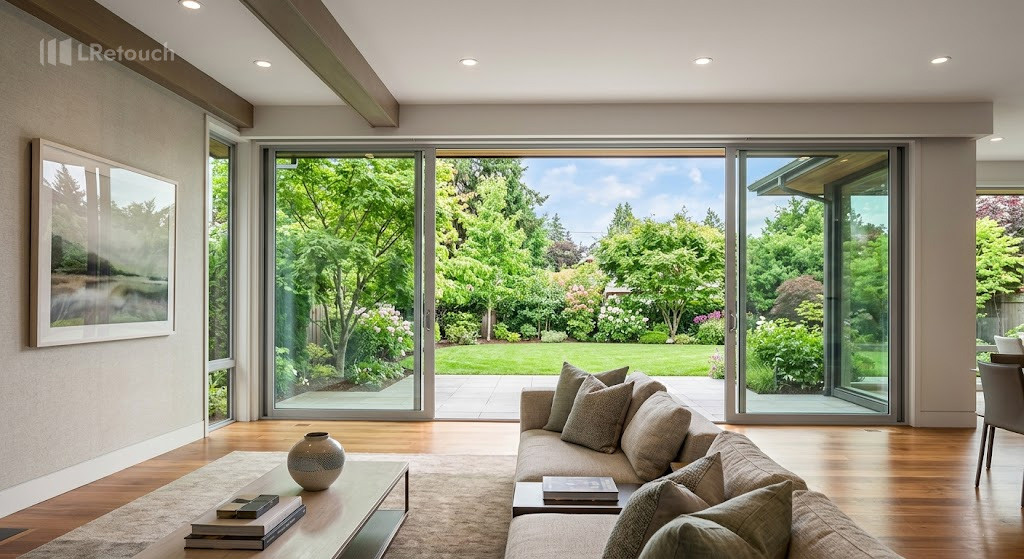
An expert example of exposure blending (HDR), where multiple brackets are combined to show both a well-lit interior and a clear view of the outdoor scenery.
Elevate Editing
Elevate editing to transform flat visuals into polished, high-impact listing images. Advanced real estate photos editing techniques—such as precise color correction, contrast tuning, and perspective alignment—help correct inconsistencies and improve visual depth.
Refining details like sharpness and tonal balance can significantly enhance clarity. This approach acts as a reliable, dull property image fix, ensuring photos appear vibrant, balanced, and more appealing to potential buyers.
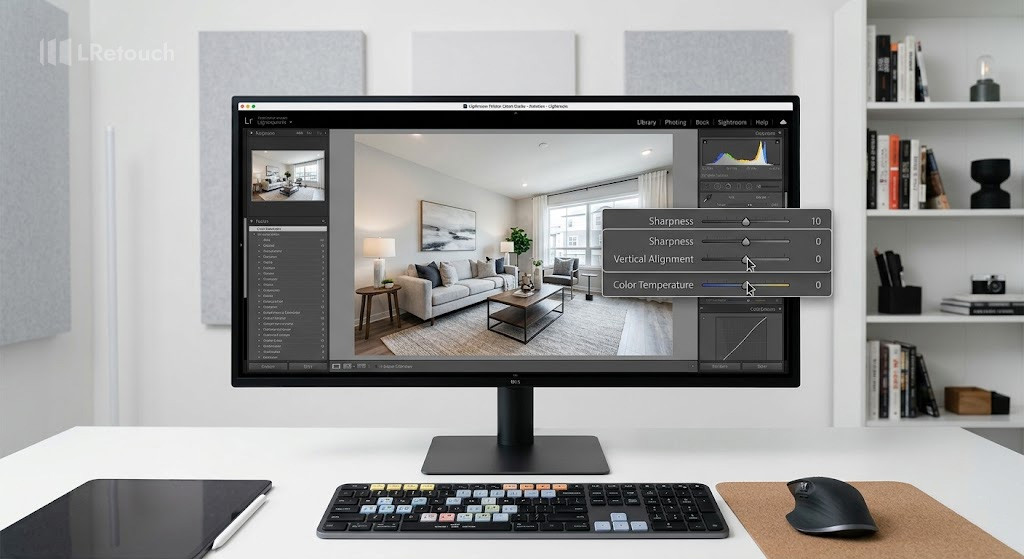
A professional digital workspace where advanced real estate photo editing techniques are applied to correct geometry, colors, and lighting.
Use a Tripod
Use a tripod to stabilize your camera and achieve sharper, more consistent property images. It minimizes motion blur and allows precise framing, especially in low-light conditions where slower shutter speeds are needed.
A tripod also helps maintain straight lines and balanced composition across multiple shots. This simple tool is an effective dull property images fix and helps improve listing photos by enhancing clarity, alignment, and overall visual quality.
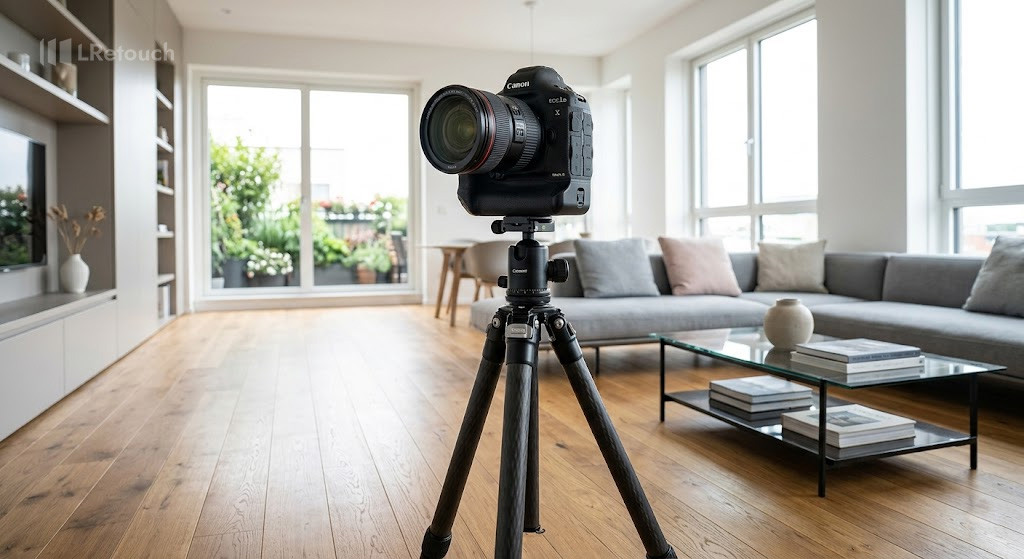
The essential use of a tripod in property photography to guarantee sharp focus, eliminate motion blur, and maintain perfect horizontal framing.
Key Takeaway
In real estate photography, small mistakes in lighting, exposure, color balance, and composition can quickly reduce a listing’s appeal. By identifying and correcting these issues, agents and photographers can avoid real estate photos look dull and increase sales.