

Outsource photo editing real estate services can save photographers significant time while improving image quality and workflow efficiency. In this guide, we compare hiring professional real estate photo editors versus self-editing to help you determine the best option for your budget, turnaround time, and business growth.
Self-editing real estate photos
photo editing vs DIY
link: real estate photos look dull
Self-editing is a common approach for photographers who want full creative control over their property images. In the debate of photo editing vs DIY, many beginners prefer editing their own photos to save money and develop editing skills.
However, self-editing also comes with limitations that can affect workflow speed and image consistency.
Benefits of self-editing real estate photos
- Saves money compared to hiring professional editors or using outsource photo editing real estate services
- Gives photographers full creative control over colors, lighting, and image style
- Helps beginners improve editing skills and understand photo editing vs DIY workflows
- Allows quick adjustments without waiting for external editing turnaround times
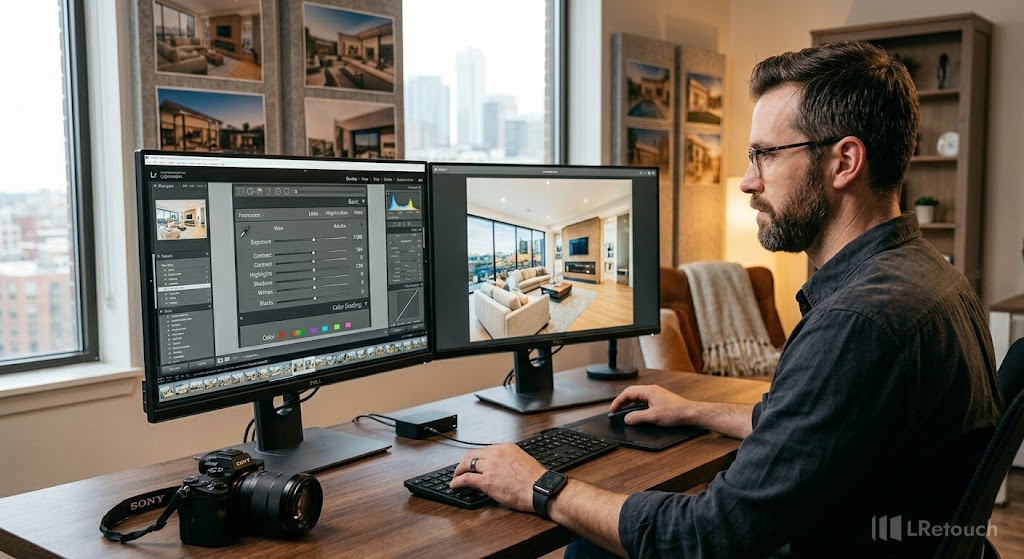
A photographer editing property images manually using professional editing software.
Limitations of self-editing real estate photos
- Editing large batches of photos can be very time-consuming
- Advanced editing techniques like HDR blending and perspective correction require experience
- Inconsistent editing can make real estate photos look dull or unrealistic
- Managing both photography and editing may reduce productivity for busy photographers
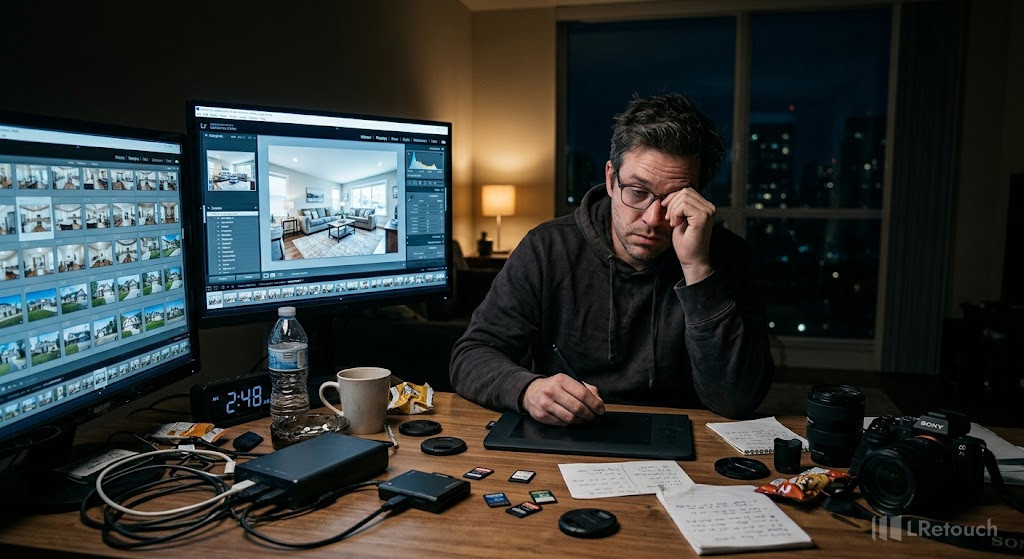
A photographer struggling with time-consuming real estate photo editing work.
When to use
Self-editing is often the best choice for beginners, small projects, or photographers working with a limited budget. It works well when managing a small number of listings with flexible turnaround times.
However, photographers with growing workloads may eventually decide to outsource photo editing real estate services to improve efficiency, maintain consistency, and focus more on photography and client management.
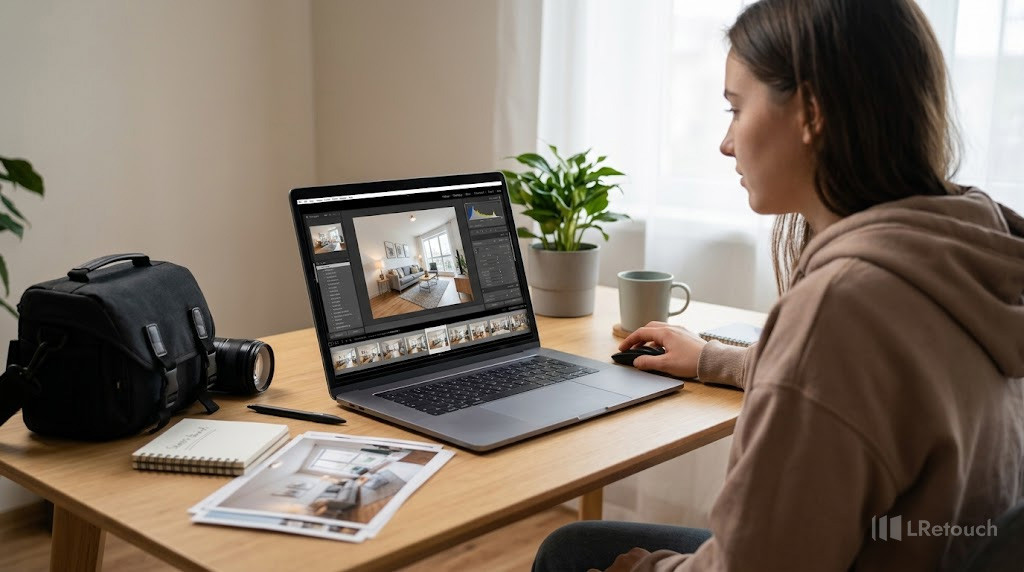
A beginner real estate photographer handling photo editing for smaller projects.
Outsource photo editing real estate
Outsourcing has become a popular solution for photographers and real estate agents who want faster workflows and consistently polished property images.
Choosing to hire photo editor professionals can save significant time while improving image quality and business efficiency.
A professional real estate editing service can handle complex editing tasks that may be difficult or time-consuming for photographers to complete on their own.
Benefits of oursource photo editing real estate
- Saves hours of editing time, allowing photographers to focus more on shooting and client communication
- Provides access to professional editors with advanced HDR blending, sky replacement, and perspective correction skills
- Delivers consistent image quality across multiple property listings
- Faster turnaround times help photographers handle more clients and larger projects
- Improve productivity and scalability for growing photography businesses
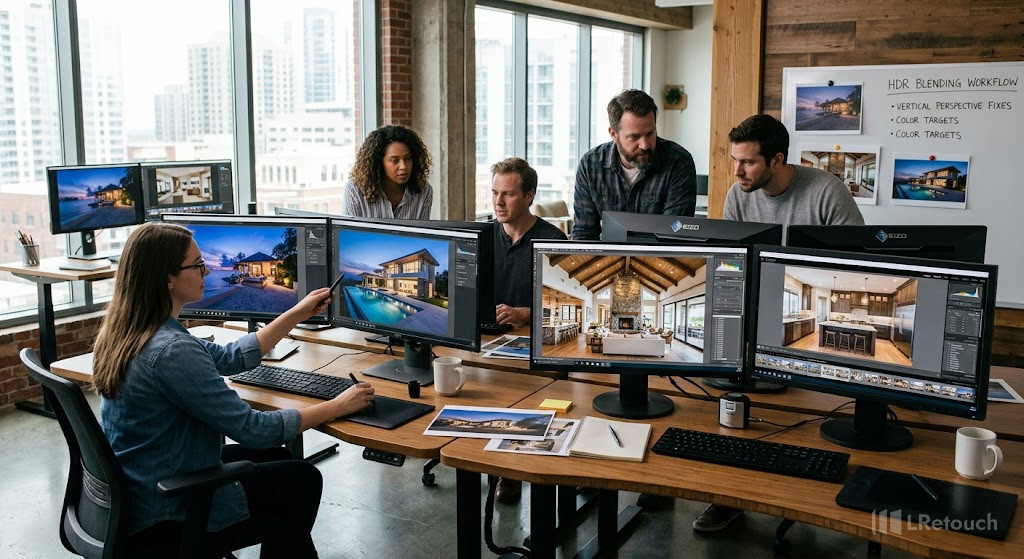
A professional editing company processing high-quality real estate photography projects.
Limitations of outsource photo editing real estate
- Ongoing editing costs can become expensive for photographers with smaller budgets
- Some photographers may lose creative control over editing style and image adjustments
- Communication issues or unclear instructions may lead to inconsistent editing results
- Turnaround times can vary depending on the workload of the chosen real estate editing service
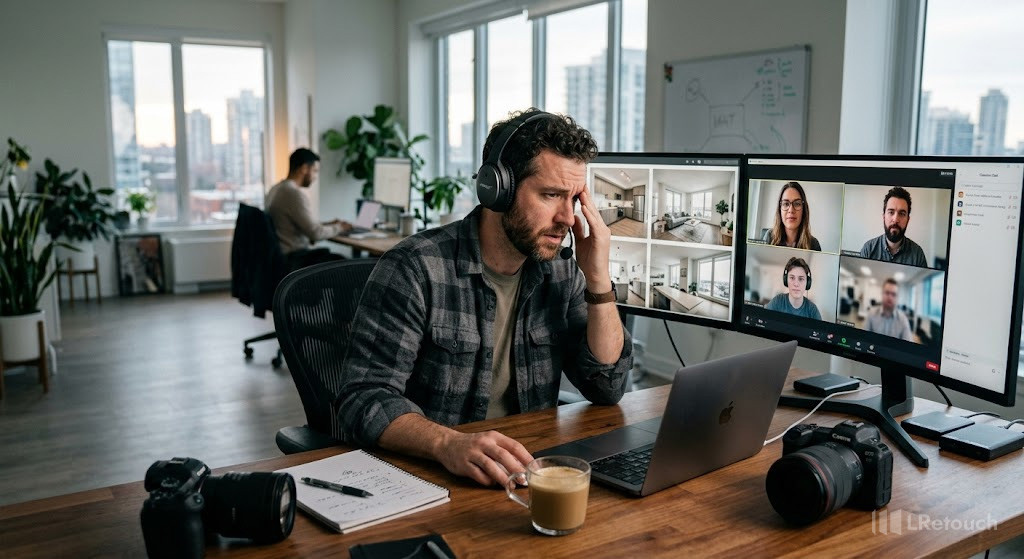
A photographer communicating with an external editing service about image revisions.
When to use
Outsourcing is usually the best choice for photographers handling high-volume projects, luxury property listings, or fast turnaround schedules.
It is also ideal for professionals who want to hire photo editor experts to manage post-processing while they focus on photography and client management.
For growing businesses, outsourcing can significantly improve productivity and support long-term scalability.
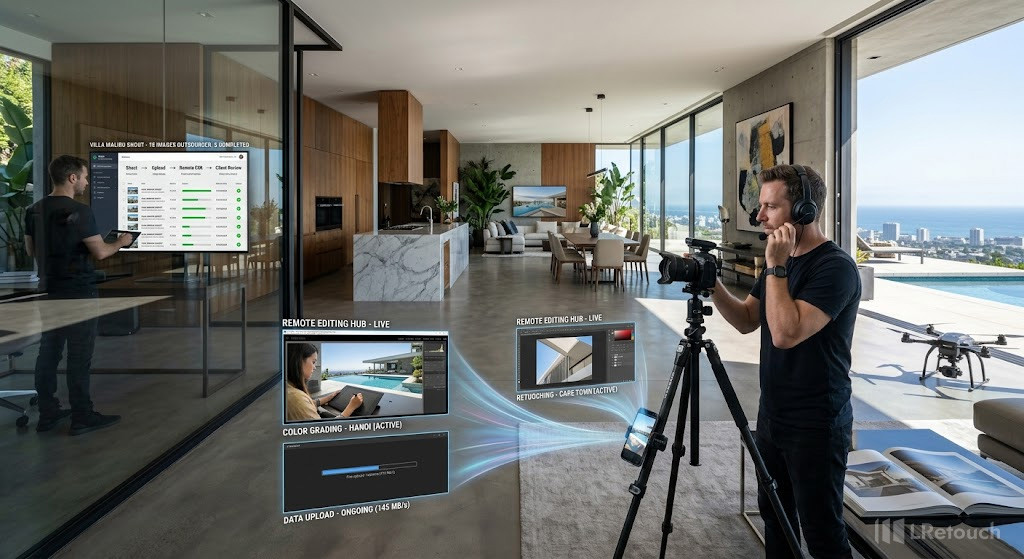
A professional photographer focusing on client work while external editors handle post-processing.
Hiring vs self-editing workflow comparison
Choosing between self-editing and outsourcing depends on your budget, workload, editing skills, and business goals. The comparison table below highlights the key differences between hiring professional editors and editing real estate photos yourself.
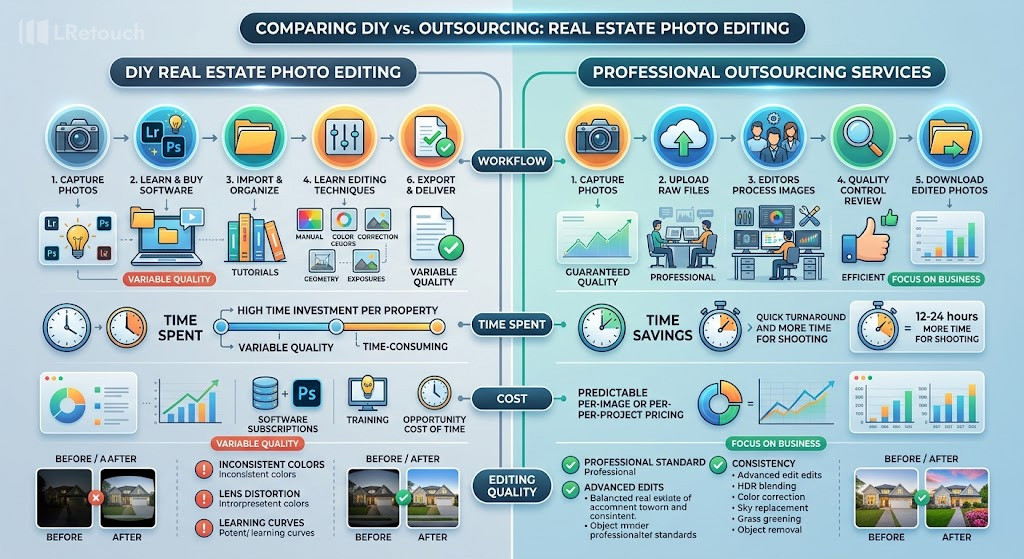
A visual comparison between self-editing and outsourcing real estate photo editing workflows.
| Factor | Self-Editing Real Estate Photos | Hiring / Outsourcing Editing |
| Cost | Lower upfront cost, but requires real estate photo editing tools and time investment | Ongoing service fees for each project or batch |
| Time Requirement | Time-consuming, especially for large property shoots | Saves significant editing time and speeds up workflow |
| Creative Control | Full control over editing style and adjustments | Less direct control, depending on the editor or company |
| Editing Quality | Depends on personal skill and experience | Often gives more consistent and professional results |
| Learning Opportunity | Helps improve editing skills and photography knowledge | Limited hands-on editing experience |
Combining self-editing and professional editing
A hybrid approach that combines self-editing with a professional real estate editing service is often the most efficient solution for photographers. This method allows photographers to maintain creative control while still benefiting from advanced editing expertise and faster workflows. Instead of handling every editing task alone or fully choosing to outsource photo editing real estate, photographers can divide the workload strategically.
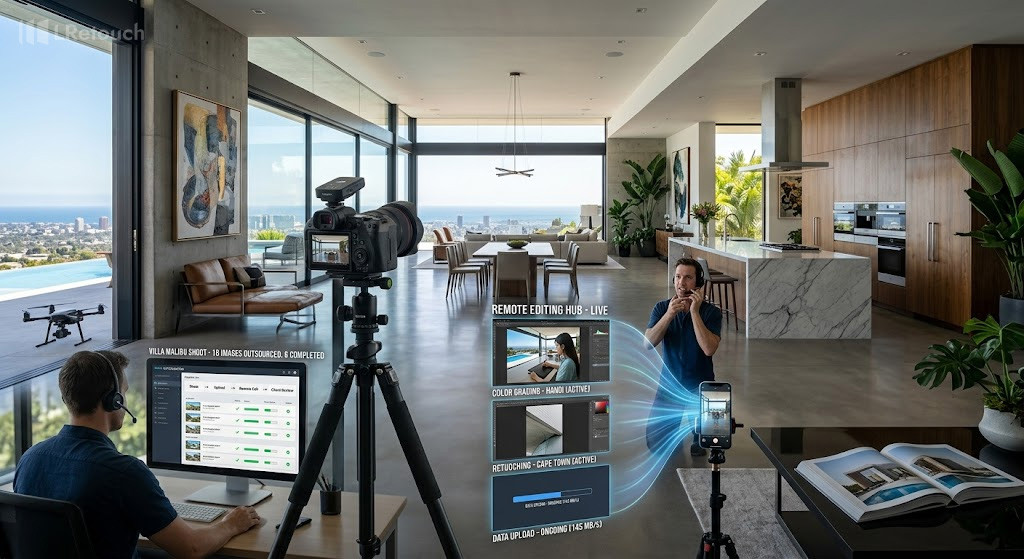
A hybrid workflow combining self-editing and outsourced real estate photo enhancement services.
A common workflow starts with self-editing basic adjustments such as exposure correction, white balance, cropping, and image selection. Photographers can organize and prepare the strongest images before sending them to a professional editor for advanced real estate photo enhancement tasks like HDR blending, sky replacement, object removal, window masking, and perspective correction. This process reduces editing costs while still improving final image quality.
For example, a real estate photographer shooting 40 listing photos may personally edit 25 standard interior shots using Lightroom vs Photoshop real estate tools, then send 15 complex images with difficult lighting or exterior sky issues to a professional real estate editing service. This hybrid workflow saves time, keeps costs manageable, and ensures consistent, high-quality listing photos.
The hybrid approach is especially useful for growing photography businesses that want scalability without losing creative involvement in the editing process.
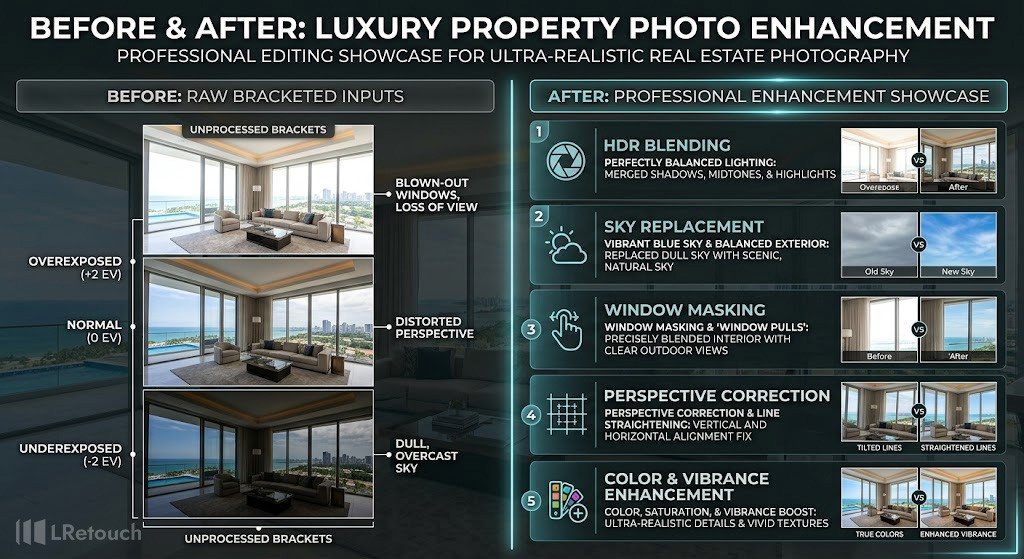
Professional enhancement techniques used in real estate photo editing.
In conclusion
Photo editing is an essential part of real estate photography, whether you choose self-editing, professional services, or a hybrid workflow. By understanding the strengths and limitations of each approach, photographers can decide when to outsource photo editing real estate projects to improve efficiency, maintain quality, and create more attractive property listings.
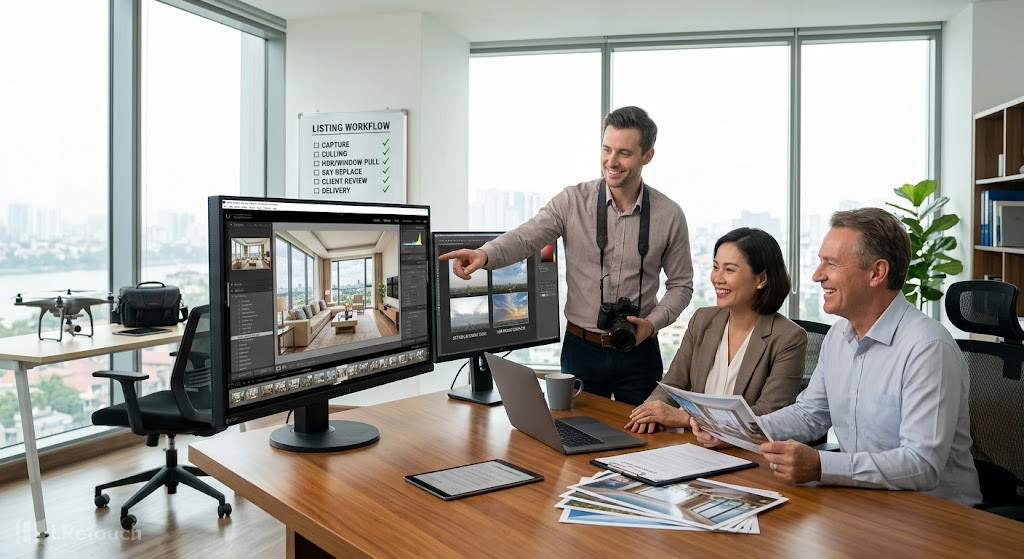
A professional real estate photographer achieving efficient workflow and high-quality property images.