
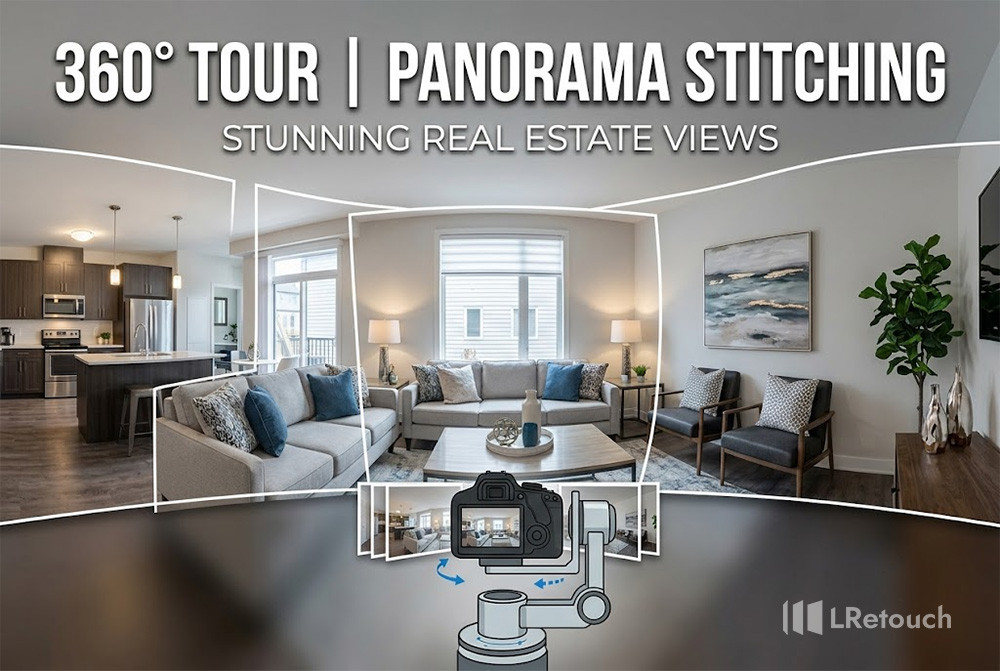
Real estate panorama stitching transforms multiple property photos into seamless 360-degree views. This technique helps real estate photographers create immersive virtual tours, showcase architectural details, and deliver engaging property experiences. Understanding these techniques allows photographers to produce professional panoramas that support modern real estate marketing.
Understanding Real Estate Panorama Stitching
Real estate panorama stitching combines overlapping photographs into one continuous panoramic image. Photographers capture multiple views around a fixed camera position. Specialized software then aligns and blends these images into a seamless scene.
This technique is essential for creating immersive 360-degree property tours. Viewers can explore rooms and understand interior layouts more naturally. Professional architectural panorama editing also preserves straight lines, realistic proportions, and accurate colors. These details are particularly important for showcasing kitchens, living rooms, offices, and luxury properties.
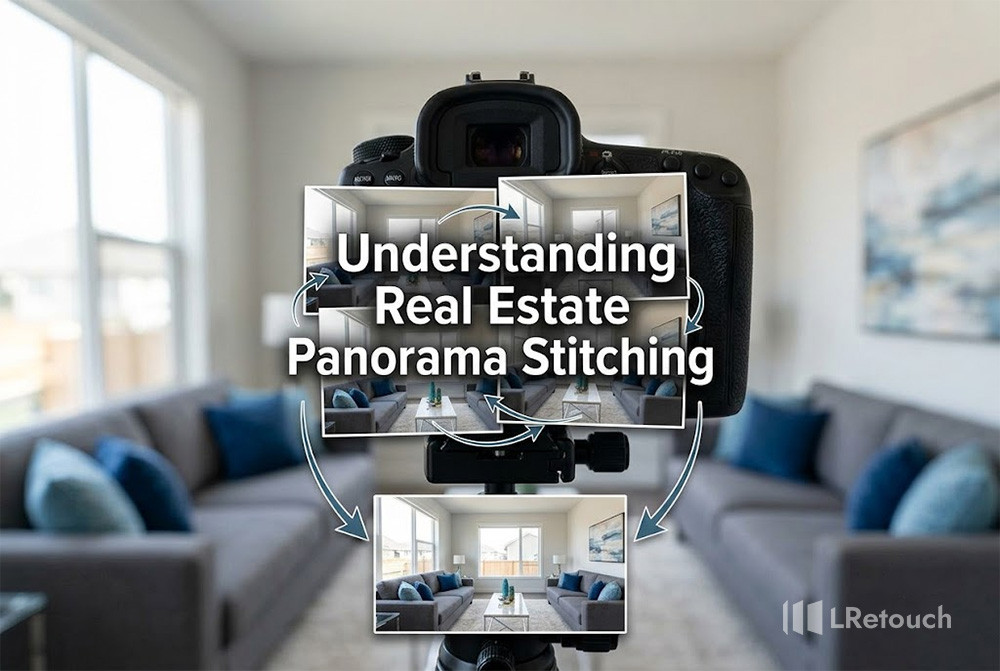
Understanding Real Estate Panorama Stitching
Common Challenges in Real Estate Panorama Stitching
Creating seamless panoramas requires more than combining photographs. Several technical issues can affect image quality and viewer experience.
1. Image Misalignment and Parallax
Camera movement between exposures can cause alignment errors. Objects may appear duplicated or distorted near stitching boundaries. Parallax becomes especially noticeable around furniture, doorways, and nearby objects.
2. Inconsistent Exposure and Color
Different photographs may have varying brightness, contrast, and white balance. Bright windows can appear overexposed, while interior corners remain too dark. These differences create visible transitions across the final panorama.
3. Lens Distortion and Architectural Errors
Wide-angle lenses can bend straight lines and distort room proportions. Incorrect perspective correction can make walls, doors, and windows appear unnatural. These problems reduce the accuracy of property presentations.
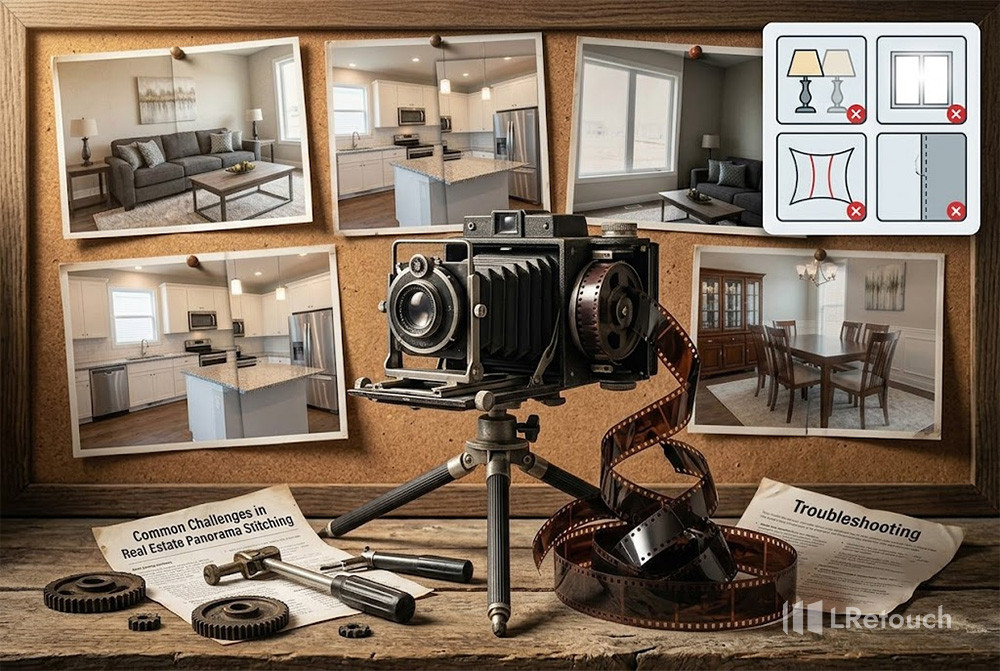
Common Challenges in Real Estate Panorama Stitching
4. Visible Seams and Blending Artifacts
Poor blending can produce hard edges, ghosting, and inconsistent textures. A laplacian blending panorama workflow helps reduce these issues by combining image information across multiple frequency levels. However, results still depend on accurate alignment and suitable source photographs.
5. Maintaining Consistent Visual Quality
Photographers must maintain consistent image quality across every room. This becomes more challenging when a property contains mixed lighting conditions. Similar consistency also matters when panoramas complement a real estate listing video within a property’s marketing package.
Advanced Panoramic Stitching Techniques for Real Estate 360 Tours
Advanced stitching techniques help photographers create natural, accurate, and immersive property panoramas. Each method addresses specific problems during image processing.
1. Precise 360 Photo Alignment
Accurate alignment is the foundation of successful panorama stitching. Software identifies matching features across overlapping photographs. It uses these points to calculate the correct positioning of each image.
Photographers should capture images from a stable camera position. A tripod and panoramic head can reduce unwanted camera movement. Consistent overlap also gives stitching software more information for matching images.
Professional 360 photo alignment reduces duplicated objects and broken architectural lines. It is particularly important in small rooms with furniture close to the camera. Careful alignment produces more convincing 360-degree views.
2. Lens Correction and Perspective Optimization
Wide-angle and fisheye lenses can introduce significant distortion. Straight walls may appear curved, and doorframes may look uneven. These effects can make interiors seem different from their actual appearance.
Lens correction profiles help compensate for optical distortion. Perspective adjustments can also restore vertical lines and realistic architectural proportions.
Effective architectural panorama editing requires a balance between correction and natural appearance. Excessive adjustments may stretch objects near image edges. Editors should preserve the original room geometry while minimizing distracting distortions.
3. Exposure Matching and Color Correction
Real estate interiors often contain bright windows and darker interior spaces. Individual photographs may capture these areas with different exposure settings. Combining them without correction can produce noticeable brightness changes.
Exposure matching helps balance highlights, shadows, and midtones across overlapping images. White balance correction keeps walls, ceilings, and furniture colors consistent. Local adjustments can also preserve window details without making interiors appear unnaturally bright.
High-quality real estate panorama stitching should produce consistent lighting throughout the scene. Instead of being overly processed, the final image should appear realistic. Natural colors help viewers understand the property’s actual appearance.
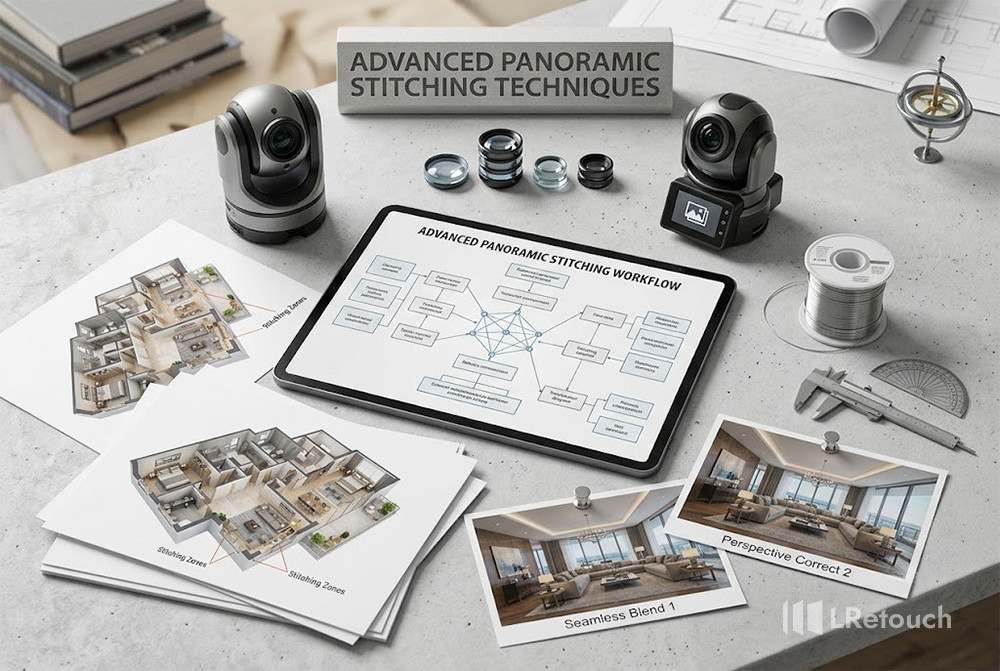
Advanced Panoramic Stitching Techniques for Real Estate 360 Tours
4. Advanced Multiband and Laplacian Blending
Blending determines how overlapping photographs transition into one another. Simple blending methods may leave visible seams when exposure or color differs between images.
Multiband blending addresses this problem by processing image information at different spatial frequencies. Laplacian pyramids separate images into multiple detail levels. The blending process then combines these levels to create smoother transitions.
A laplacian blending panorama workflow can preserve fine details while reducing broad brightness differences. It works well when overlapping images contain slight variations in lighting. However, blending cannot fully correct severe misalignment or moving objects.
Photographers should combine advanced blending with careful capture and exposure matching. This approach produces more consistent panoramas with fewer visible artifacts.
5. Nadir and Zenith Correction
A complete 360-degree panorama includes the floor beneath the camera and the ceiling above it. These areas are often called the nadir and zenith.
The nadir may contain a tripod, camera stand, or missing floor details. The zenith may show ceiling gaps or incomplete image coverage. These defects become obvious when viewers rotate the virtual tour.
Editors can repair these areas using image reconstruction, cloning, and carefully matched textures. They should preserve floor patterns and ceiling geometry whenever possible. Clean corrections create a more polished viewing experience.
6. Quality Control and Platform Optimization
A technically correct panorama still requires a final quality check. Editors should inspect stitching boundaries, vertical lines, exposure consistency, and color accuracy. They should also check for ghosting and missing image regions.
Image dimensions and file formats must match the target virtual tour platform. Appropriate compression helps maintain visual quality while supporting smooth loading. Large panoramas may require optimization for mobile devices and slower connections.
Professional virtual tour stitching services can standardize these processes across multiple properties. This helps photographers maintain consistent results and deliver reliable virtual tour experiences.
High-quality panoramas also complement real estate marketing photos. Together, they provide both detailed still images and interactive property exploration.
When to Use Professional Virtual Tour Stitching Services
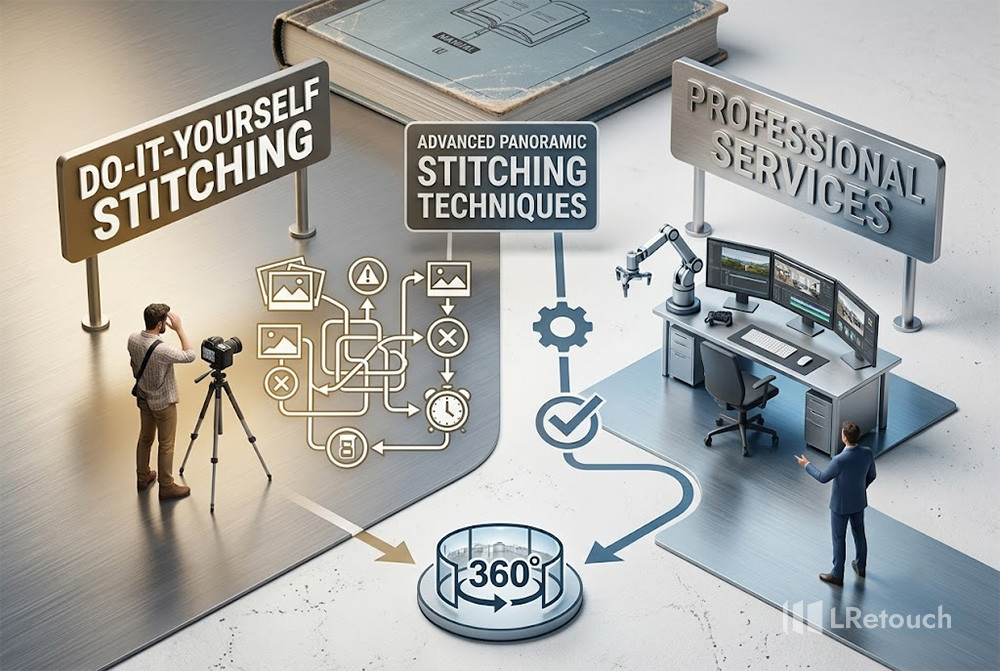
Professional editing becomes valuable when photographers manage large projects or demanding deadlines. Outsourcing can reduce editing time and provide access to specialized stitching expertise.
Experienced editors can handle alignment, lens correction, exposure matching, advanced blending, and final quality control. They can also follow consistent guidelines across multiple rooms and properties. This helps real estate agencies maintain professional presentation standards.
When to Use Professional Virtual Tour Stitching Services
Before choosing a provider, review sample panoramas and check their stitching accuracy. Compare turnaround times, pricing, revision policies, and platform compatibility. Confirm that the provider can meet your image quality requirements.
Ready to create seamless 360-degree property tours? Choose a reliable editing partner to streamline your workflow and improve your panoramic images. Professional real estate panorama stitching helps you deliver immersive virtual tours while focusing on photography, client service, and business growth.