
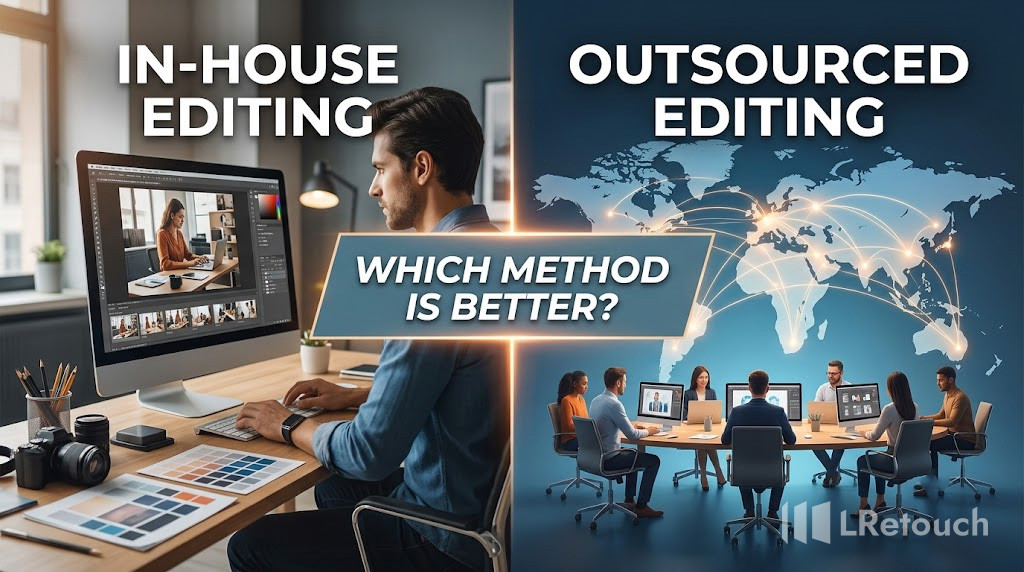
Outsource vs in house editing is an important decision for real estate photographers who want to manage editing costs and maintain consistent image quality. This article explains the key differences between both methods, and shares practical tips to help you choose the best editing solution for your real estate photography business.
What is outsource photo editing?
Outsource photo editing means sending raw property images to an external editor or real estate editing team for post-production. The team can handle tasks such as color correction, HDR blending, exposure adjustment, and object removal. This approach lets photographers use specialized editing support without handling every image themselves.
Pros and cons of outsourcing
Choosing between outsource vs in house editing depends on your workload, budget, and business goals. Outsourcing can improve workflow efficiency, but it also creates some challenges that photographers should consider.
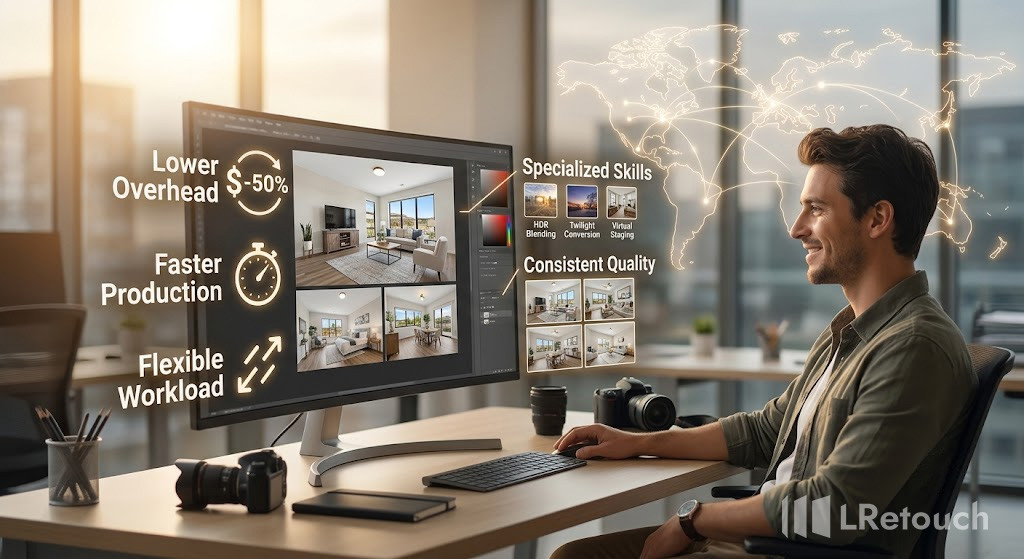
- Flexible workload: You can send more images to an external team during busy seasons and reduce orders during slower periods.
- Lower overhead: You pay for editing when you need it instead of covering full-time salaries, software, equipment, and training.
- Faster production: Professional teams can process large batches and meet deadlines such as 24-hour delivery.
- Specialized skills: Editing companies often have teams with experience in HDR blending, twilight editing, virtual staging, and other real estate techniques.
- Consistent quality: A dedicated team can follow your editing style and maintain a consistent look across multiple property listings.
Pros of Outsourcing
Cons of Outsourcing
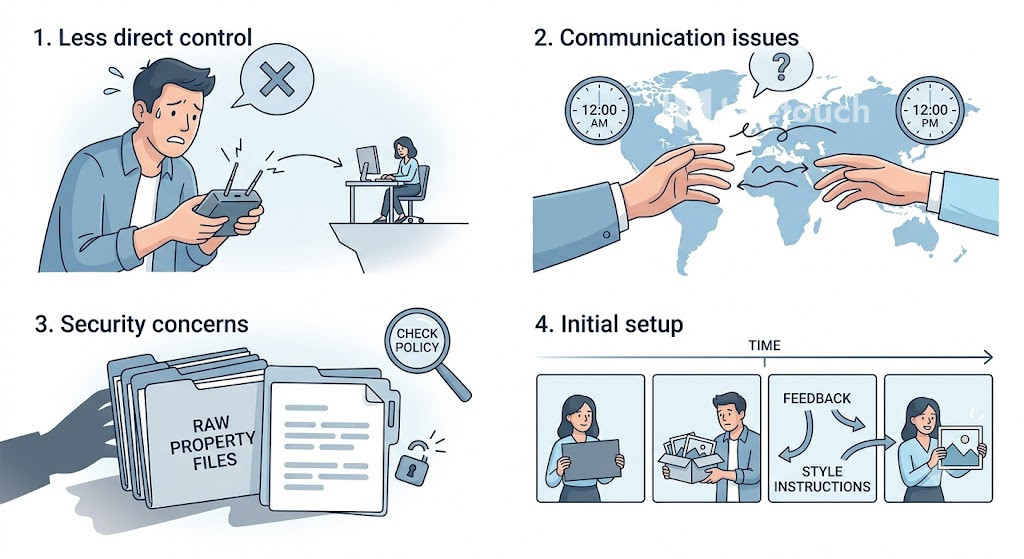
- Less direct control: You must rely on an external editor to follow your preferred style and quality standards.
- Communication issues: Different time zones or unclear instructions can cause revisions and delays.
- Security concerns: Raw property files may contain sensitive client information, so you should check the provider’s file-handling and security policies.
- Initial setup: Editors need sample images, style instructions, and feedback before they can consistently match your expectations.
Cons of Outsourcing
What is in-house editing?
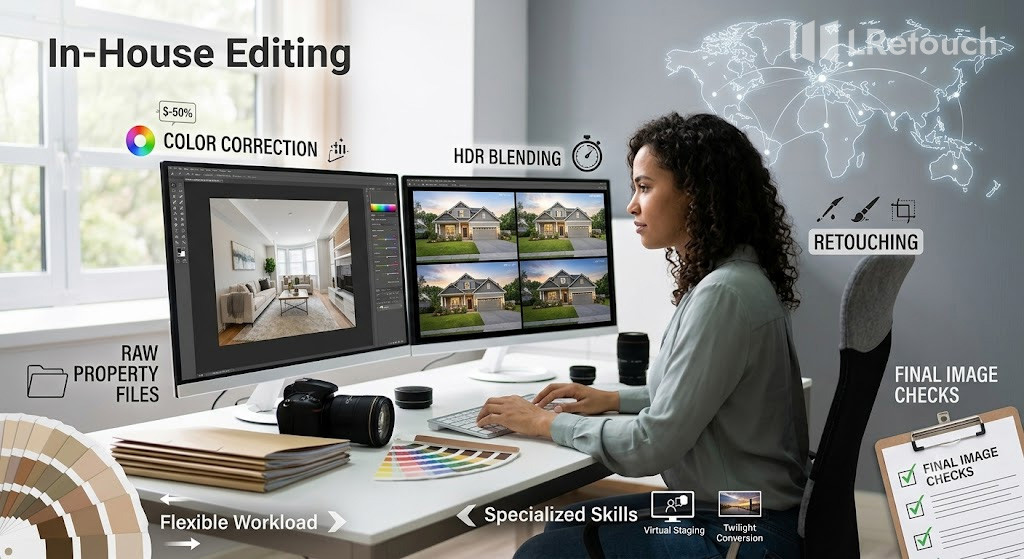
In-house editing means hiring an editor as a regular member of your company. The editor works directly for your business instead of an external agency or freelancer. For real estate photography, an in-house editor can handle tasks such as color correction, HDR blending, retouching, and final image checks.
What is in-house editing?
Pros and cons of in house editing
editing cost comparison, real estate photo editing cost
In-house editing gives real estate photography businesses direct control over their post-production process. However, it also creates fixed costs and management responsibilities. When making an Outsource vs in-house editing decision, consider both daily workflow and long-term expenses.
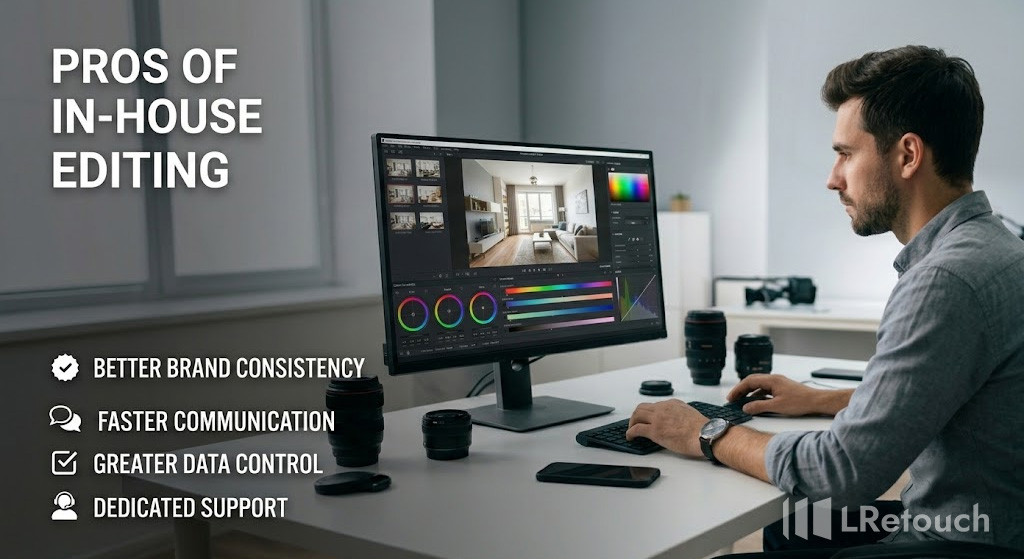
Pros of In-House Editing
- Better brand consistency: An in-house editor works with your team every day. They can learn your preferred exposure, color, contrast, and retouching style.
- Faster communication: You can provide feedback immediately through internal meetings or messaging tools. This can reduce delays when clients request revisions.
- Greater data control: Raw property images remain within your company’s storage system. This can make file management and confidentiality easier.
- Dedicated support: An in-house editor focuses on your projects. They do not need to balance your listings with other clients.
Pros of In-House Editing
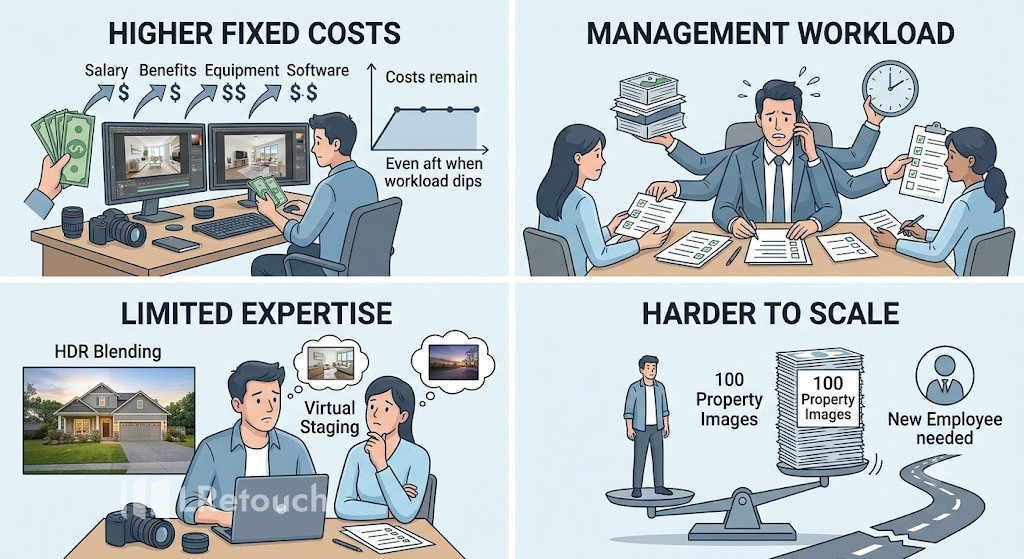
Cons of In-House Editing
- Higher fixed costs: You must cover salary, benefits, equipment, software, and other employee expenses. These costs continue even when your editing workload drops.
- Management workload: Someone must assign projects, check quality, manage deadlines, and provide training. This can take time away from other business activities.
- Limited expertise: One editor may not have advanced skills in every area. For example, they may handle HDR editing well but have limited experience with virtual staging or twilight conversions.
- Harder to scale: A single editor has a limited daily capacity. If your business suddenly receives 100 additional property images, you may need another employee or temporary support.
Cons of In-House Editing
Both in-house and outsourced editing have clear strengths and limitations, so the right choice depends on your workflow, workload, and real estate photo editing cost. To make a practical decision, the next section will compare outsource vs in-house editing across cost, quality, flexibility, and control.
Compare outsource vs in house editing
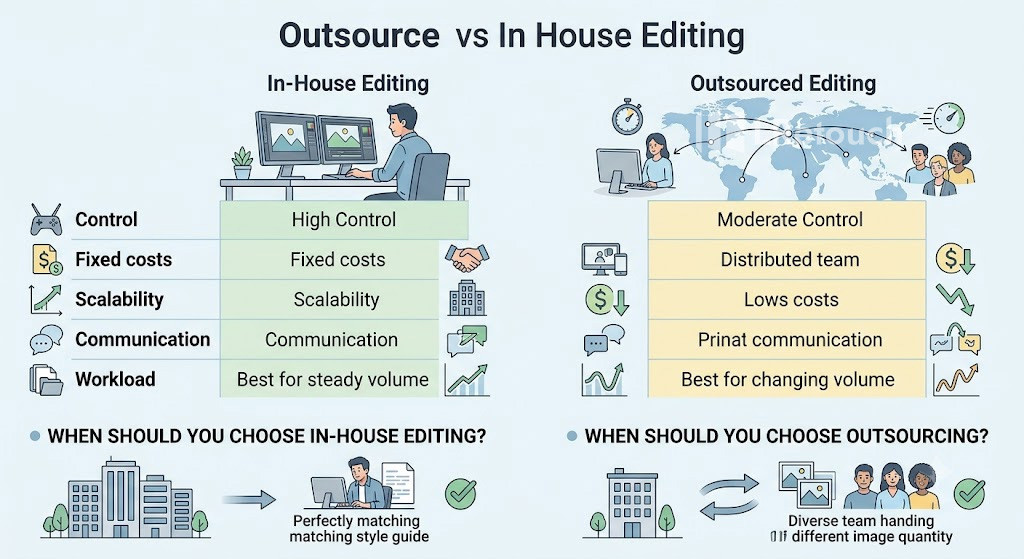
The choice between outsource vs in house editing depends on your workload, budget, and need for creative control. An in-house editor gives you direct oversight and fast communication. Outsourcing gives you more flexibility when image volume changes or deadlines become tight.
| Factor | In-House Editing | Outsourced Editing |
| Control | High | Moderate |
| Fixed costs | Higher | Lower |
| Scalability | Limited by staff | Easy to scale |
| Communication | Direct | Remote |
| Workload | Best for steady volume | Best for changing volume |
Compare outsource vs in house editing
When Should You Choose In-House Editing?
Choose in-house editing when you handle a large and consistent volume of property images. It also works well when your brand requires strict creative control. An internal editor can learn your exact style and make immediate changes.
When Should You Choose Outsourcing?
Choose outsourcing when you have tight deadlines, changing workloads, or limited resources. Hiring editor vs outsourcing becomes especially important for smaller photography businesses that do not need a full-time employee.
For example, a photographer handling 10 listings one week and 25 the next may benefit from an external team that can adjust to demand.
Consider a Hybrid Workflow
A hybrid approach can offer the best balance. Keep high-priority or highly customized projects in-house and send routine editing to an external team.
This editing workflow comparison shows that there is no single best solution. Choose the method that matches your workload, budget, quality standards, and growth plans.
Conclusion
Choosing the right editing model depends on your workload, budget, quality standards, and growth plans. In-house editing offers greater control, while outsourcing provides flexibility and scalability. A hybrid approach can also combine both methods. Before making a decision, compare costs, turnaround times, and workflow needs to find the best fit for your business. Ultimately, Outsource vs in house editing is about choosing the model that supports your goals.