
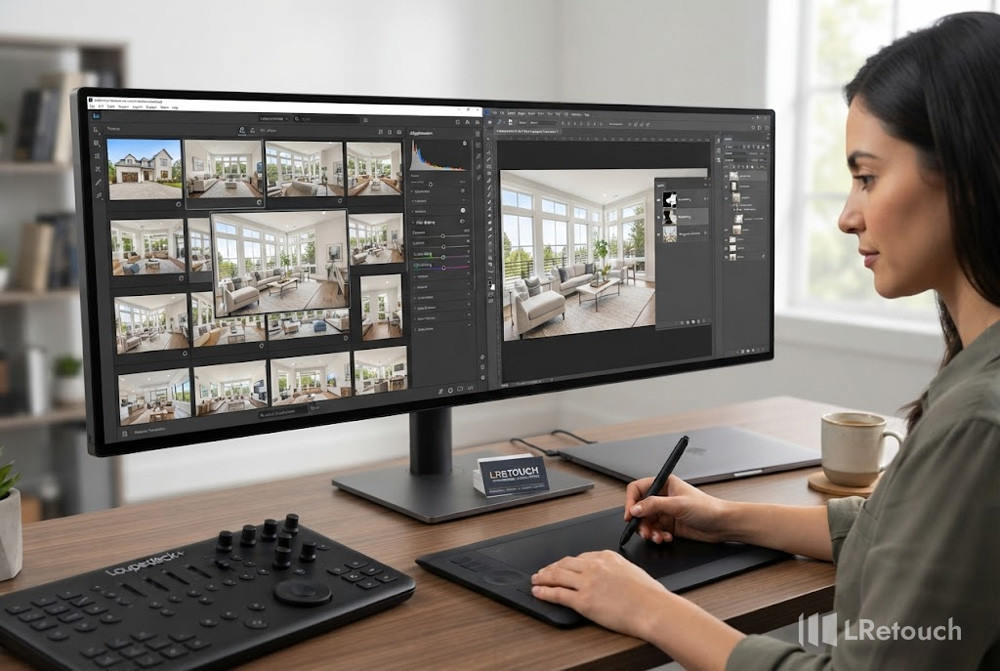
Mastering photo editing for photographers is essential to convert raw captures into market-ready visual assets. Efficient post-production refines lighting, fixes distortions, and establishes visual consistency across portfolios.
Essential Editing Steps
Professional photographers need a consistent process for every project. A clear workflow reduces mistakes and saves valuable editing time.
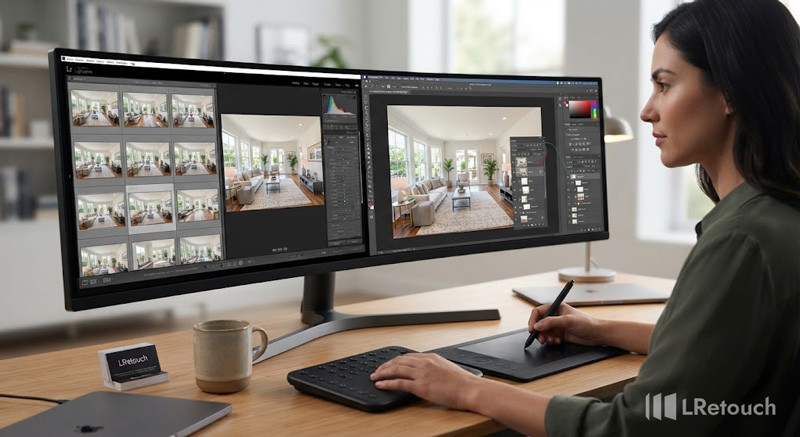
Essential Editing Steps
Lens and Perspective Correction
Wide-angle lenses are common in property photography. They help capture more space in small rooms. However, they can also create lens distortion.
Start by enabling the correct lens profile. This helps correct common distortion automatically.
Next, check vertical and horizontal lines. Walls, windows, and doorframes should look straight.
Use vertical or guided transformation tools when needed. Avoid excessive correction because it can make rooms look unnatural.
Precise alignment is fundamental when applying real estate photography tips to present clean spaces.
HDR or Flambient Blending
Real estate interiors often contain difficult lighting conditions. Windows can look too bright while interior areas appear too dark.
HDR blending helps solve this problem. Photographers capture several exposures at different brightness levels. The images are then combined into one balanced photo.
Flambient editing uses ambient and flash exposures. This method can create natural lighting while preserving important details.
Both techniques can produce strong results when handled carefully. The goal is a realistic image, not an overly processed appearance.
Decluttering
Clutter can distract viewers from important property features. Common distractions include trash bins, cables, signs, and small objects.
Content-aware tools can remove many unwanted elements. AI removal tools can also speed up this process.
However, photographers should use removal tools carefully. Permanent property features should never be removed without a clear reason.
The best edits improve presentation without changing the property’s actual appearance.
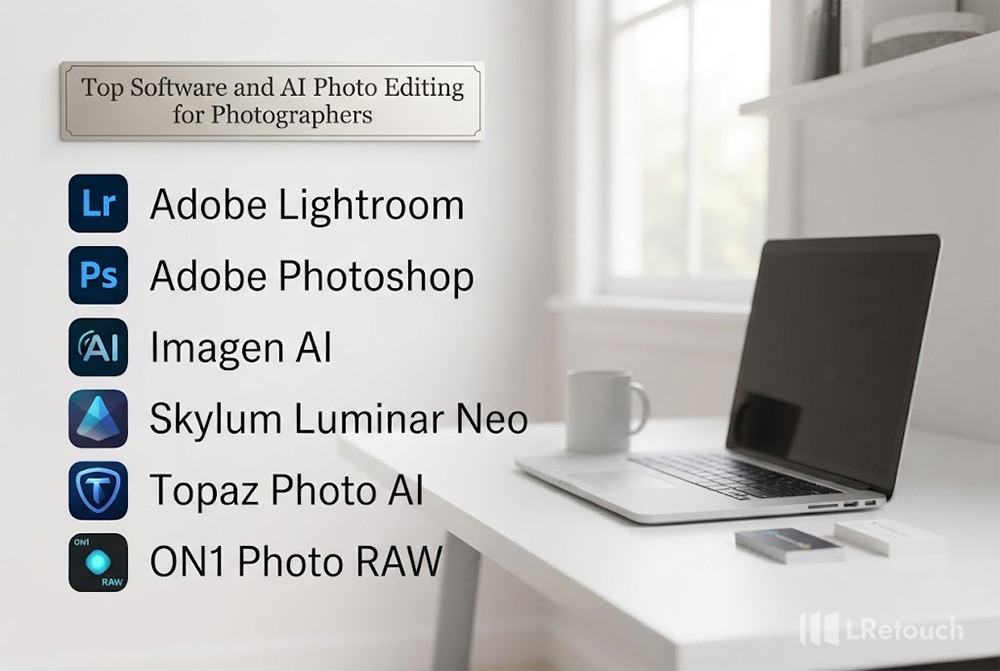
Top Software and AI Photo Editing for Photographers
Choosing the right software depends on volume, editing style, and project requirements.
Top Software and AI Photo Editing for Photographers
Adobe Lightroom and Photoshop
Adobe Lightroom remains a popular choice for organizing and editing large photo collections. Its batch editing tools can apply similar adjustments across many images.
For example, photographers can synchronize exposure, contrast, and color settings. This approach creates consistency across an entire property shoot.
Photoshop is better for advanced retouching and complex composites. Lightroom and Photoshop also work together in a connected editing workflow.
This combination works well for photographers handling both routine edits and detailed corrections.
Imagen AI
AI editing tools can reduce repetitive work for photographers. They can help automate adjustments across large image collections.
This approach can benefit photographers who process hundreds of images each week. It can also support a consistent editing style.
AI should support your creative process rather than replace quality control. Always review important images before delivery.
Skylum Luminar Neo
Luminar Neo provides AI-powered tools for fast creative edits. Its Sky AI tool can automatically detect skies and replace them.
The software also works as an application or plugin for Photoshop and Lightroom. This makes it useful within different editing workflows.
It can be useful for exterior property images. However, sky replacements should remain realistic and match the lighting.
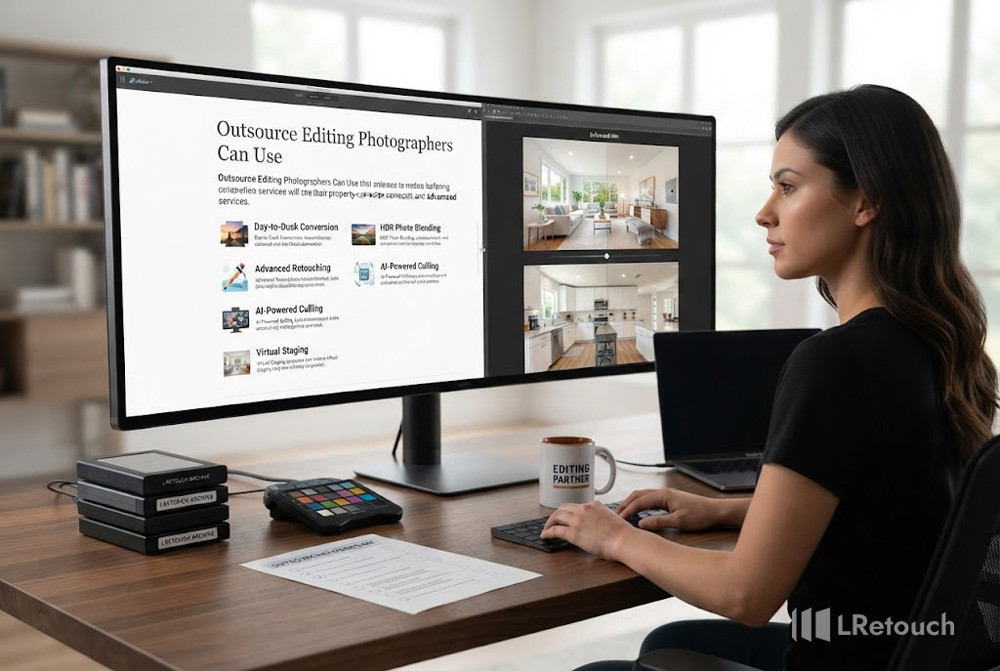
Outsource Editing Photographers Can Use
Processing every image personally becomes unfeasible during peak shooting seasons. High-volume creators frequently hire a specialized photo editing service to manage backlogs.
Companies like PhotoUp and BoxBrownie specialize in batch processing, day-to-dusk conversions, twilight enhancements, and virtual staging. BoxBrownie even offers a rapid 24-hour turnaround on basic image enhancements.
Choosing to outsource editing photographers often evaluate tradeoffs between speed, cost, and creative authority.
Outsource Editing Photographers Can Use
Pros of Outsourcing
- Massive Time Savings: Delegating repetitive edits liberates time for client acquisition and shooting.
- Scalable Output: External teams absorb sudden volume spikes without slowing down delivery.
- Faster Turnaround: Structured editor shifts allow next-day gallery delivery to clients.
- Reduced Burnout: Offloading tedious screen time keeps core energy focused on business growth.
Cons of Outsourcing
- Reduced Granular Control: Editors may interpret subjective lighting or color choices differently.
- Revision Delays: Miscommunications require revision requests, which temporarily delay final delivery.
- Recurring Overhead: Outsourcing introduces direct per-image expenses that affect profit margins.
Real Estate Photography Tips for Better Editing
Better editing often begins with better shooting. Photographers can reduce post-production work through careful preparation.
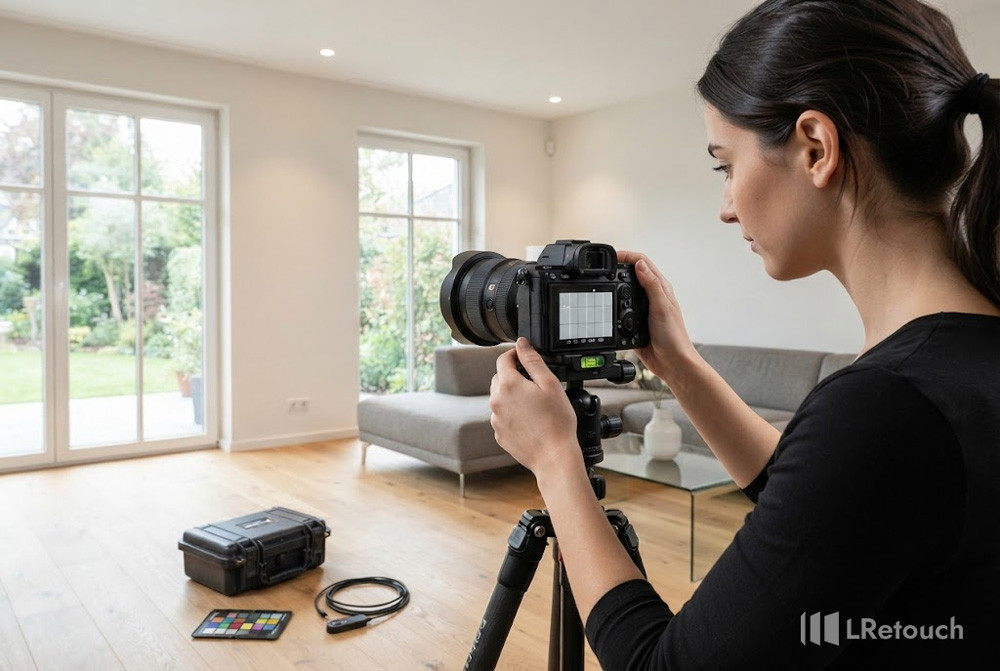
Use a tripod when possible. It keeps compositions stable during bracketed exposures.
Keep vertical lines straight while shooting. This reduces the need for heavy perspective correction.
Capture multiple exposures for bright interiors. This provides more information for HDR or flambient processing.
Keep rooms clean before shooting. Removing clutter during the shoot is faster than removing it digitally.
Real Estate Photography Tips for Better Editing
Use a consistent white balance throughout the property. Consistent color helps create a cohesive final gallery.
These techniques are useful for real estate photography for beginners. Beginners should focus on exposure, composition, straight lines, and consistent color.
Following these real estate photography tips can also reduce editing time. Good files give editors a stronger starting point.
In Conclusion
Building an automated pipeline or delegating tasks is crucial for long-term production scaling. Mastering real estate photography for beginners starts with solid capture techniques, but sustainable growth ultimately relies on optimizing your full pipeline. Refining your photo editing for photographers strategy ensures high-quality results while preserving your time.