
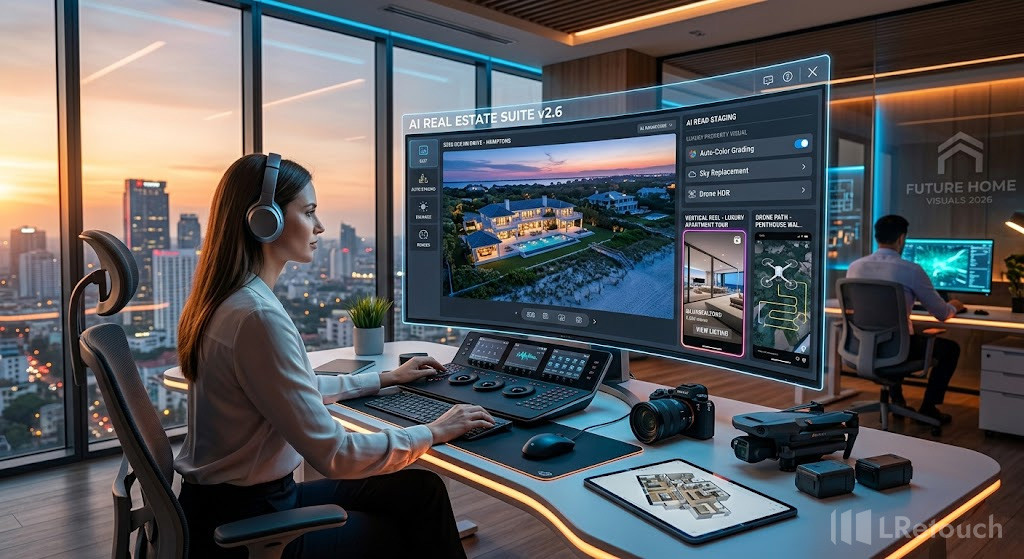
Real estate photo trends are constantly evolving as buyers expect more immersive, high-quality property visuals online. From AI-powered editing and drone photography to natural lighting and vertical video content, modern trends are reshaping how properties are marketed. Understanding these emerging photography styles can help real estate agents and photographers create listings that attract more views and generate faster sales. Keep reading to update on the latest property marketing trends.
Key Property Photo Editing Trends 2026
- Professional real estate photos can help homes sell for $3,000–$11,000 more on average. Listings with quality images also sell 32% faster.
- Bright lighting, straight vertical lines, and natural colors remain essential. Most professional results still require advanced editing.
- HDR editing is widely used in the industry. Photographers typically combine 3–5 bracketed exposures to balance bright windows and dark interiors.
- AI editing tools are growing rapidly in the photo editing trends 2026 market. Some AI platforms can process 1,000 photos in under 10 minutes.
- Mobile optimization is critical. Over 52% of buyers search for homes on smartphones. Vertical images now perform better on Instagram and TikTok.
- Advanced edits increase profits. Virtual staging usually costs only $15–$50 per photo but can significantly improve buyer engagement.
- 4K exports are becoming standard. Resolution sizes like 3840 × 2160 pixels provide sharper images for modern screens and future marketing campaigns.
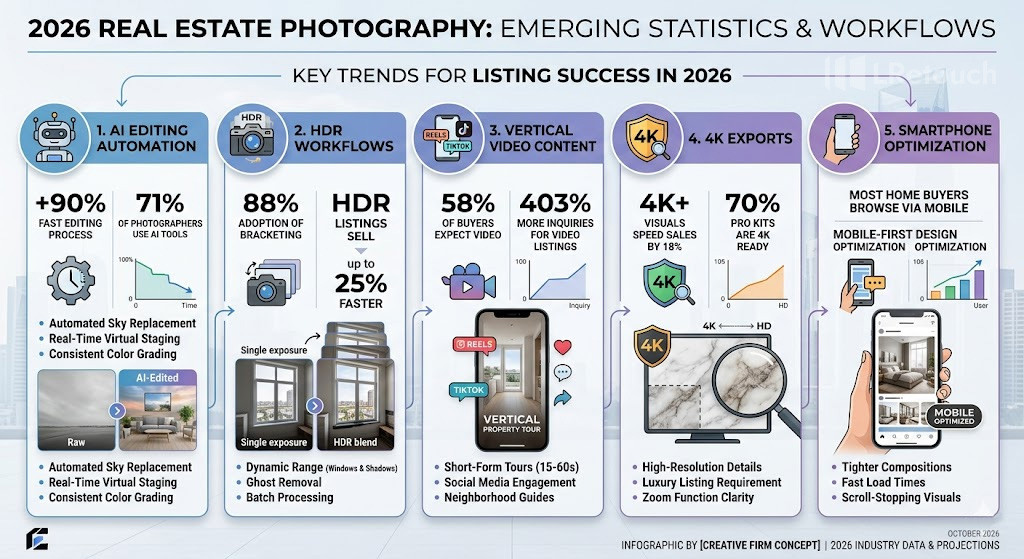
An infographic highlighting key real estate photography and editing trends for 2026.
Real estate photo trends in 2026
Real estate photography continues to evolve rapidly as AI, automation, and advanced editing technologies reshape how property listings are created and marketed.
In 2026, buyers expect highly polished visuals, faster listing updates, and immersive digital experiences across websites, mobile apps, and social media platforms.
Studies consistently show that professional real estate photos can help listings sell faster and attract significantly more online views compared to low-quality images.
Modern workflows now focus on speed, realism, ethical editing, and high-resolution content. From AI-powered retouching to vertical video optimization, the latest editing innovations are transforming the real estate photography industry.
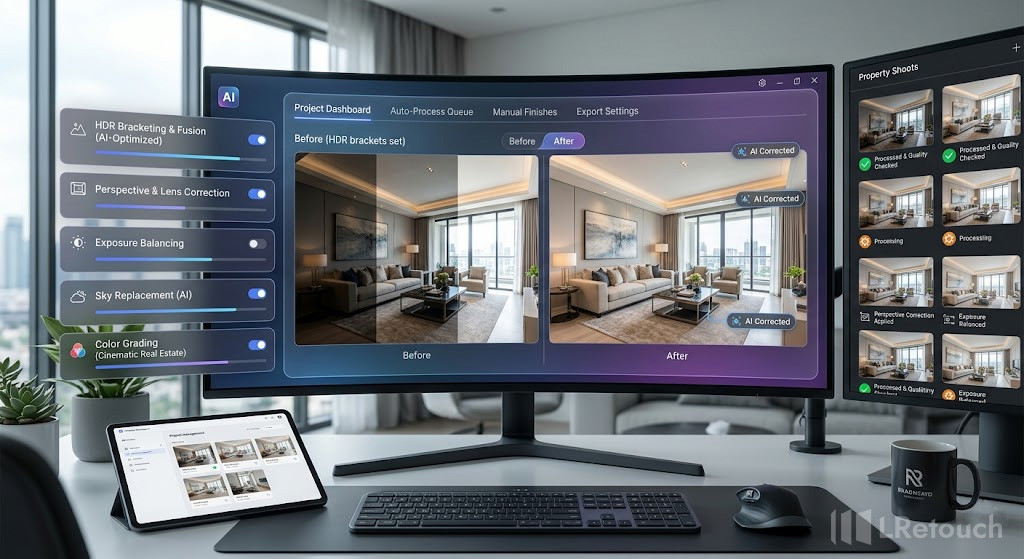
An AI system automating real estate photo enhancement and editing tasks.
AI-powered efficiency and automation
One of the biggest real estate photo trends in 2026 is the rapid growth of AI-driven workflows and automation. Advanced real estate photo editing tools can now process hundreds of images in minutes instead of hours, dramatically reducing turnaround times for photographers and agencies.
AI-powered editing innovations now automate tasks such as:
- HDR merging
- White balance correction
- Lens distortion fixes
- Exposure balancing
- Perspective correction
Fast delivery has become essential because many real estate agents expect edited galleries within 24 hours or less. AI editing platforms help photographers meet these demands while maintaining consistency across large photo sets.
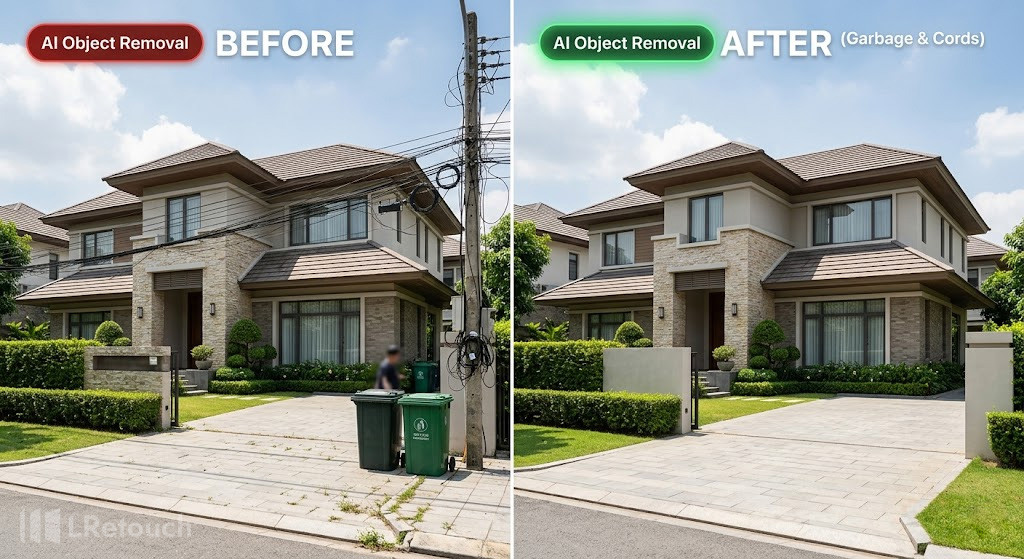
A property photo enhanced using AI-powered object removal tools.
Another major advancement is intelligent object removal. AI tools can automatically detect and remove temporary distractions such as:
- Garbage cans
- Parked cars
- Garden hoses
- Electrical cords
- Minor interior clutter
This creates cleaner listing photos without altering the permanent structure of the property.
Automated sky and lawn replacement has also become standard in luxury listings. Platforms such as Luminar Neo use AI to generate natural-looking skies and balanced lighting conditions. Editors can transform dull exterior images into bright, visually appealing scenes within seconds.
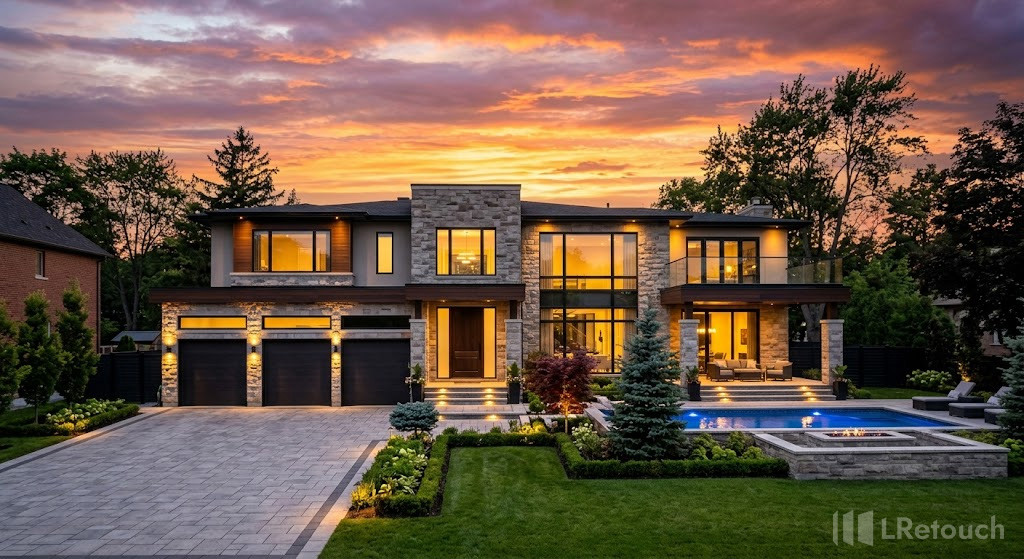
A luxury property image enhanced with AI-generated sky replacement.
Personalized AI editing is another growing trend. AI systems like Imagen learn a photographer’s editing style from previous catalogs, allowing consistent edits across thousands of photos. This helps photography businesses scale their operations while preserving brand identity and visual consistency.

An AI system learning a photographer’s editing style for automated property image enhancement.
High-demand visual enhancements
Modern buyers increasingly expect premium real estate visuals that feel cinematic, immersive, and lifestyle-focused. As competition among listings increases, advanced image enhancement trends are becoming essential for attracting online attention.
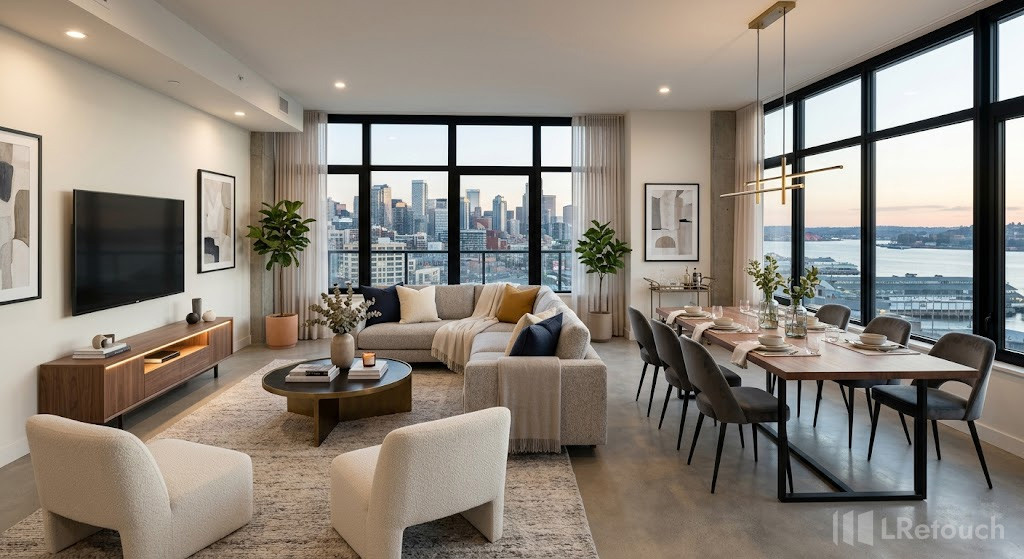
A virtually staged property interior with realistic AI-generated furniture.
One of the most popular developments is hyper-realistic virtual staging. Earlier staging techniques often looked artificial or overly digital. In 2026, AI-generated furniture and décor will be nearly indistinguishable from real staging.
Virtual staging is commonly used for:
- Empty apartments
- Luxury condos
- New construction homes
- Rental properties
This approach allows agents to present furnished spaces without the cost of physical staging.
Day-to-dusk conversion is another dominant editing trend. Editors transform bright daytime exterior shots into dramatic twilight scenes featuring:
- Warm interior lighting
- Glowing windows
- Enhanced landscaping
- Vibrant sunset skies
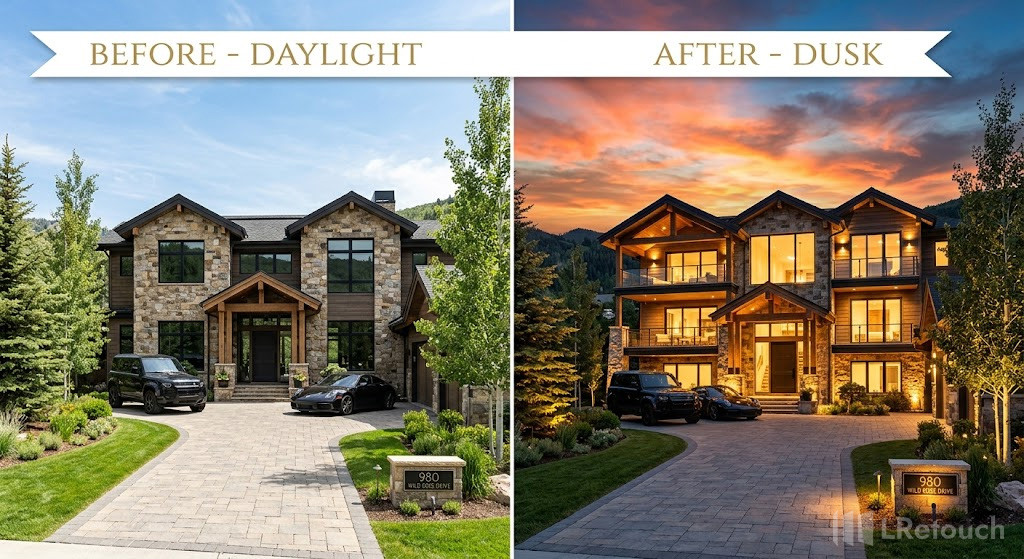
A luxury property exterior enhanced using day-to-dusk editing techniques.
These edits significantly improve curb appeal and help listings stand out in search results and social media feeds.
A softer “film + retro” aesthetic is also emerging in lifestyle-oriented property photography. Instead of overly sharp or heavily saturated edits, many photographers now prefer:
- Warm color tones
- Subtle film grain
- Softer highlights
- Natural contrast
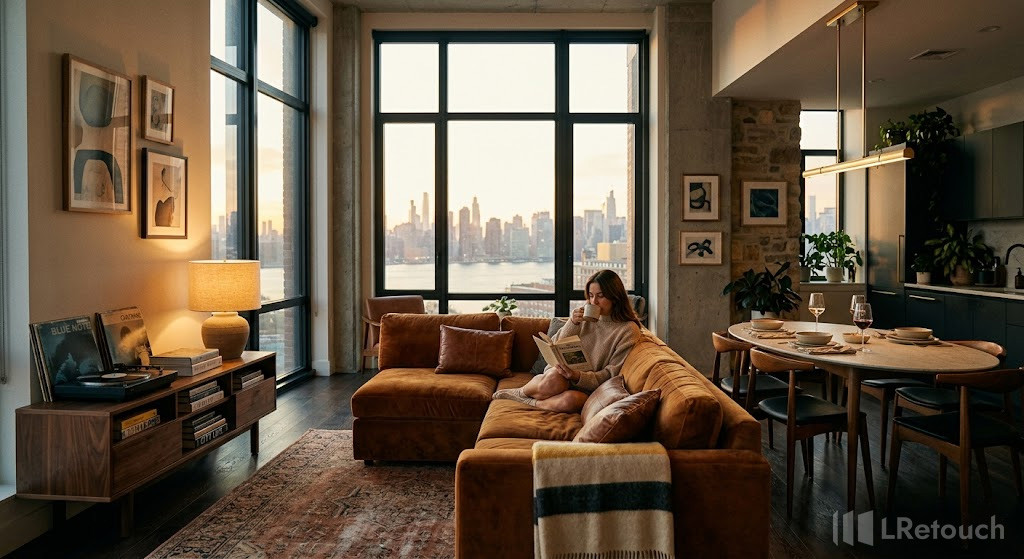
A modern real estate photo edited with a soft cinematic film aesthetic.
This style creates a more emotional and inviting atmosphere while maintaining accurate property representation.
Video content is becoming equally important. Vertical-first editing for platforms like Instagram Reels, TikTok, and YouTube Shorts is now a standard part of many real estate workflows. Modern editing innovations support the fast production of:
- Vertical property tours
- Short-form listing videos
- Social media teaser clips
- Cinematic walkthroughs

A vertical property video optimized for TikTok and Instagram marketing.
Photographers who can deliver both still images and optimized video content have a significant competitive advantage in 2026.
Ethical and Regulatory Changes
As AI-generated editing becomes more powerful, ethical standards and regulations are becoming increasingly important in the real estate industry. One of the most important real estate photography tips for 2026 is maintaining transparency in edited property images.
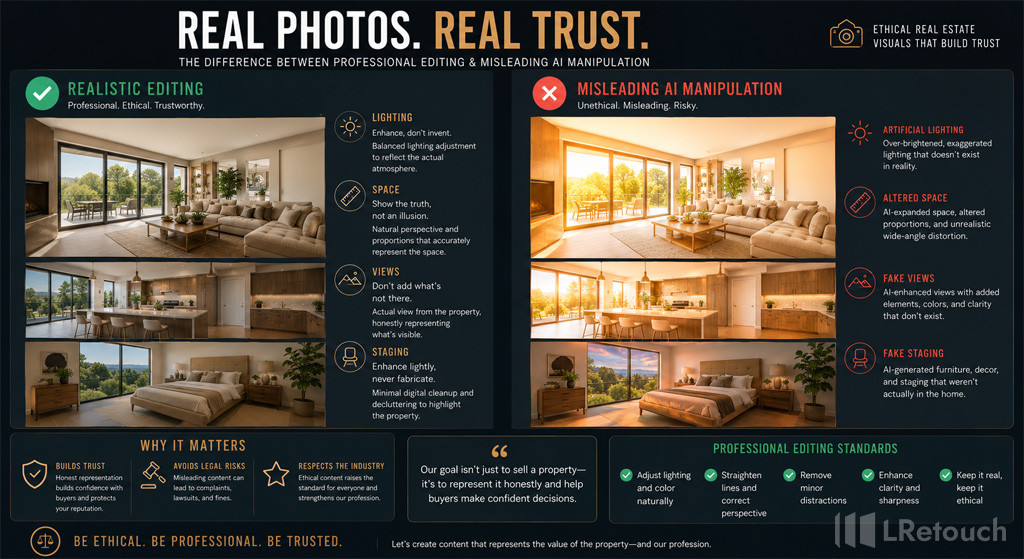
A visual comparison between ethical photo enhancement and misleading AI edits.
Several regions, including parts of California, now require disclosure when AI significantly alters listing photos. This includes heavily modified images involving:
- Virtual renovations
- Structural alterations
- Artificial room modifications
- Digitally enhanced landscaping
Mandatory AI disclosure policies aim to prevent misleading property marketing and improve buyer trust.

A real estate listing showing disclosure for AI-enhanced property images.
Ethical “virtual renovation” is another major discussion in the industry. While virtual staging remains widely accepted, deceptive edits that change permanent structural features are increasingly discouraged.
Examples of unethical edits include:
- Removing load-bearing walls
- Adding non-existent windows
- Changing room sizes
- Hiding property damage
Professional photographers and editors are now expected to balance visual enhancement with accurate property representation. Maintaining realism is becoming just as important as producing visually attractive listings.
Technical Standards
Technical expectations for real estate photography are also rising rapidly. In 2026, 4K resolution will become the new baseline standard for premium listings. High-resolution smartphone screens, large monitors, and smart TVs have increased buyer expectations for image clarity and detail.
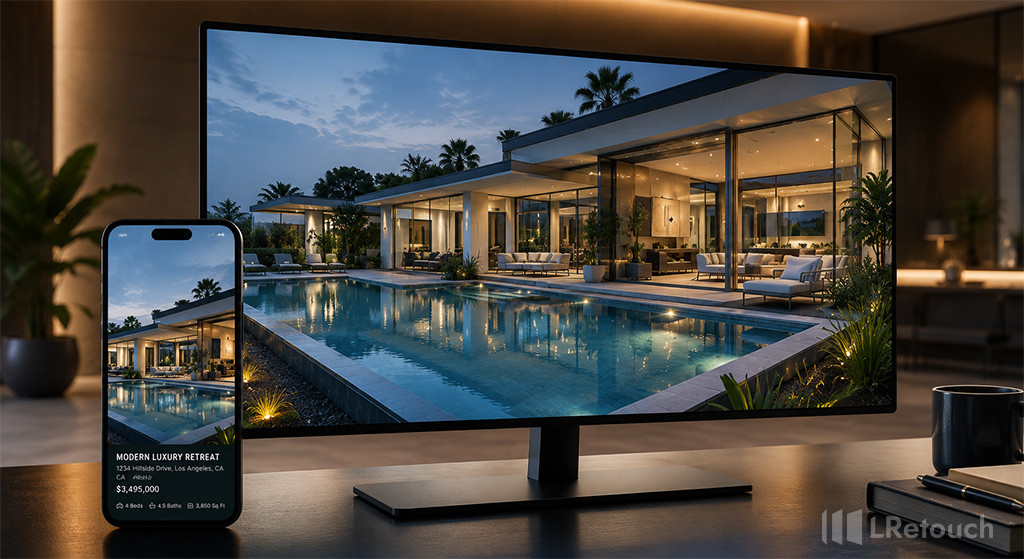
A high-resolution 4K real estate image optimized for modern devices.
Many MLS systems previously accepted lower-resolution images such as 1024×768 pixels, but modern listings increasingly prioritize:
- 4K property photography
- Ultra-sharp image exports
- High-resolution social media content
- Optimized mobile viewing
Another important trend is the use of desktop-cloud hybrid workflows. Many photographers combine desktop software like Adobe Lightroom Classic with cloud-based AI editing platforms. This workflow provides both editing stability and automation scalability.
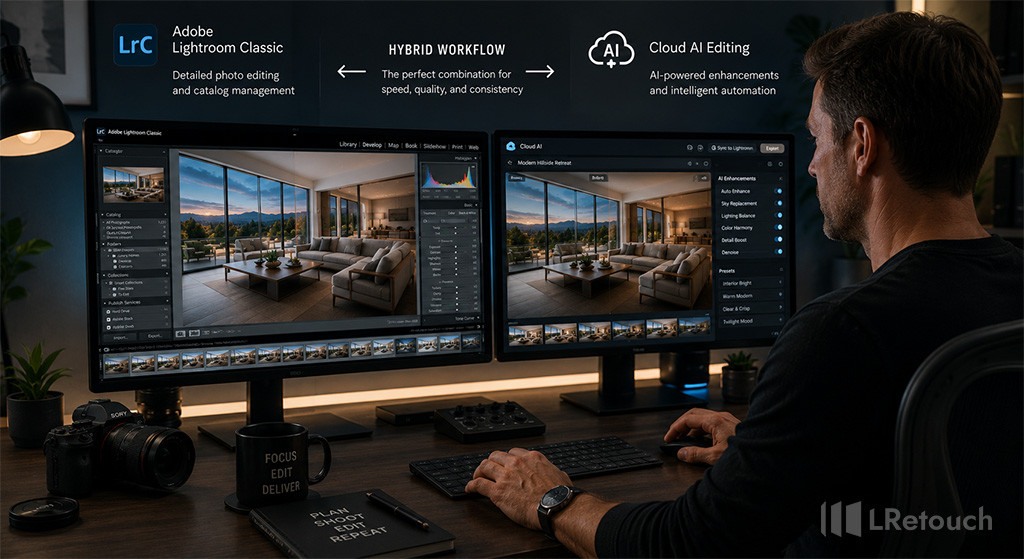
A hybrid editing workflow combining desktop software and cloud AI automation.
Advanced “window pull” editing has also become a key quality standard in luxury real estate photography. Specialized masking techniques help balance bright exterior windows with darker interiors, allowing viewers to see outdoor scenery clearly without overexposing the room.
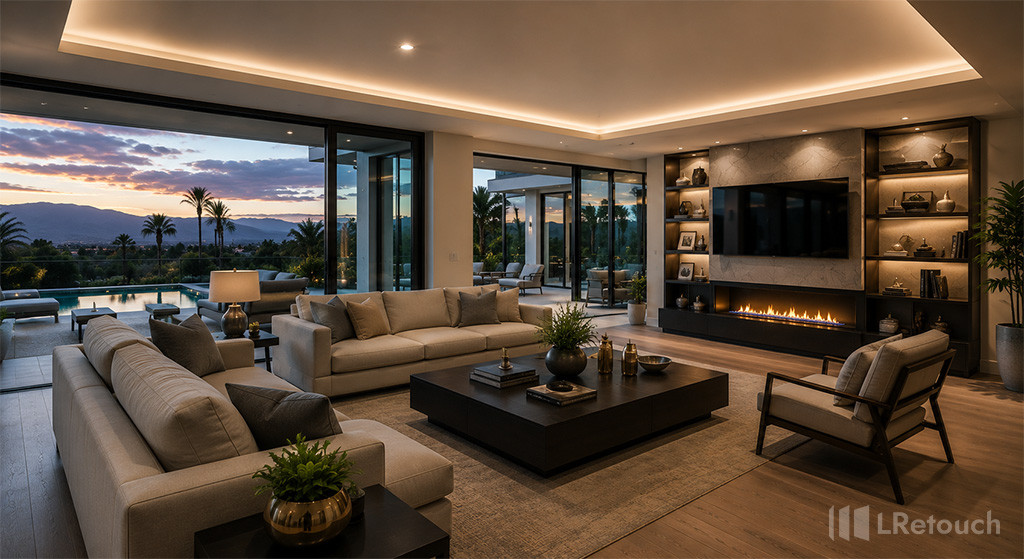
A professionally edited real estate image using advanced window pull techniques.
The bottom line
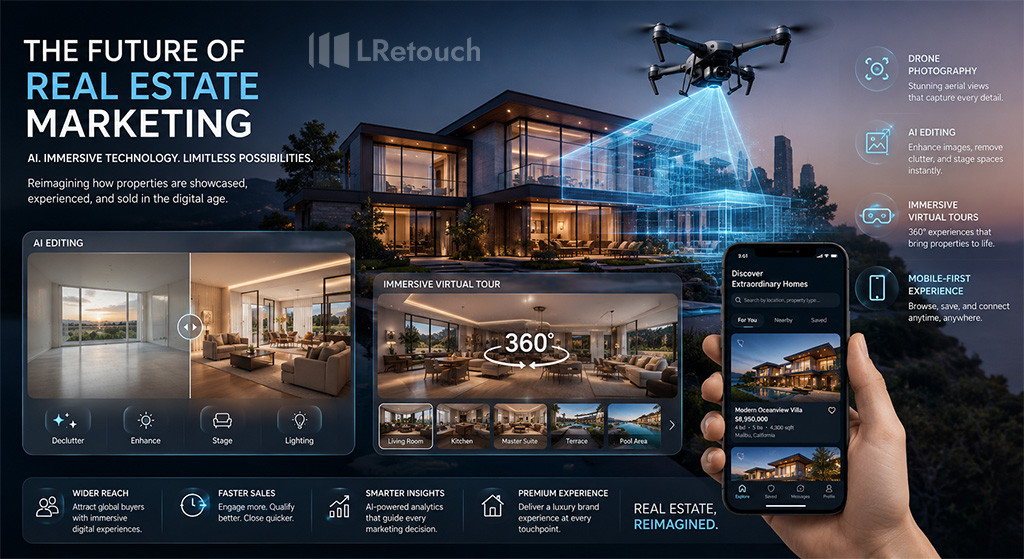
A futuristic vision of AI-powered real estate photography and digital property marketing.
The industry is rapidly evolving through AI automation, immersive visuals, ethical editing standards, and higher technical expectations. Staying updated with the latest real estate photo trends helps photographers create more engaging listings, improve workflow efficiency, and remain competitive in the modern property market.
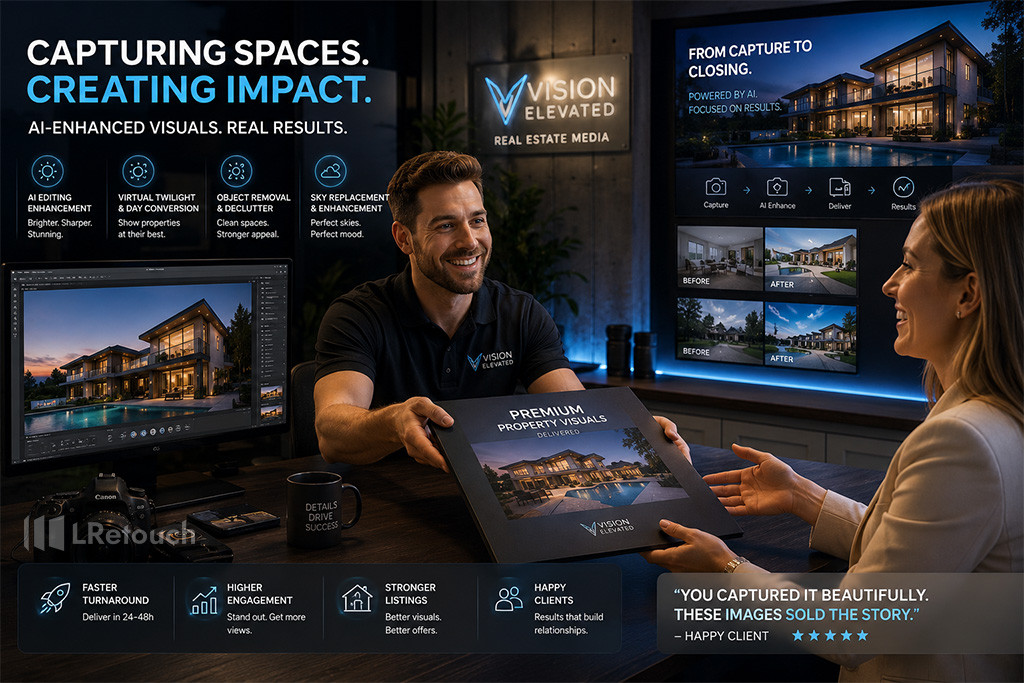
A professional real estate photography business adapting to modern industry trends and AI workflows.