
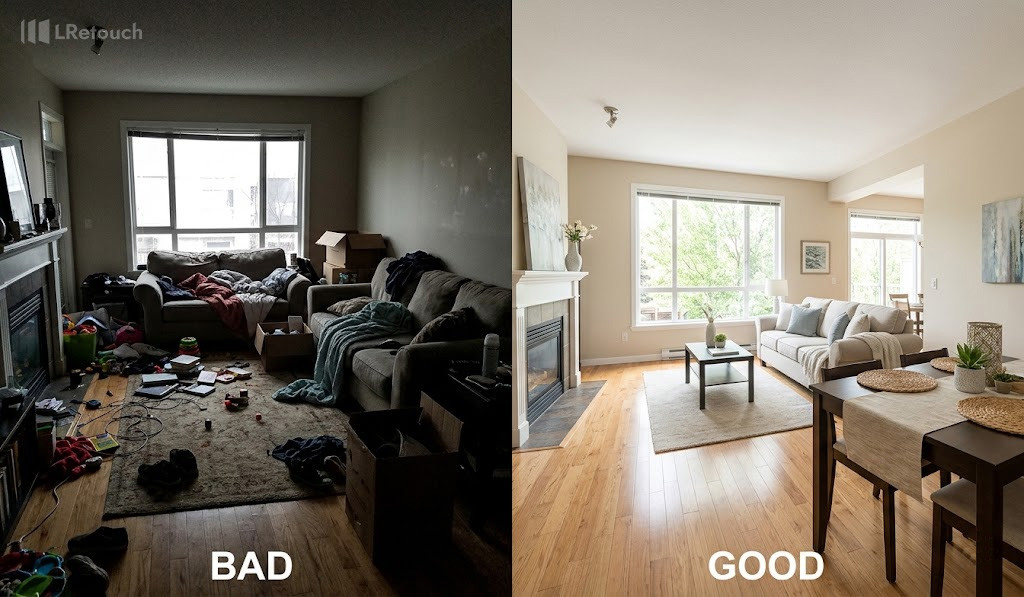
We all know the first impression is very important to attract qualified buyers and secure higher offers. However, many agents make common real estate photography mistakes. This guide will expose 10 common listing photo mistakes, providing actionable solutions to get better effectiveness. Let’s explore.
Recognize common real estate photography mistakes
To enhance real estate photos and attract potential buyers, it is essential to avoid common mistakes that can negatively impact a listing’s visual quality and credibility.
Poor photography can make even a beautiful property appear unappealing or misleading.
Common issues include:
- Bad lighting mistakes photography
- Over-Saturation of Colors
- Harsh HDR Processing
- Poor Window Masking
- Clutter amateur real estate photos
- Misalignment in real estate images
- Sensitive content in listing photo mistakes
- Bad property photos’s quality
- Poor composition
- Lack of remote viewing functionality
By recognizing and correcting these mistakes, sellers and photographers can significantly improve listing performance and buyer engagement.
Bad lighting mistakes photography
Bad lighting mistakes photography is a frequent issue in real estate images, making spaces appear dark, uneven, or overly harsh. Photos may suffer from underexposure, blown-out highlights, strong shadows, or mixed color temperatures that create unnatural tones. Relying only on artificial lighting or shooting at the wrong time of day can also result in flat, uninviting images that fail to showcase the property accurately.
Solutions:
- Always check the histogram while shooting to prevent overexposed windows or underexposed interiors, ensuring a balanced image.
- Using HDR techniques when you take bracketed shots and merge them. This allows you to retain detail in both bright and dark areas, especially in rooms with strong natural light.
- Apply the flambient technique to combine natural light with external lighting (like flash) to fill dark areas and control harsh shadows.
- Use a mix of natural and artificial lighting to balance exposure
- Shoot during optimal daylight hours for softer, more even light
- Adjust ISO, shutter speed, and white balance for accurate tones
- Use a tripod and bracketing to capture well-exposed images
- Apply subtle post-processing to correct brightness and color consistency
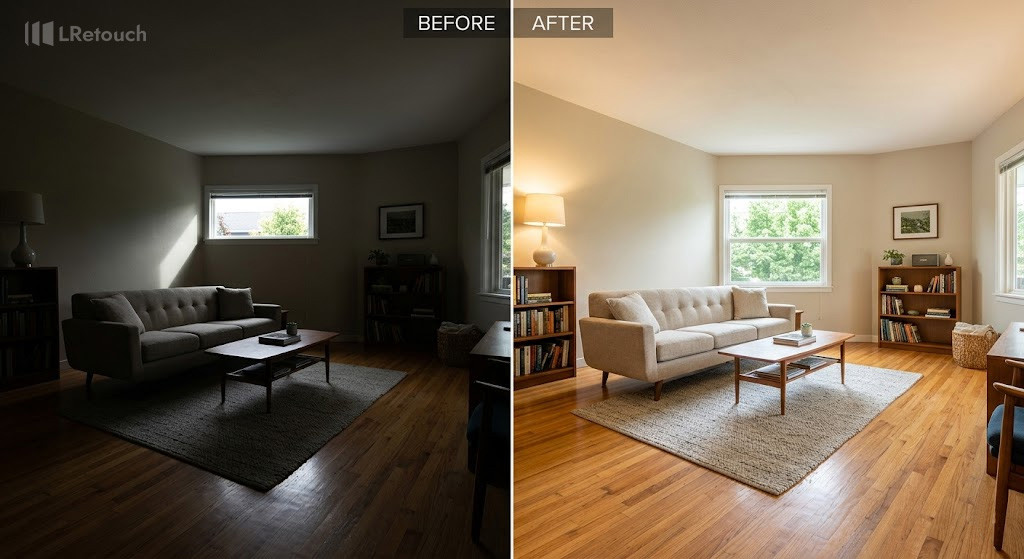
bad lighting real estate photography
Over-Saturation of Colors
Over-Saturation of Colors makes images look unrealistic and distracting. Excessively vivid tones can distort wall colors, flooring, and furniture, giving the property an artificial appearance. This often happens during editing when saturation or vibrance is pushed too far, reducing credibility and potentially misleading buyers about the true look of the space.
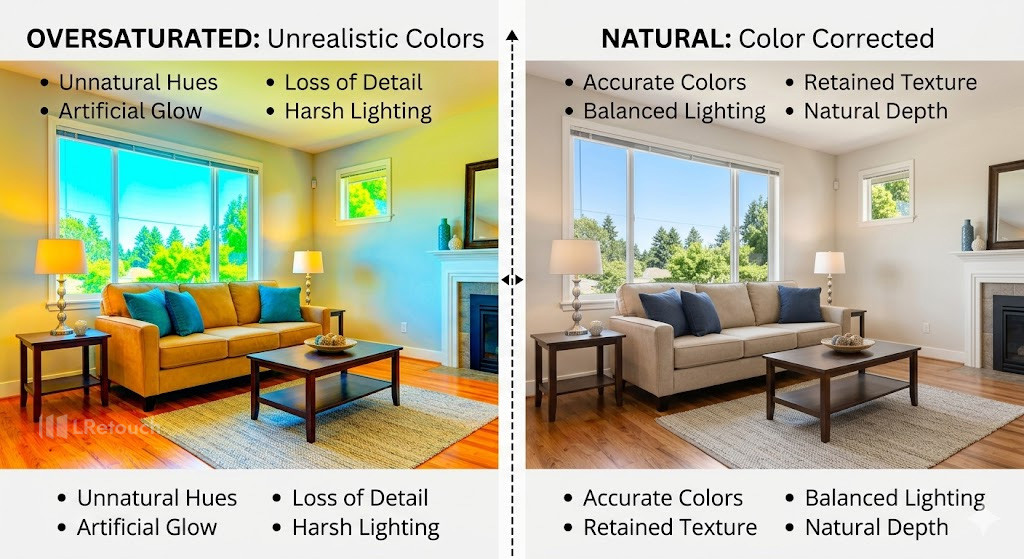
oversaturated real estate photos vs natural colors
Solutions:
- Keep saturation and vibrance adjustments subtle and natural
- Compare edited images with the original scene for color accuracy
- Use calibrated monitors to ensure true-to-life color representation
- Adjust white balance before increasing color intensity
- Focus on enhancing realism rather than making colors overly vivid
- Manual White Balance ( WB) to manage color temperature based on the lighting environment. HDR uses multiple exposures, and Auto WB can cause slight color shifts between images. Even small temperature changes (2000K–12000K) can affect results, so using manual WB helps maintain uniform tones and prevents over-saturation.
Harsh HDR Processing
Harsh HDR Processing makes images look unnatural and overly dramatic. Excessive HDR can create halos around edges, flatten shadows, and produce unrealistic contrast and colors.
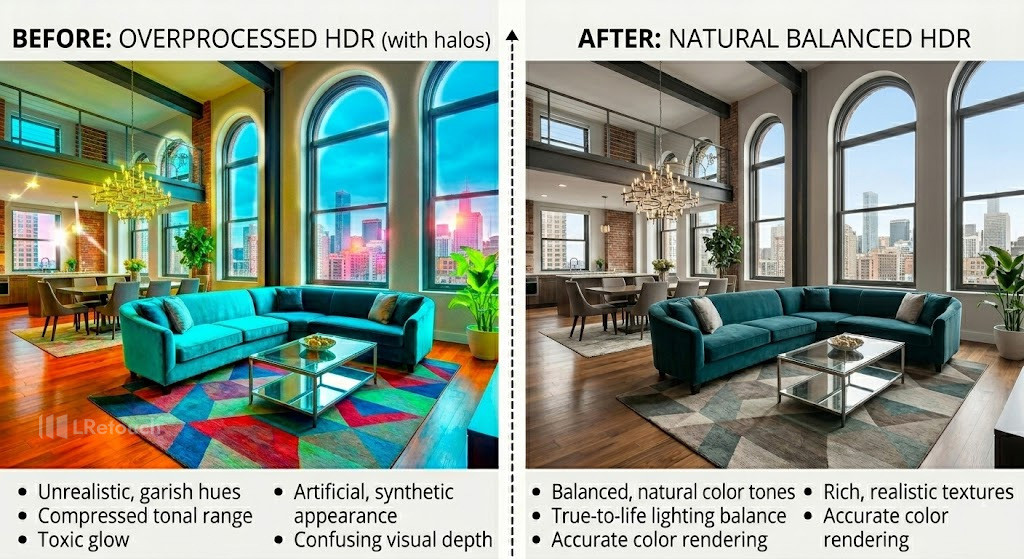
harsh hdr real estate photography
Solutions:
- Use HDR subtly to balance highlights and shadows, not exaggerate them
- Avoid extreme contrast and keep tones natural and consistent
- Blend exposures carefully to preserve realistic lighting
- Check for halos or artifacts around edges and correct them
Poor Window Masking
Poor Window Masking is a common real estate image errors where window views appear blown out, unnaturally dark, or poorly blended with the interior. Incorrect masking can create visible edges, mismatched lighting, or unrealistic outdoor scenes that distract viewers.
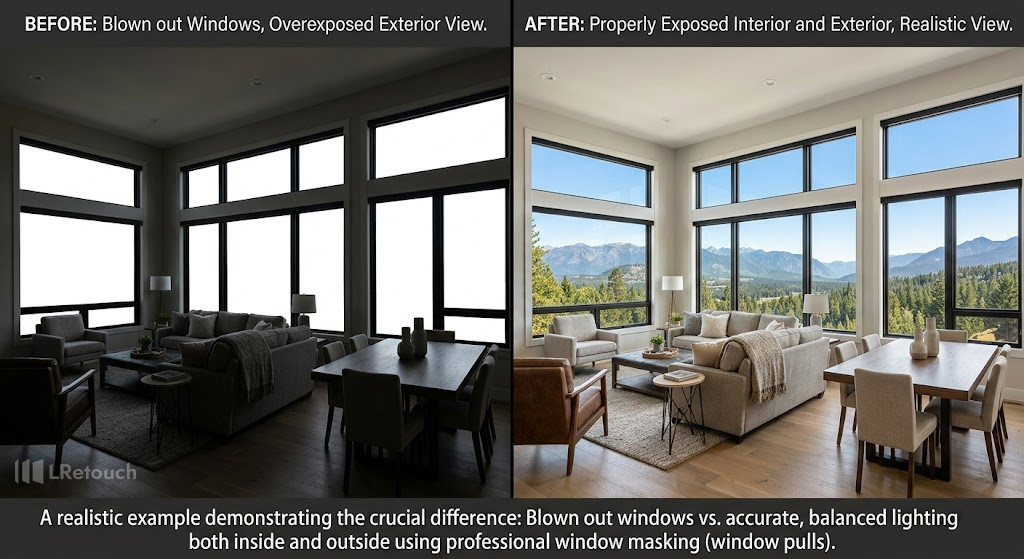
window masking real estate mistake
Solutions:
- Balance interior and exterior exposures for a natural look
- Use precise masking techniques to avoid visible edges or halos
- Match the brightness, contrast, and color temperature between inside and outside
- Avoid overly dramatic sky replacements or unrealistic views
Clutter amateur real estate photos
One of the most common real estate photo mistakes, especially amateur photos, is clutter. Spaces look messy, smaller, and less appealing to buyers. Personal items, excessive decorations, or unorganized furniture can distract from the property’s key features.
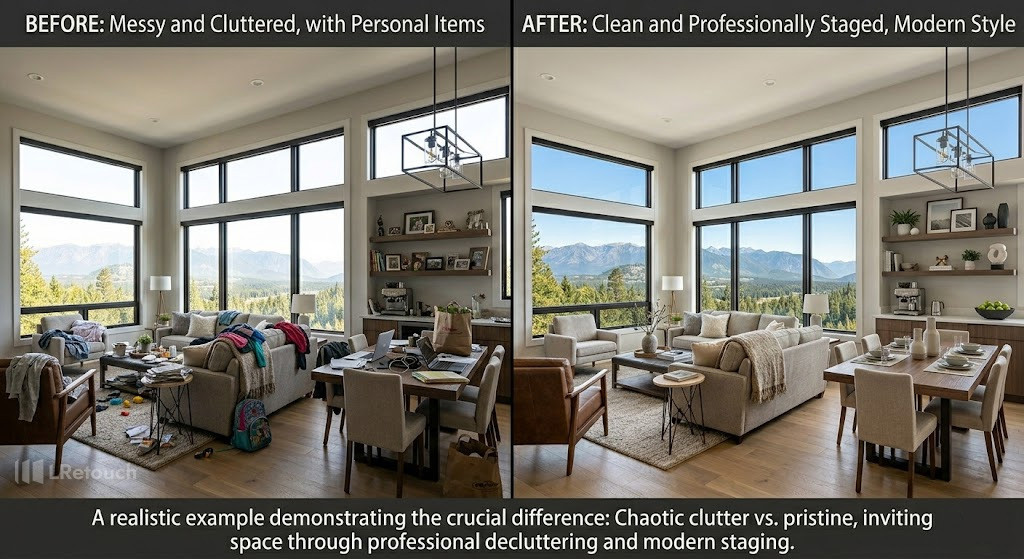
clutter real estate photo mistake
This clutter reduces visual clarity and prevents viewers from imagining themselves in the space.
Solutions:
- Declutter rooms by removing personal and unnecessary items
- Keep surfaces clean and minimal for a tidy appearance
- Arrange furniture to create open, spacious layouts
- Use simple, neutral decor to highlight the property
- Stage each room to improve the overall presentation
Misalignment in real estate images
Misalignment in real estate images makes photos look unbalanced and unprofessional. Crooked lines, tilted walls, or distorted verticals can occur when the camera is not properly leveled or when wide-angle lenses are misused. This creates a sense of instability and can make rooms appear awkward or inaccurately shaped.
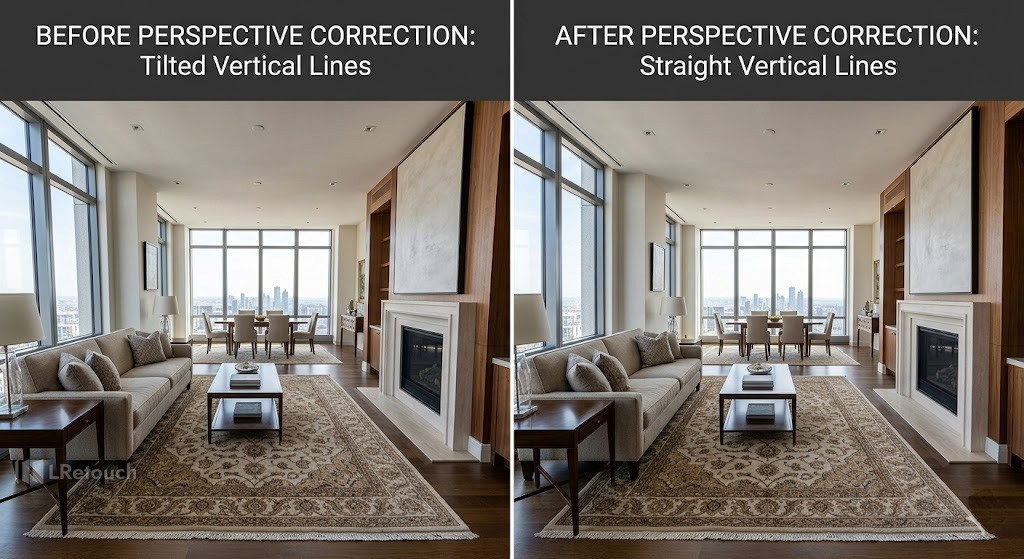
misaligned real estate images
Solutions:
- Keep the camera level to maintain straight vertical and horizontal lines
- Use a tripod with a built-in level for better stability
- Avoid excessive tilting when using wide-angle lenses
- Correct perspective distortion during post-processing
Sensitive content in listing photo mistakes
Sensitive content in listing photo mistakes occurs when personal, private, or inappropriate items are visible in real estate images. This can include family photos, documents, valuables, or anything that reveals personal information.
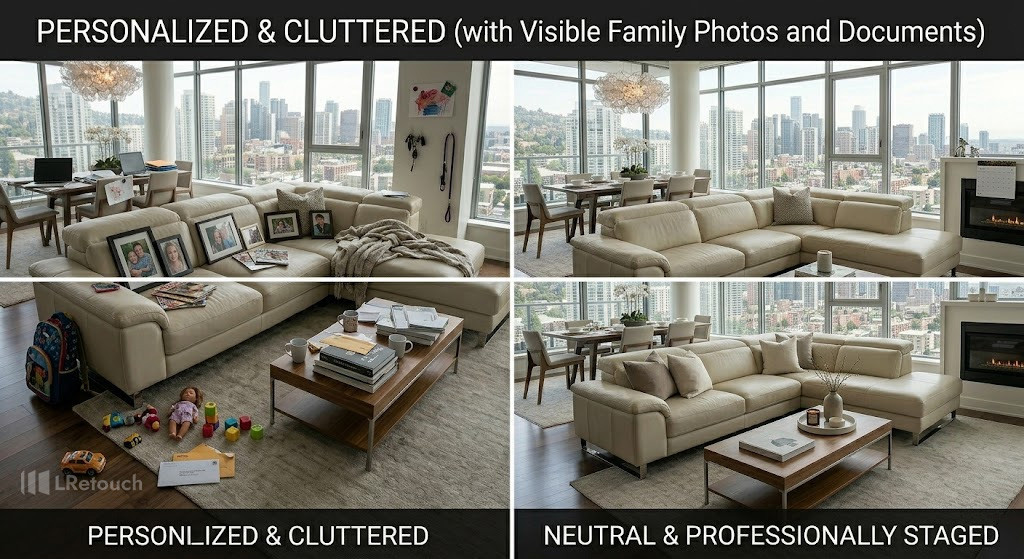
sensitive content real estate photo mistake
Such content not only distracts buyers but can also raise privacy concerns and make the listing appear unprofessional.
Solutions:
- Remove personal items like photos, documents, and identifiable details
- Check each room carefully before shooting for sensitive or private content
- Keep the space neutral to appeal to a wider audience
- Blur or edit out any overlooked sensitive elements during post-processing
Bad property photos’s quality
Bad property photos’ quality is a major real estate photography mistake that can make real estate photos look dull and uninviting. Low-resolution images, blur, noise, or compression artifacts make photos look unprofessional and unclear. Poor image quality can hide important details and give buyers a negative impression of the property’s overall condition.
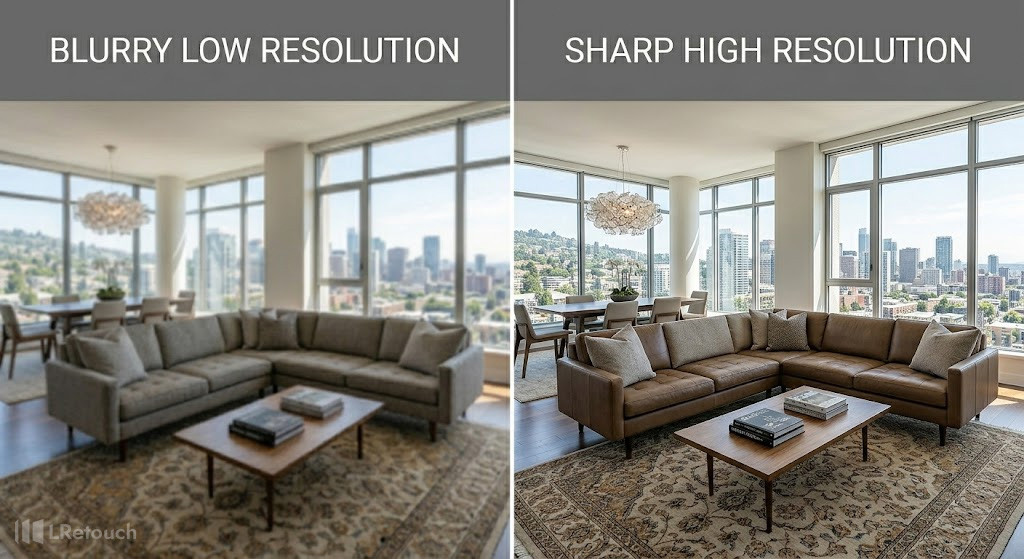
bad quality real estate photos
Solutions:
- Use a high-resolution camera to capture sharp, detailed images
- Ensure proper focus and avoid motion blur by using a tripod
- Keep ISO levels low to reduce noise and grain
Poor composition
Poor composition makes images feel unbalanced and less engaging. Incorrect framing, awkward angles, or cutting off important features can confuse viewers and reduce the visual appeal of a space.
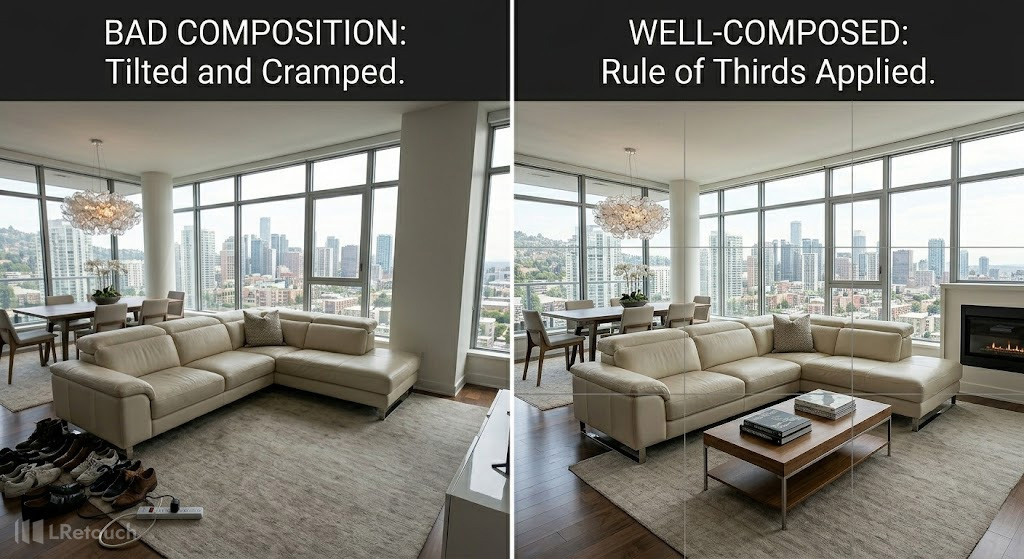
poor composition real estate photography
Solutions:
- Follow basic composition rules like the rule of thirds
- Choose angles that showcase space, depth, and key features
- Keep lines straight and avoid awkward cropping
Lack of remote viewing functionality
Lack of remote viewing functionality is a major oversight in modern listings, where static images alone can make a property feel outdated and incomplete. Without interactive tools like 3D tours or virtual walkthroughs, it becomes harder for buyers to evaluate a home fully. This limitation reduces engagement, weakens buyer interest, and is one of the real estate photo mistakes realtors make that directly impacts lead quality and conversion.
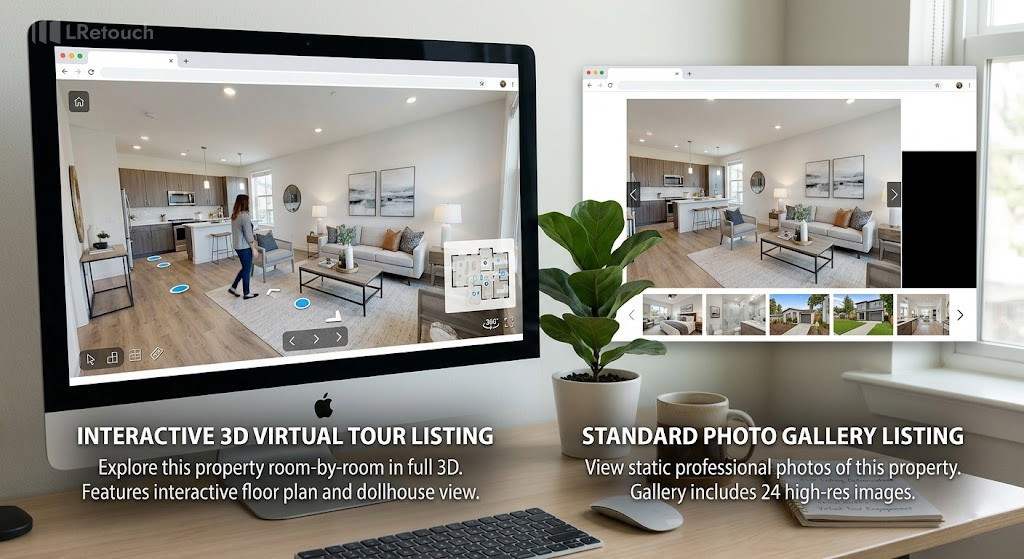
virtual tour vs static real estate listing
Solutions:
- Integrate immersive 3D technology to let buyers explore the property anytime, anywhere
- Offer a Matterport 3D Tour to create a realistic digital twin of the space
- Embed the virtual tour across listing platforms and your website for maximum exposure
The bottom line
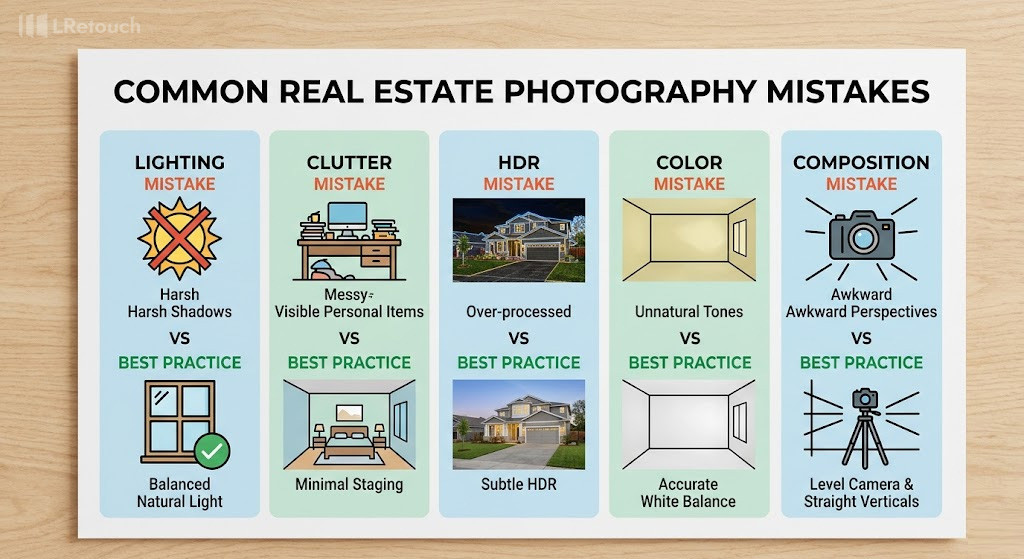
real estate photography mistakes infographic
Avoiding these common pitfalls can significantly improve listing quality, attract more buyers, and boost engagement. By focusing on lighting, composition, and modern tools, agents can present properties more effectively and stand out in a competitive market, minimizing costly real estate photo mistakes.